

My Secret Garden Under the Dock: Discovering the Hidden Life of Freshwater Sponges
 |

Summary:
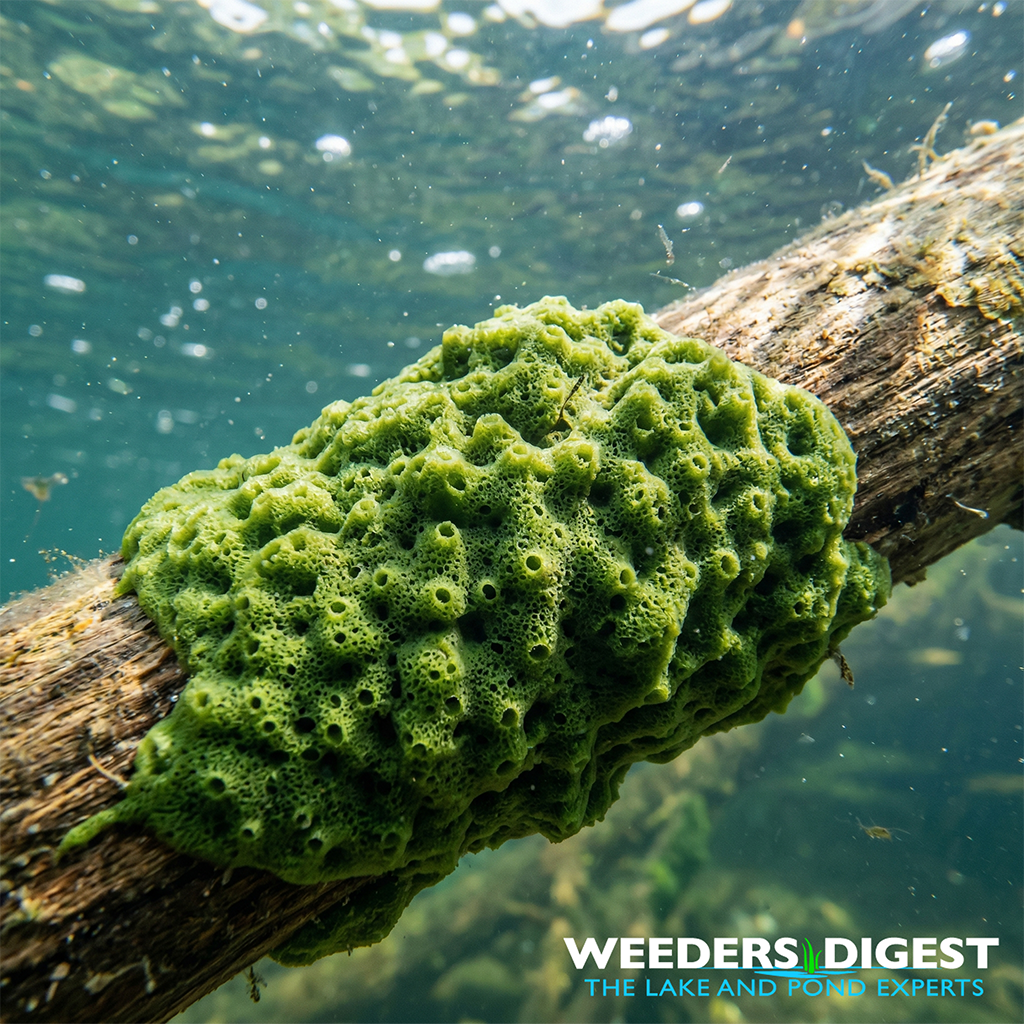
When most people think of sponges, they imagine tropical coral reefs or perhaps a synthetic block in the kitchen. However, you might be surprised to find that your local lake or pond is likely home to its own variety of these fascinating creatures. Freshwater sponges are simple, sedentary animals that look more like patches of moss or lumpy green growths on submerged wood and rocks. They are nature’s quiet cleaners, spending their days filtering microscopic particles out of the water to stay fed, which actually helps improve the clarity of the water around your dock.
Finding them is a bit of a treasure hunt because they blend in so well with their surroundings. I often find them clinging to the undersides of floating docks, submerged branches, or even the shells of slow-moving snails. They thrive in clean, oxygen-rich water where they can remain undisturbed. If you’ve ever pulled a branch out of a lake and noticed a rough, brownish-green crust that smells a bit like damp earth, you have likely stumbled upon a freshwater sponge colony.
Their survival strategy is one of the most resilient in the natural world. Unlike fish that can swim away when a pond freezes or dries up, sponges are stuck in place. To get around this, they have a "backup plan" in the form of tiny, armored pods. These pods allow the sponge to effectively die off when conditions get harsh and then "reboot" its entire life cycle once the water warms up or returns in the spring. It is a brilliant bit of biological engineering that has allowed them to exist for millions of years.
The Science Behind It:
Freshwater sponges belong to the family Spongillidae within the phylum Porifera. Unlike their marine counterparts, these organisms have evolved specific physiological adaptations to survive the fluctuating environments of temperate freshwater ecosystems. Their primary anatomical structure consists of a canal system lined with choanocytes—specialized flagellated cells that create a current to draw in water. As water passes through the ostia (pores), the sponge filters out bacteria, algae, and particulate organic matter. According to research from the University of California Museum of Paleontology, this filtration process is vital for nutrient cycling within the benthic zone of lacustrine environments.
One of the most significant survival mechanisms of Spongillidae is the production of gemmules. Gemmules are internal buds consisting of archaeocytes surrounded by a tough, protective layer of silica spicules and spongin. These structures are highly resistant to desiccation, freezing, and even anoxia. When environmental stressors such as winter temperatures or drought occur, the adult sponge tissue may undergo senesence, but the gemmules remain dormant in the substrate. Upon the return of favorable conditions, the cells within the gemmules emerge through a small opening called the micropyle to begin the morphogenesis of a new functional sponge.
The distribution of freshwater sponges is largely dictated by water chemistry and substrate availability. They are typically found in oligotrophic to mesotrophic bodies of water where silicon dioxide levels are sufficient for the construction of their skeletal spicules. Manconi and Pronzato (2008) note that while sponges are adaptable, they are highly sensitive to heavy metal contamination and excessive sedimentation, which can clog their delicate filtration systems. This sensitivity makes them excellent bioindicators for assessing the long-term ecological health of a freshwater habitat.
The coloration of these organisms—often a vibrant green—is frequently the result of a symbiotic relationship with "zooanthellae" or green algae (typically Chlorella). The algae reside within the sponge's tissues, providing oxygen and carbohydrates through photosynthesis, while the sponge provides a protected environment and nitrogenous waste for the algae. This mutualism allows sponges to colonize sunlit areas, though many species are equally capable of surviving in shaded or deeper littoral zones by relying entirely on heterotrophic filter feeding.