


My Secret Universe: The Tiny Monsters and Marvels Living in Your Lake Water
 |

Summary:
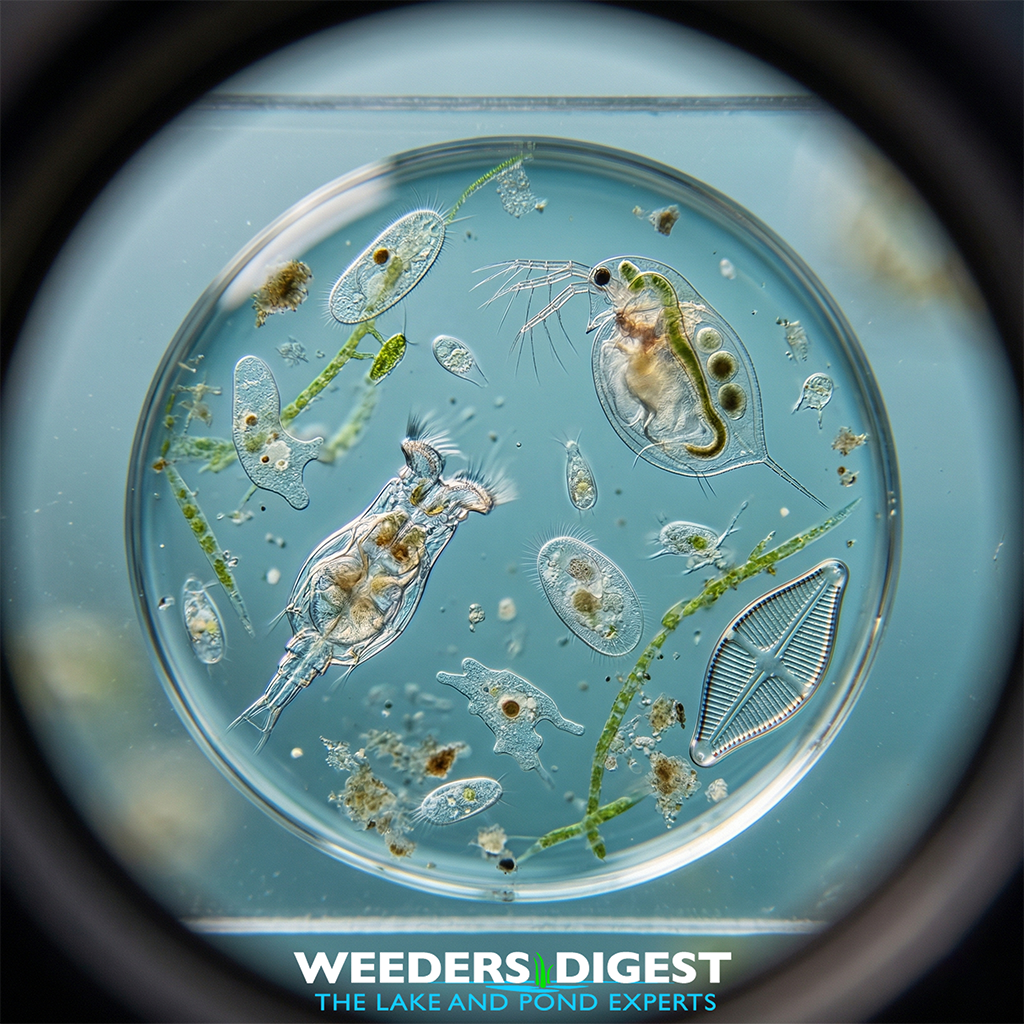
When you look at a clear drop of water from your lake, it probably looks empty, but you are actually peering into a crowded, bustling metropolitan city. This single drop is home to thousands of tiny organisms that are completely invisible to the naked eye. These creatures are the foundation of your lake's entire ecosystem, acting as the primary food source for fish and the natural "recyclers" that keep the water healthy and balanced.
Among these microscopic residents, you will find everything from fast-moving predators that hunt smaller bacteria to delicate, transparent animals that look like they belong in a science fiction movie. Some of these organisms are plants that breathe out oxygen, while others are tiny animals with complex digestive systems and beating hearts. Understanding who these neighbors are can help you appreciate the complex life cycle happening right off your dock every single day.
Seeing these creatures usually requires a microscope, but their impact is massive. Without this invisible world, the water would quickly become stagnant and lifeless. They are the unsung heroes of the aquatic world, constantly filtering the water and converting sunlight into energy. If you’ve ever felt a little "slime" on a submerged rock or seen a slight green tint in the water, you are witnessing the collective power of millions of these microscopic marvels.
The Science Behind It:
The microbial community within a single milliliter of lacustrine water is a complex assembly of prokaryotic and eukaryotic life, primarily classified as plankton. This community is dominated by phytoplankton, which are photosynthetic organisms like cyanobacteria and diatoms, and zooplankton, which are heterotrophic micro-animals. According to research published by the University of New Hampshire Center for Freshwater Biology, a single drop can contain thousands of individuals, with densities fluctuating based on nutrient availability (phosphorus and nitrogen) and thermal stratification within the water column.
Among the most ecologically significant microscopic animals are the Rotifera. These multicellular eukaryotes are characterized by a ciliated organ called a corona, which creates a vortex to draw in food particles. Rotifers play a critical role in the trophic transfer of energy, bridging the gap between primary producers and secondary consumers. Research in Limnology and Oceanography indicates that rotifers are highly sensitive to pH and dissolved oxygen levels, making them excellent bioindicators for assessing the overall health and stability of a freshwater lentic system.
In addition to rotifers, Cladocerans—commonly known as "water fleas" like Daphnia—are frequently present. These organisms possess a transparent carapace and move through the water using branched antennae. Daphnia are essential for maintaining water clarity because they are highly efficient filter feeders, capable of consuming vast quantities of algae. Studies from Cornell University’s Department of Ecology and Evolutionary Biology highlight that Daphnia undergo cyclomorphosis, an evolutionary adaptation where they change their body shape in response to chemical signals from predators, showcasing the high level of biological sophistication at a microscopic scale.
The base of this microscopic food web is supported by a staggering diversity of Protists and Cyanobacteria. Diatoms, a major group of algae, are unique for their cell walls made of hydrated silicon dioxide, forming intricate, glass-like structures called frustules. These organisms are responsible for a significant portion of the oxygen production in freshwater environments. The interaction between these autotrophs and the predatory protozoans, such as ciliates and amoebae, creates a "microbial loop" that ensures nutrients are continuously recycled rather than lost to the benthic sediment.