

My Secrets to a Living Shoreline: How I Saved My Eroding Bank Naturally
 |

Summary:
When I first noticed my shoreline crumbling into the water, my instinct was to reach for heavy rocks or concrete. However, I soon realized that fighting nature with hard barriers often creates more problems than it solves. The most environmentally friendly way to stabilize an eroding bank is through a method called bioengineering, or the creation of a "living shoreline." This approach uses native plants, organic materials, and strategic shaping to work with the water’s energy rather than against it.
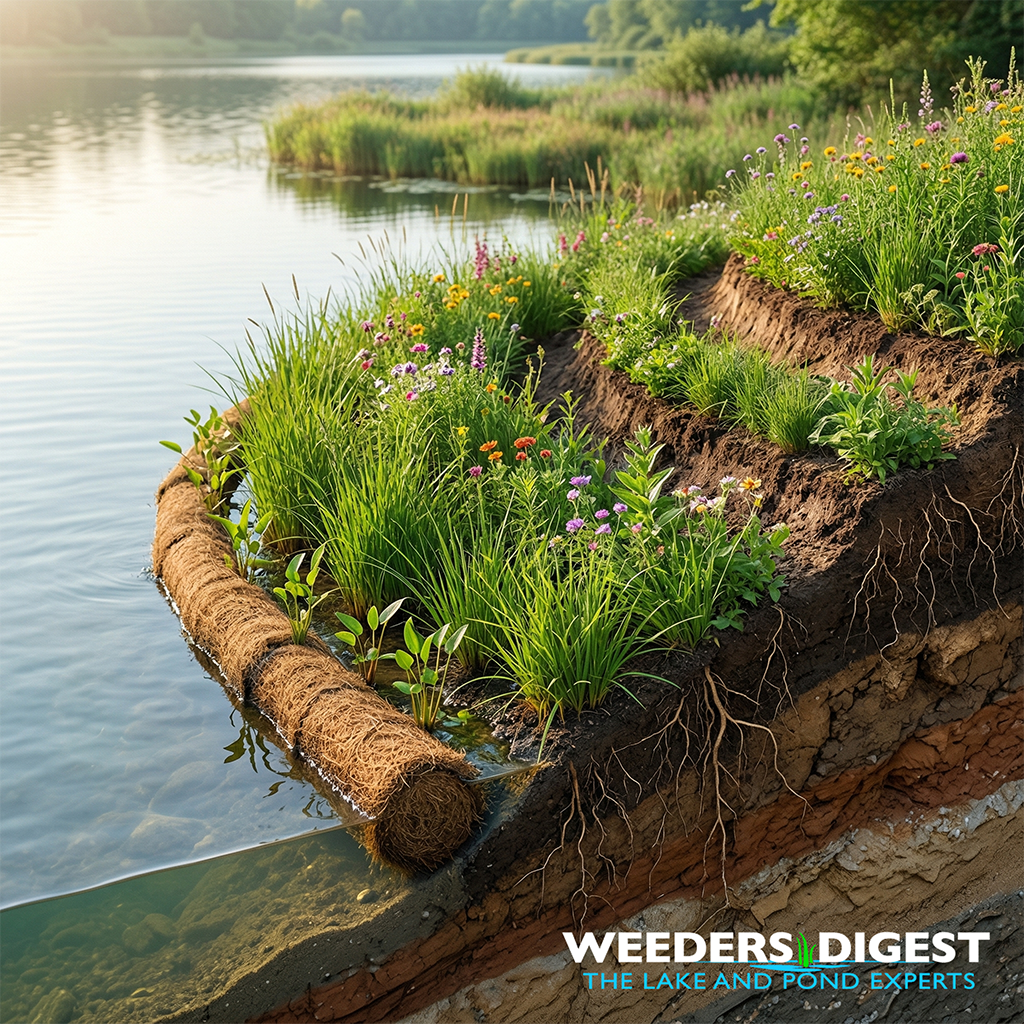
By planting deep-rooted native grasses and shrubs along the water's edge, I was able to create a natural "rebar" system. These roots bind the soil together far more effectively than a pile of stones ever could. Additionally, using organic materials like coconut fiber logs (coir) provides immediate protection while the plants take hold. Over time, these materials biodegrade, leaving behind a self-sustaining, beautiful landscape that actually cleans the water and provides a home for local wildlife.
Stabilizing a bank this way is a long-term investment in the health of the pond or lake. Unlike sea walls that eventually crack and fail, a living shoreline grows stronger every year. It absorbs the impact of waves and runoff, filtering out pollutants before they reach the water. Choosing this path meant I didn't just stop the erosion; I restored a piece of the ecosystem, ensuring my waterfront remains stable and vibrant for decades to come.
The Science Behind It:
Riparian buffer stabilization through soil bioengineering utilizes the mechanical and hydrological properties of vegetation to enhance slope stability. According to research from the Iowa State University Extension and Outreach, the effectiveness of this method relies on the "root reinforcement" principle. As plants mature, their root systems increase the apparent cohesion of the soil profile. The tensile strength of the roots compensates for the soil's inherent lack of tension resistance, effectively anchoring the soil mass to more stable substrata. This biological integration prevents the rotational failures common in saturated embankments.
The hydrological benefits of a living shoreline are equally significant in preventing erosion. Traditional "gray infrastructure," such as concrete bulkheads, reflects wave energy, which often leads to "scouring" at the base of the wall and increased erosion on neighboring properties. In contrast, native vegetation and sloped profiles increase the hydraulic roughness of the bank. This roughness dissipates kinetic energy from wake and wind-driven waves, as noted in studies by the North Carolina Coastal Federation. Furthermore, the presence of a diverse plant canopy reduces the impact of "splash erosion" caused by heavy rainfall events.
Strategic placement of biodegradable structural components, such as coir fiber rolls or "biologs," provides the necessary initial stability for the establishment of the vegetation. These high-density coconut fiber cylinders act as a temporary breakwater. Over a period of three to five years, these logs entrap suspended sediments from the water column, creating a fertile bed for the expansion of emergent macrophytes. As the organic material decomposes, the plant community assumes the primary role of structural stabilization. This transition from a temporary physical barrier to a permanent biological system is the hallmark of sustainable aquatic management.
The ecological implications of this method extend to nutrient cycling and habitat complexity. Peer-reviewed literature emphasizes that living shorelines serve as "ecotones"—transitional zones that facilitate the movement of nutrients and organisms between terrestrial and aquatic environments. Native plants along the bank filter nitrogen and phosphorus from upland runoff, preventing the eutrophication that leads to harmful algal blooms. By maintaining a natural slope and vegetative cover, managers support the life cycles of various amphibians and invertebrates, which are essential components of the aquatic food web.