


My Summer Sentinels: Why Dragonflies Are Always Patrolling Your Shoreline
 |

Summary:
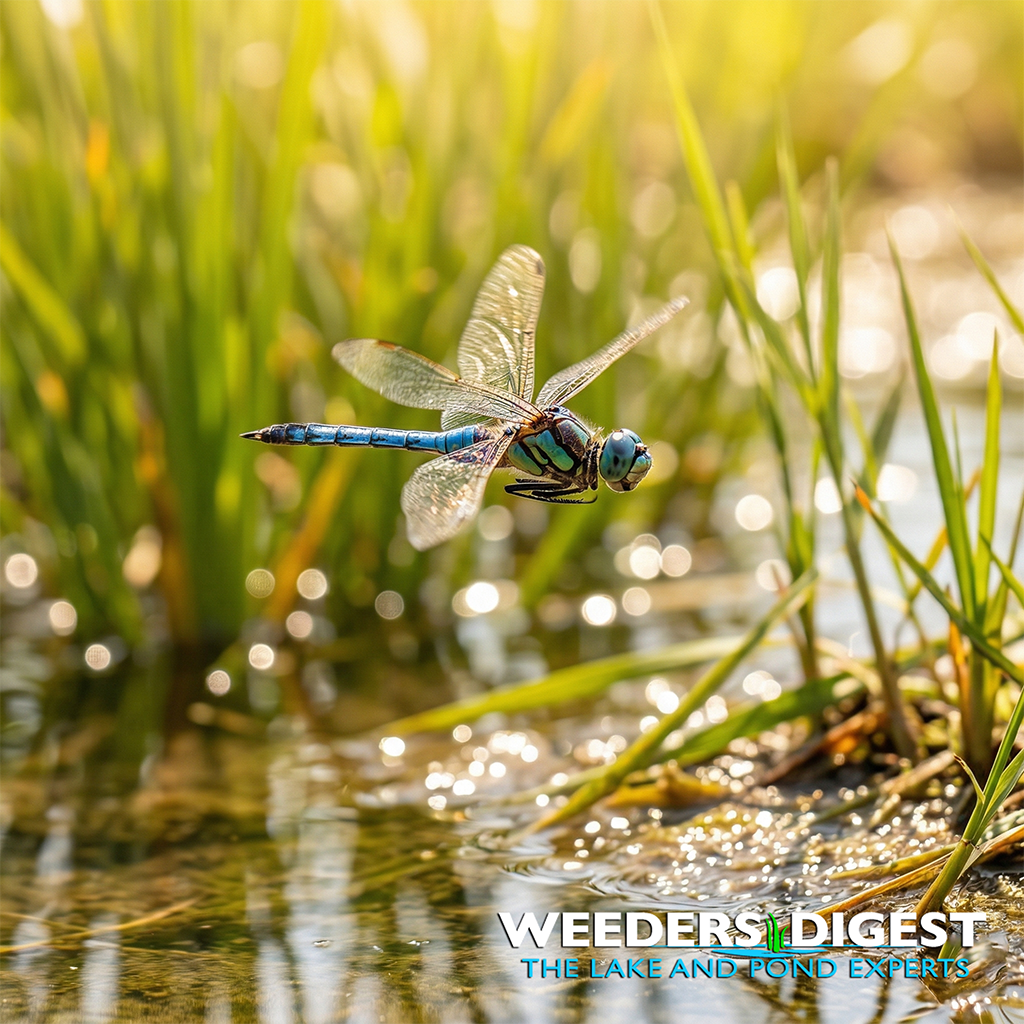
If you have ever spent a warm afternoon by the water, you have likely noticed dragonflies darting back and forth like tiny fighter jets. It often feels like they are personally guarding the edge of your pond, chasing away anything that flies too close. This behavior isn't just random flying; it is a high-stakes game of survival and legacy. These insects are some of the most successful predators on the planet, and the shoreline is their most valuable piece of real estate.
In the heat of the mid-afternoon, the activity reaches a fever pitch because that is when the sun is brightest and the air is warmest. For a dragonfly, this is prime time for hunting and, more importantly, for finding a mate. When you see one hovering and then suddenly diving at another insect, you are witnessing a territorial patrol. They are protecting a specific "beat" along the water where they hope to intercept a female or catch an easy meal of midges and mosquitoes.
The aggression you see is born out of intense competition. Because dragonflies rely on the water to lay their eggs and for their young to develop, every foot of the shoreline is precious. A male dragonfly will defend his chosen patch of reeds or open water against all rivals. To us, it looks like a beautiful summer dance, but to the dragonfly, it is a relentless defensive maneuver to ensure their genetics are the ones that carry on to the next generation.
By understanding this behavior, you can appreciate your pond's ecosystem even more. These "aggressive" patrols are actually a sign of a healthy aquatic environment. The more dragonflies you see claiming territory, the more active the food web is beneath the surface. They are the ultimate natural pest control, and their afternoon shifts are simply their way of keeping the neighborhood in check.
The Science Behind It:
The aggressive patrolling behavior observed in Odonata, particularly within the suborder Anisoptera, is primarily driven by thermoregulation and reproductive territoriality. Dragonflies are ectothermic, meaning they rely on external heat sources to regulate their body temperature. Mid-afternoon provides the peak solar radiation necessary for optimal muscle function in their thoracic flight muscles. Research published in Ecological Entomology indicates that many species exhibit "percher" or "flier" strategies, where fliers utilize the high ambient temperatures of the afternoon to sustain prolonged, high-energy aerial patrols that would be metabolically impossible during cooler morning hours.
Reproductive success in many dragonfly species is directly correlated to the quality of the territory a male can defend. According to studies found in the Journal of Insect Behavior, males establish territories along shorelines that offer the best oviposition (egg-laying) sites for females, such as specific submerged vegetation or calm inlets. The "patrolling" behavior is a visual advertisement of dominance. When a rival male enters this airspace, the resident male engages in agonistic displays or physical strikes to expel the intruder. This ensures that any female entering the territory will mate exclusively with the resident male before depositing her eggs in the guarded substrate.
The precision of these patrols is facilitated by the dragonfly's complex visual system. With nearly 30,000 ommatidia in their compound eyes, they possess a near 360-degree field of vision and a flicker fusion frequency significantly higher than that of humans. This allows them to detect the slight wingbeat of a competitor or the movement of a potential mate against the cluttered background of the shoreline. The mid-afternoon sun provides high-contrast lighting that enhances their ability to track moving targets with a success rate often exceeding 95%.
Furthermore, the shoreline serves as a concentrated foraging corridor. Aquatic insects emerging from their larval stages often congregate at the water's edge, providing a dense caloric resource. A study by Corbet (1999) on Odonata ecology highlights that "patrolling" often serves a dual purpose: territorial defense and "sit-and-wait" or "search-and-destroy" predation. By maintaining a constant presence over the shoreline during peak insect activity hours, dragonflies maximize their energy intake while simultaneously minimizing the risk of rival males usurping their breeding grounds. This convergence of thermal optimality, reproductive necessity, and prey availability creates the high-intensity behavioral patterns observed by limnologists and pond managers.