

Portable Suction Dredge Pump System
- Delivery Estimate:
- hide





Description
Physically Remove Muck, Sludge, Silt and Organic Sediment From the Bottom
The Portable Suction Dredge Pump System gives homeowners, contractors, lake associations, and shoreline-management crews a mechanical way to remove pumpable bottom sediment instead of simply stirring, treating, or relocating material within the water.
A 190cc Briggs & Stratton Professional Series 4-stroke gas engine powers the centrifugal dredge pump. Under favorable operating conditions, the system moves approximately 15,800 gallons of water per hour while handling up to approximately 211 cubic feet of sediment per hour.
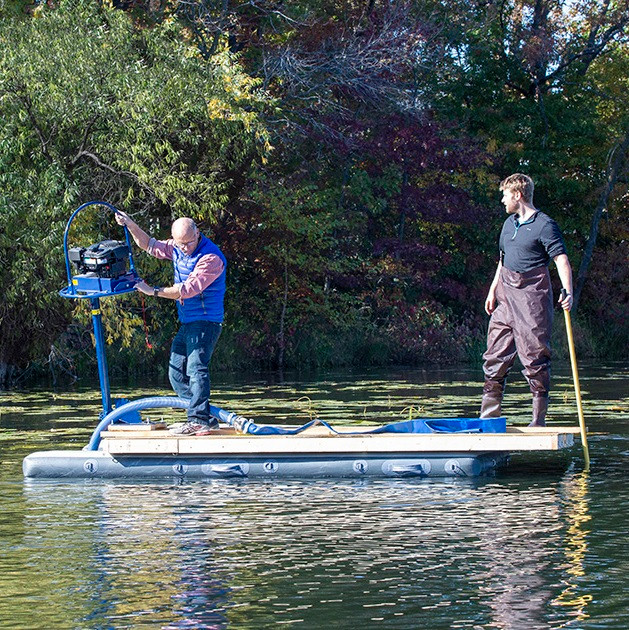
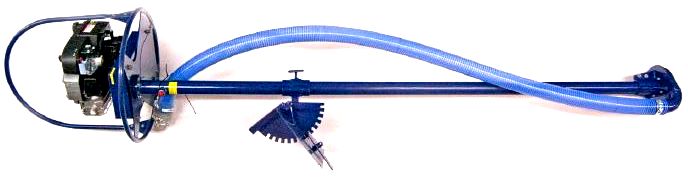
Mount the dredge to a stable raft, boat, pontoon, or other suitable floating platform. The adjustable mount lets the operator position the intake over soft lake or pond sediment and set the cleaning depth and angle of attack.
An integrated mill processes reed roots and other aquatic plant waste entering the intake so the material travels through the discharge system with the water-and-sediment slurry.

Remove the Sediment From the Area Instead of Only Disturbing It
Take Muck and Organic Buildup Out of the Treatment Area
Rakes, cutters, blowers, and circulation equipment serve different waterfront jobs. A suction dredge is designed for situations where the goal is to physically transfer soft bottom material away from the area being restored.
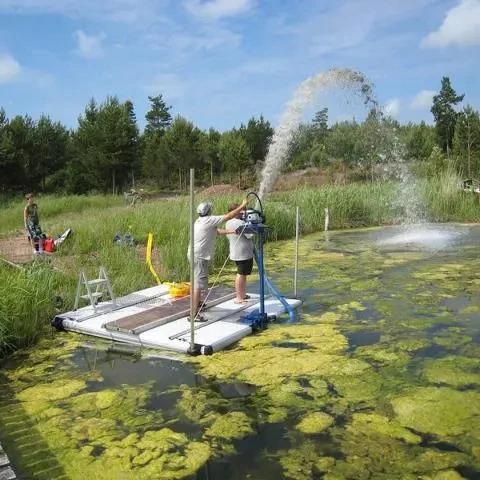
The centrifugal pump draws water, muck, sludge, silt, mud, decaying vegetation, and other pumpable organic material into the intake. The resulting slurry moves through the discharge hose to a separate containment or disposal location.
This makes the system useful for targeted cleanup around swimming areas, docks, boat slips, coves, pond edges, and other waterfront zones where accumulated soft sediment has reduced usable depth or created an undesirable bottom.
Soft Muck & Sludge
Loose organic bottom buildup is the primary material this dredge is designed to remove.
Rooted Plant Waste
The integrated mill helps process reed roots, decaying weeds, and other aquatic plant material entering the pump.
Silt & Mud
Fine pumpable sediment and mud move through the system when conditions stay within the dredge's operating limits.
Targeted DIY Dredging
The compact system provides an alternative for targeted areas where bringing large excavation equipment to the shoreline is impractical.
Compare other lake and pond suction dredging machines or browse muck and sludge removal tools from Weeders Digest.
What's Included
What Comes With the Portable Suction Dredge?
The base system includes the dredging equipment and primary discharge connection components. Select the shaft length and discharge-hose configuration needed for your site using the product options above.
Dredge Pump & Engine
190cc Briggs & Stratton Professional Series 4-stroke gas engine paired with the centrifugal dredge pump and integrated mill assembly.
Variable Mounting Assembly
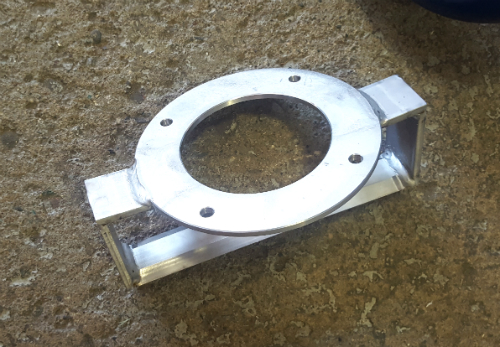
The adjustable mount secures the dredge to a suitable flat mounting surface and lets the operator change intake depth and attack angle.
Selected Shaft Length
Choose a 6-foot, 8-foot, or 10-foot shaft configuration based on the floating platform and operating depth.
10-Foot Transparent Hose Stub
A clear 10-foot connection hose links the dredge outlet to the selected discharge-hose system.
One Cam Lock Coupling
One Cam Lock coupling is included for the discharge connection.
Optional Bottom Softening Knife
Select the Bottom Softening Knife separately when the site has firmer pumpable sediment that benefits from loosening before suction.
Bottom Conditions
What Bottom Material Does This Dredge Handle?
Performance depends heavily on what is sitting on the lake or pond bottom. The pump works best when the material mixes readily with water and travels through the suction and discharge system as a slurry.
Best Applications
- Soft organic muck
- Sludge
- Soft mud
- Silt
- Decaying aquatic vegetation
- Reed roots and other pumpable plant waste
- Loose organic sediment
Use Caution or Choose Another Method
- Hard-packed clay
- Dense compacted mineral bottom
- Large continuous volumes of sand
- Rock-heavy bottom areas
- Stones larger than approximately 1 inch
- Material that does not form a pumpable slurry
Hard-Packed Clay
The Portable Suction Dredge is not designed to excavate hard-packed clay. Dense clay does not enter the pump as readily as loose organic sediment and should not be treated as a normal dredging application.
Sand
Some sand will move through the system during normal dredging, but sand is abrasive. Pumping large volumes of sand accelerates wear on internal pump parts, the mill, hose, and other components.
Rocks and Stones
Material around 1 inch represents the practical upper rock size described for the system. Repeated rock ingestion increases wear. Larger stones should stay out of the intake path.
Firmer Sediment
For bottom material that is firmer than normal muck but still pumpable, the optional Bottom Softening Knife helps disturb the surface ahead of suction.
Specifications
Portable Suction Dredge Specifications
| Product Type | Portable gas-powered lake and pond suction dredge |
|---|---|
| Primary Use | Physical removal of muck, sludge, silt, mud, plant waste, and pumpable organic sediment |
| Engine | 190cc Briggs & Stratton Professional Series 4-stroke gas engine |
| Pump Type | Centrifugal dredge pump with integrated mill |
| Approximate Water Throughput | 2,118 cubic ft./hr., approximately 15,800 gal./hr. |
| Approximate Sediment Throughput | Up to approximately 211 cubic ft./hr. under favorable conditions |
| Available Shaft Lengths | 6 ft., 8 ft., and 10 ft. |
| Mounting | Variable adjustable mount for a suitable flat surface on a stable raft, boat, pontoon, or floating platform |
| Recommended Operators | 2 people during normal dredging operation |
| Recommended Maximum Hose Length | Approximately 450 ft. |
| Maximum Lift Height | Approximately 78 ft. |
| Included Connection Hose | 10-ft transparent hose stub |
| Included Coupling | 1 Cam Lock coupling |
| Rock Handling | Material around 1 in represents the practical upper range. Repeated rock ingestion accelerates wear. |
| Sand | Small amounts occur during normal use, but heavy continuous sand pumping accelerates component wear. |
| Hard-Packed Clay | Not recommended |
| Optional Accessory | Bottom Softening Knife |
Setup & Operation
How to Set Up and Operate the Portable Suction Dredge
Successful dredging starts with a stable floating platform, the correct shaft length, controlled intake positioning, and a discharge route planned before pumping begins.
- Choose a stable floating platform.
Mount the dredge to a sturdy raft, boat, pontoon, or other suitable platform with enough stability for the engine, operators, mount, and discharge hose. - Select the correct shaft length.
Choose the 6-foot, 8-foot, or 10-foot configuration that places the intake at the working depth without creating an awkward operating angle. - Plan the discharge route.
Route the hose to an appropriate containment or disposal area before pumping begins. - Set the depth and intake angle.
Use the adjustable mount to hover the intake over or lightly into the soft sediment. Avoid burying the assembly into hard bottom material. - Begin in soft, pumpable sediment.
Start where muck, sludge, and organic sediment enter the pump easily. Avoid dense rocks, hard-packed clay, and unnecessary sand ingestion. - Operate with two people.
One operator manages the dredge pump and intake position. The second person controls the platform movement and helps manage the hose. - Move across the area systematically.
Work one manageable section at a time, then reposition the platform and intake to the next section. - Watch the discharge area.
Confirm the slurry reaches the planned containment or disposal location and does not immediately wash back into the water. - Inspect the equipment after use.
Check the intake, mill, pump components, hose, couplings, and wear surfaces for damage or abrasion.
Pump & Mill
How the Dredge Pump and Integrated Mill Work Together
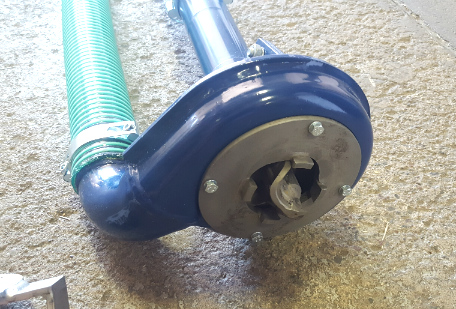
The centrifugal pump pulls water and sediment from the bottom while the integrated mill sits at the working end of the dredge.
As reed roots, weed fragments, and similar organic material enter the intake, the mill helps break down the plant waste before the material travels through the discharge line.
This design is useful in waterfront areas where muck and decaying vegetation occur together. Instead of treating the root and plant material as a separate cleanup step, the pump and mill work as one dredging system.
The mill is still a wear component. Sand, rocks, and hard debris increase abrasion and mechanical stress, so the intake area should be managed carefully.
Hose & Accessories
Configure the Dredge for Your Shoreline
Shaft length, hose length, lift, and bottom conditions all affect how the dredge performs. Plan the entire work path from the intake location to the sediment disposal area before selecting options.
Bottom Softening Knife
The optional Bottom Softening Knife helps loosen firmer sediment ahead of the intake. It also provides added protection around the dredge blade area when larger debris or rocks occur near the work zone.
The attachment is intended for material that needs some loosening but still remains suitable for suction dredging. It does not turn the pump into an excavator for hard-packed clay.
6-Foot Shaft
Choose the shorter shaft when the floating-platform height and dredging depth suit the 6-foot configuration.
8-Foot Shaft
Provides additional reach for deeper operating areas or taller mounting positions.
10-Foot Shaft
Provides the longest available shaft configuration for deeper working positions.
Up to 450 Feet of Hose
The recommended maximum discharge-hose run is approximately 450 feet.
Up to 78 Feet of Lift
Elevation between the dredge and discharge location affects output. The listed maximum lift height is approximately 78 feet.
Extra Quick Couplings
Additional couplings simplify dividing a long discharge run into shorter hose sections for setup, transport, inspection, and cleaning.
Permits & Disposal
Plan the Permit and Sediment Disposal Before Dredging
Suction dredging physically excavates sediment from the bottom. Because this changes the lake, pond, river, stream, wetland, or shoreline bottom, regulatory requirements differ from those for simple hand raking or cutting.
Before Starting Work
- Determine whether the waterbody is regulated as public water, wetland, river, stream, or another protected water resource.
- Confirm state and local dredging requirements.
- Check federal requirements where applicable.
- Determine where the dredged slurry and solids will be contained.
- Keep removed sediment from washing directly back into the cleaned area.
- Check rules covering disposal, dewatering, wetlands, shoreland, and neighboring property.
Minnesota customers should review the Minnesota DNR Public Waters Work Permit Program before using a suction dredge.
FAQs
Portable Suction Dredge FAQs
What does this portable suction dredge remove?
The dredge is designed for soft muck, sludge, mud, silt, loose organic sediment, decaying plant material, reed roots, and other pumpable bottom material.
Does the dredge actually remove the sediment?
Yes. The pump transfers a mixture of water and bottom sediment through the discharge hose to a separate containment or disposal location. The material leaves the area being cleaned instead of only being stirred within the water.
How powerful is the dredge?
The system uses a 190cc Briggs & Stratton Professional Series 4-stroke gas engine. Under favorable conditions, listed output is approximately 15,800 gallons of water per hour with up to approximately 211 cubic feet of sediment per hour.
What shaft lengths are available?
The Portable Suction Dredge is available with 6-foot, 8-foot, and 10-foot shaft configurations.
How far away does the dredge discharge material?
The recommended maximum discharge-hose length is approximately 450 feet. Output depends on hose length, elevation, sediment concentration, and operating conditions.
What is the maximum lift height?
The listed maximum lift height is approximately 78 feet.
Does the dredge remove hard-packed clay?
No. Hard-packed clay is not the intended application. The system performs best on soft, pumpable muck, sludge, silt, mud, and organic sediment.
Does the dredge pump sand?
Some sand will travel through the system during normal dredging, but large amounts of sand are abrasive and accelerate wear on the pump, mill, hose, and internal components. Heavy sand removal is not the intended application.
How large of a rock goes through the pump?
Material around 1 inch represents the practical upper rock range listed for the system. Repeated rock ingestion increases wear, and larger stones should stay outside the intake path.
What does the integrated mill do?
The mill helps break down reed roots, weed fragments, and other pumpable aquatic plant material before the slurry travels through the discharge line.
How many people are needed to operate the dredge?
Two people are recommended during normal dredging. One operator manages the dredge intake and pump while the second person controls platform movement and helps manage the discharge hose.
What does the dredge mount to?
The variable mounting system attaches to a suitable flat surface on a stable raft, boat, pontoon, or other appropriate floating platform.
What comes with the dredge?
The system includes the dredge pump and 190cc engine, variable mounting assembly, selected shaft configuration, a 10-foot transparent connection hose, and one Cam Lock coupling. Hose length and the optional Bottom Softening Knife are selected through the product options.
What is the Bottom Softening Knife for?
The optional knife loosens firmer pumpable sediment ahead of the intake and provides added protection around the dredge blade area from larger rocks and debris.
Does the Bottom Softening Knife let the dredge remove hard clay?
No. The attachment helps with firmer sediment that still remains suitable for suction dredging. Hard-packed clay is outside the normal operating application.
Why use a suction dredge instead of a lake rake?
A rake collects weeds and loose debris near the bottom or surface. A suction dredge physically pumps soft accumulated sediment and organic material through a discharge hose to another location.
How does this compare with using an excavator?
The Portable Suction Dredge targets water areas from a floating platform without bringing full-size earthmoving equipment onto the shoreline. The discharge hose also lets you route the slurry to a planned containment or disposal area.
Where should the dredged sediment go?
Route the slurry to a legal containment, dewatering, or disposal location where the removed material does not immediately wash back into the waterbody. Disposal rules differ by location.
Do I need a permit to use the dredge?
Dredging and excavation regulations depend on the waterbody and location. Minnesota public-water dredging generally requires review through the DNR Public Waters Work Permit program. Other state, federal, watershed, and local approvals also apply in some situations.
How quickly does the dredge remove sediment?
Listed sediment throughput is up to approximately 211 cubic feet per hour under favorable conditions. Actual production changes with sediment type, concentration, hose distance, lift height, bottom conditions, and operator technique.
What maintenance should I perform after dredging?
Inspect the intake, integrated mill, pump internals, discharge hose, Cam Lock connections, mounting hardware, and other wear areas. Sand, stones, roots, and debris increase wear, so regular inspection is important.
Shipping
Portable Suction Dredge Shipping
Videos
See the Portable Suction Dredge in Action
Watch the gas-powered dredge operate from a floating platform and see how the system moves water, muck, sediment, and organic bottom material through the discharge line.
Heavy-Duty Portable Gas-Powered Aquatic Dredge

Shipping Note: Please allow 5 business days for processing and handling of this oversized item before it ships. You will receive an automated email with tracking information as soon as your order is on its way.
1 Review
-
Very good product
I was not entirely sure what to expect because the pump looks rather small. When we got it put together and started it’s very very good . Much better than I expected
Related Products


