

The Physics of Weed Blasters: Dislodging Debris Without Harming Your Lake's Substrate
 |

Summary:
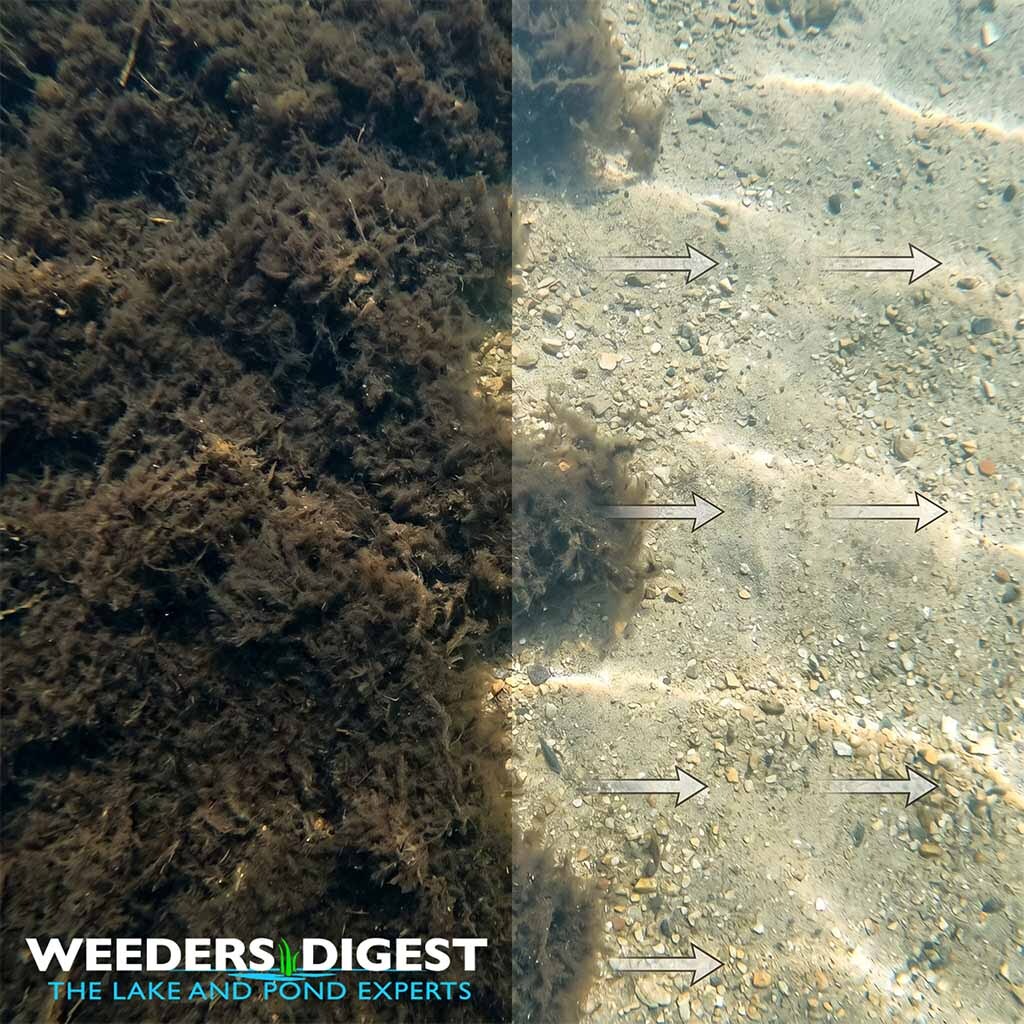
The physics of weed blasters relies on generating a calibrated, horizontal water current that is strong enough to blow away lightweight organic muck but gentle enough to leave the heavier sand and gravel untouched. These devices, frequently referred to as aquatic thrusters or benthic blowers, function by pushing a steady, sweeping flow of water along the bottom of a lake or pond. Because decaying organic matter—such as dead aquatic weeds, algae, and fallen leaves—is highly buoyant and fluffy, it takes very little water force to lift it and push it into deeper areas. In stark contrast, the underlying mineral substrate composed of rock, sand, or gravel is exceptionally dense, requiring a significantly stronger current to be disturbed or washed away.
In my years as a Certified Lake Manager, I have seen property owners completely transform their waterfronts simply by utilizing this basic principle of physics; standing on the shoreline, you can actually watch the dark, silty debris effortlessly roll away into the deeper water, revealing a pristine, hard sandy bottom that was buried underneath all along. The technology is remarkably straightforward yet elegant, relying entirely on the natural differences in weight between varying aquatic materials.
When an aquatic weed blaster is turned on, its propeller generates a directed stream that travels horizontally along the pond floor. As the water moves, it creates gentle friction against the very bottom layer, peeling away the loose, unconsolidated debris. The result is a clean swimming, wading, or boating area that maintains its vital structural integrity. It is an environmentally sound mechanical process that selectively sorts the bottom sediment, taking advantage of fluid dynamics to clear out the nuisance debris without physically scraping or harming the natural lakebed.
The Science Behind It:
The operational mechanics of aquatic thrusters are governed by fluid dynamics and the principle of critical shear stress within the benthic boundary layer. The benthic boundary layer is the specific water zone immediately above the sediment-water interface where flowing water experiences drag and friction against the bottom. When water moves across this boundary, it exerts a horizontal tractive force known as shear stress. For any particle to be dislodged and resuspended into the water column, the fluid's applied shear stress must mathematically exceed the particle's specific critical shear stress. Because the critical shear stress is determined by a particle's specific gravity, size, and cohesiveness, distinct and calculable flow thresholds exist for different sediment types.
Organic muck, composed of both autochthonous materials (like internally decaying aquatic plants) and allochthonous materials (such as external wind-blown leaves), is highly flocculent and water-laden. Geologists formally define mineral sand as hard, structural particles larger than 62 microns in diameter, whereas organic muck—categorized as gyttja or sapropel—is dominated by lightweight, gel-like particulate organic matter that lacks structural density (Hoyer et al., 2017). Due to its exceptionally low specific gravity and high moisture content, the critical shear stress required to mobilize this organic detritus is remarkably low. Conversely, the dense, crystalline matrix of mineral sand or gravel demands a substantially higher applied shear stress to initiate bedload transport. By generating a highly specific and limited flow velocity, an aquatic weed blaster capitalizes entirely on this wide gap in critical transport thresholds.
Laboratory and field studies have rigorously quantified these strict hydrodynamic boundaries. Research assessing sediment-to-water fluxes found that the resuspension of basal sediments becomes initially detectable at specific bottom shear velocities ranging from 0.95 to 1.35 cm/s (Wainright, 1990). By engineering an aquatic thruster to produce a laminar flow that maintains a localized shear velocity just above this lower threshold, the device can effectively mobilize unconsolidated organic matter while remaining safely below the velocity required to scour or transport the heavier mineral sands. The fluid momentum selectively lifts the lighter organic flocs into the water column, where ambient lake currents can carry them offshore, leaving the mineral framework of the lakebed completely intact and undisturbed.
Furthermore, this controlled hydrodynamic disturbance plays a critical role in the localized biogeochemical cycling of the lakebed. Studies on the effects of water circulation over aquatic sediments indicate that engineered flow velocities significantly alter the vertical concentration gradients of nutrients within the sediment layer, actively accelerating the release and flushing of trapped ammonia and nitrates from the porewater into the overlying water column (Cheng et al., 2016). Therefore, the applied physics of a weed blaster does more than physically clear debris; it fundamentally alters the micro-environment of the substrate. By stripping away the anaerobic, nutrient-dense muck layer without physically eroding the underlying mineral bed, the engineered flow reduces localized oxygen demand and disrupts the cycle of concentrated nutrient loading that fuels future aquatic weed regrowth.
Sources / References:
- Cheng, X., Zhu, D., Wang, X., Yu, D., & Xie, J. (2016). Effects of nonaerated circulation water velocity on nutrient release from aquaculture pond sediments. Water, 9(1), 6. https://doi.org/10.3390/w9010006 (Cited by: 16)
- Hoyer, M. V., Canfield Jr., D. E., & Brenner, M. (2017). A beginner's guide to water management—Muck: Causes and corrective actions. EDIS, 2017. https://doi.org/10.32473/edis-fa200-2017 (Cited by: 3)
- Wainright, S. C. (1990). Sediment-to-water fluxes of particulate material and microbes by resuspension and their contribution to the planktonic food web. Marine Ecology Progress Series, 62, 271–281. https://doi.org/10.3354/meps062271 (Cited by: 203)