


Why Does All the Junk End Up on My Shore? Understanding Lake Debris and Wind
 |

Summary:
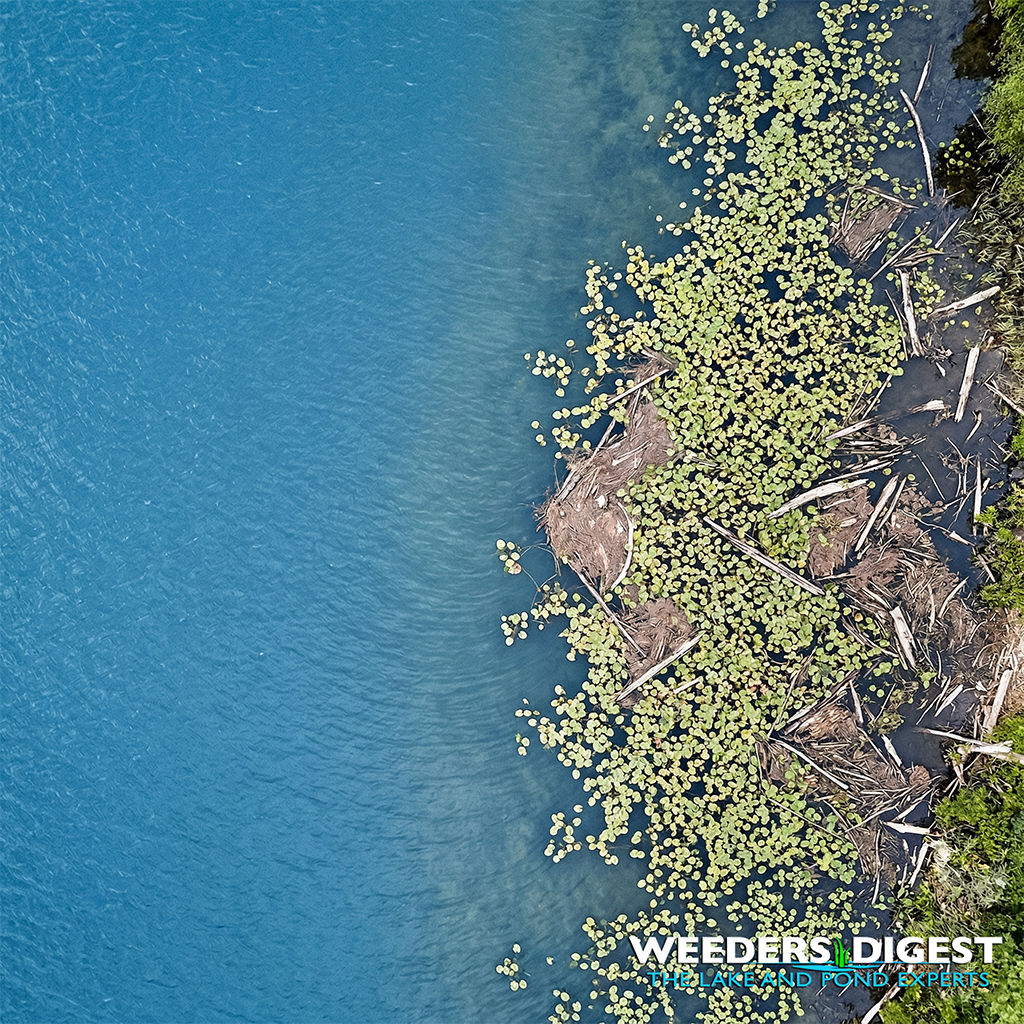
If you have ever walked out to your dock only to find a thick mat of lily pads, sticks, and plastic bottles hugging your shoreline while your neighbor across the lake has crystal clear water, you aren't just having a run of bad luck. This phenomenon is almost entirely driven by the prevailing winds and the unique shape of your lake's shoreline. Wind acts as a giant conveyor belt for anything floating on the surface, pushing surface water—and everything in it—toward the "lee" side of the lake.
When the wind blows consistently from one direction, it creates a surface current that carries buoyant materials across the open water. As this water hits the shore, the debris has nowhere else to go. It becomes trapped in the shallow margins, tangled in aquatic plants, or pushed up onto the sand. This is why certain properties seem to be "magnets" for lake muck and driftwood while others remain pristine; it is all about your position relative to the wind's path.
The shape of your specific shoreline also plays a massive role. Points of land that stick out into the water or small, recessed coves can act like "catch-alls" that funnel debris into a concentrated area. Once the wind pushes the debris into these pockets, the lack of circulating water keeps it there until the wind direction shifts significantly. Understanding these patterns is the first step in managing your waterfront effectively.
The Science Behind It:
The accumulation of organic and inorganic debris on specific shorelines is a result of wind-induced surface drift and the subsequent development of Langmuir circulation cells. When wind stress is applied to the surface of a standing body of water, it imparts momentum to the upper layer, typically moving at approximately 3% of the wind speed. This movement creates a horizontal transport of buoyant macrophyte fragments, filamentous algae, and anthropogenic litter toward the downwind or leeward shore. This process is governed by the principles of fluid dynamics where the "fetch"—the linear distance of open water over which wind blows—determines the energy and volume of debris transport.
As the surface water is pushed toward the leeward shore, it eventually encounters the terrestrial boundary, causing a localized rise in water level known as wind setup. Because the water cannot continue forward, it must sink or move laterally, but the floating debris remains trapped at the surface due to its buoyancy. Research conducted on lake hydrodynamics indicates that these areas of convergence become sinks for nutrient-rich organic matter. According to studies on coastal and lacustrine transport, the morphology of the shoreline, such as "concave" embayments, significantly increases the retention time of this material by reducing the velocity of return currents that might otherwise flush the area.
Furthermore, the interaction between wind and the lake's thermal stratification can influence debris deposition. In many temperate lakes, the wind-driven surface layer, or epilimnion, moves independently of the deeper, colder hypolimnion. Scientific observations published in ecological journals note that persistent winds can lead to the "piling up" of warm surface water on the downwind side, which carries with it the highest concentrations of dissolved organic carbon and floating biomass. This creates a localized ecological zone where decomposition rates are often higher due to the concentrated volume of organic inputs.
The physical entrapment is often exacerbated by the presence of emergent and submergent vegetation. Aquatic plants act as biological filters, physically snagging debris as it is pushed shoreward. Once the material is entangled in the littoral zone, it undergoes mechanical breakdown and contributes to the "muck" layer. Hydrodynamic modeling shows that unless there is a reversal in wind direction or a significant storm event to create high-energy wave action, the debris remains sequestered in these downwind zones, fundamentally altering the sediment composition and nutrient loading of that specific shoreline compared to the upwind or windward side.