


Why Does Your Canal Smell So Different From My Open Lake?
 |

Summary:
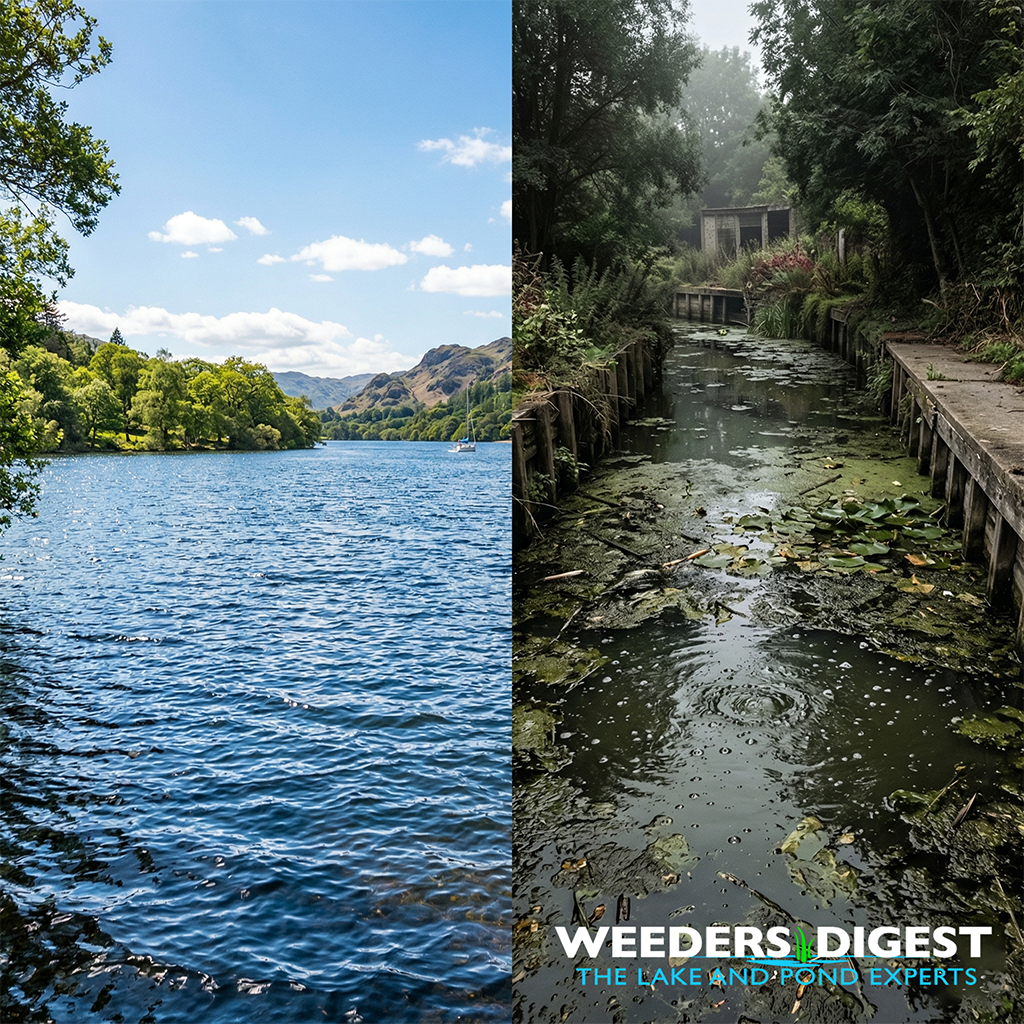
If you have ever walked by a stagnant canal and noticed a scent reminiscent of rotten eggs or decaying garbage, you aren't imagining things. That pungent aroma is vastly different from the crisp, earthy, or even "fishy" scent of an open lake. The primary reason for this discrepancy is a lack of movement. In an open lake, wind and waves act like a giant lung, constantly pushing oxygen into the water and keeping it fresh. In a narrow, dead-end canal, the water sits still, allowing organic debris like grass clippings, leaves, and fish waste to pile up on the bottom.
When this organic "muck" accumulates without enough oxygen to break it down properly, a different set of bacteria takes over the decomposition process. These specialized microbes thrive in environments where oxygen is absent, and their digestive process releases gases that are far more offensive to the human nose than those found in healthy, flowing water. It is essentially a battle between aerobic and anaerobic processes, and in a stagnant canal, the "smelly" anaerobic side is winning.
Furthermore, the physical structure of a canal often traps heat and pollutants more effectively than a wide-open body of water. Shallower depths mean the water warms up faster, which further depletes oxygen and accelerates the decay of organic matter. While a lake has the benefit of "fetch"—the distance wind travels over water to create waves—your canal is shielded, leading to a thermal and chemical environment that acts more like a compost pile than a waterway.
The Science Behind It:
The primary driver of the distinct odor in stagnant canals is the shift from aerobic to anaerobic decomposition within the benthic zone. In open lacustrine environments, dissolved oxygen (DO) levels are typically maintained through atmospheric diffusion and photosynthetic activity. This allows aerobic bacteria to oxidize organic matter into odorless byproducts like carbon dioxide and water. However, in restricted lotic systems or stagnant canals, the rate of oxygen consumption by decomposing organic matter often exceeds the rate of re-aeration. According to research published in Water Research, when DO concentrations fall below $2 \text{ mg/L}$, the system enters a state of hypoxia or anoxia.
In these anoxic conditions, facultative and obligate anaerobic bacteria utilize alternative electron acceptors for respiration. One of the most prevalent processes is sulfate reduction, where bacteria such as Desulfovibrio convert sulfates into hydrogen sulfide ($H_2S$). This gas is highly volatile and is the primary culprit behind the "rotten egg" smell characteristic of stagnant waters. Additionally, the decomposition of nitrogenous organic matter under these conditions can lead to the production of ammonia ($NH_3$) and volatile organic compounds (VOCs) like cadaverine and putrescine, which contribute to a "fleshy" or putrid scent.
The physical morphology of a canal significantly exacerbates these chemical shifts. Canals often exhibit high "residence time," meaning the water does not flush out frequently. This leads to the accumulation of autochthonous and allochthonous organic carbon. Research highlighted by the University of Florida IFAS notes that stagnant water bodies often experience thermal stratification where a warm top layer (epilimnion) prevents the mixing of oxygen into the cooler, denser bottom layer (hypolimnion). In an open lake, the "fetch" or surface area allows for significant wind-driven mixing, which breaks this stratification and oxygenates the entire water column.
Biological factors also play a role through the production of secondary metabolites. In the nutrient-rich, still waters of a canal, cyanobacteria (blue-green algae) thrive. Many species of cyanobacteria and actinomycetes produce earthy-smelling compounds such as geosmin and 2-methylisoborneol (MIB). While these are also present in open lakes, their concentration is often much higher in stagnant systems due to the lack of dilution and the concentration of nutrients like phosphorus and nitrogen that fuel "blooms." Consequently, the olfactory profile of a canal is a complex cocktail of reduced sulfur compounds, ammonia, and concentrated algal metabolites.