


Why My Favorite Fishing Spots Are Always on the Edge of the Weeds
 |
Summary:
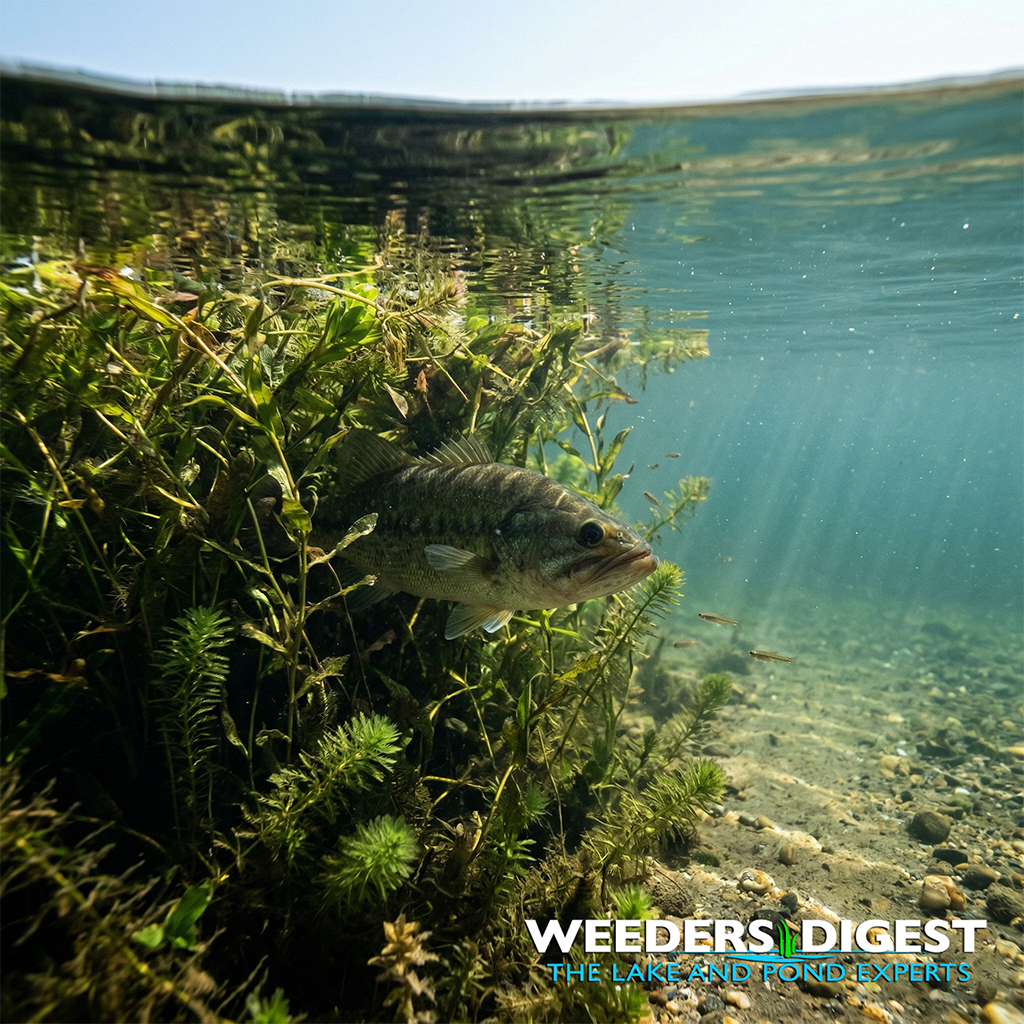
If you have ever spent a summer afternoon on your dock or in a boat, you have likely noticed that the biggest fish always seem to be lurking right where the thick underwater plants meet the open water. This isn’t a coincidence; it is a calculated survival strategy. Predatory fish like Largemouth Bass or Northern Pike treat these weed edges like a tactical ambush point. They use the dense vegetation as a camouflage screen, allowing them to remain invisible to smaller prey swimming in the clear water just inches away.
The weed line acts as a natural "edge environment" that offers the best of both worlds. Inside the weeds, the water is often cooler and packed with tiny organisms, but the density makes it hard for a large fish to move quickly. By hugging the very edge, these predators gain a high-speed runway. They can dart out into the open to grab a meal and then disappear back into the shadows before a larger predator or a rival even knows they were there.
For homeowners and pond enthusiasts, understanding this behavior helps explain the balance of your waterfront ecosystem. These edges are the "highways" of the lake. While the center of a weed bed might be too thick for a trophy fish to navigate comfortably, the perimeter provides the perfect blend of structural protection and hunting efficiency. It is the aquatic equivalent of a lion hiding in the tall grass at the edge of a watering hole.
Ultimately, these fish are looking for the path of least resistance that yields the highest reward. The transition zone between plants and sand or deep water creates a distinct visual and physical boundary. By staying on this line, fish can monitor two different habitats simultaneously, ensuring they stay fed while expending as little energy as possible.
The Science Behind It:
In limnology and aquatic ecology, the phenomenon of predatory fish congregating at the boundary of vegetation is known as the "edge effect" within an ecotone. Research conducted by Smith et al. in the Journal of Freshwater Ecology indicates that structural complexity directly dictates the foraging efficiency of piscivorous fish. In high-density macrophyte beds, the visual field of a predator is severely restricted, and the physical stems create "interstitial friction" that hampers burst swimming speeds. Consequently, the edge of the weed line represents an optimal foraging point where the predator can exploit the high prey density of the littoral zone without the mechanical constraints of dense plant biomass.
The "Edge-Mediated Predation" theory suggests that transition zones provide a significant tactical advantage regarding the light environment and contrast. Predatory species, such as Micropterus salmoides (Largemouth Bass), possess physiological adaptations for ambush hunting, including specialized lateral line systems that detect low-frequency vibrations. By positioning themselves at the vegetation interface, these teleost fish utilize the shadows cast by macrophytes to break up their silhouette—a concept known as disruptive coloration. This allows them to maintain a "low-conspicuity" status while observing prey in the more illuminated pelagic or open-water zones.
Furthermore, dissolved oxygen (DO) gradients play a critical role in this spatial distribution. According to studies published via University Extension programs, extremely dense weed beds can undergo nocturnal hypoxia, where oxygen levels plummet as plants respire. The edge of the weed line often maintains more stable DO levels due to increased water mixing and fetch from the open lake. This creates a physiological "comfort zone" where the metabolic demands of large-bodied predators are met more consistently than in the stagnant interior of a weed mat.
The specific architecture of the weed line—often composed of species like Potamogeton (pondweeds) or Myriophyllum (milfoil)—creates a vertical wall that concentrates prey. Forage fish, such as bluegill or minnows, frequently travel along these margins to navigate between feeding grounds. This predictable movement of biomass creates a "conveyor belt" of energy for the predator. By remaining stationary at these junctions, predators maximize their net energy gain, minimizing the caloric expenditure required for searching while maximizing the success rate of short-distance, high-velocity strikes.