


Why My Favorite Local Lake Just Became a Giant Rest Stop for Migrating Birds
 |
Summary:
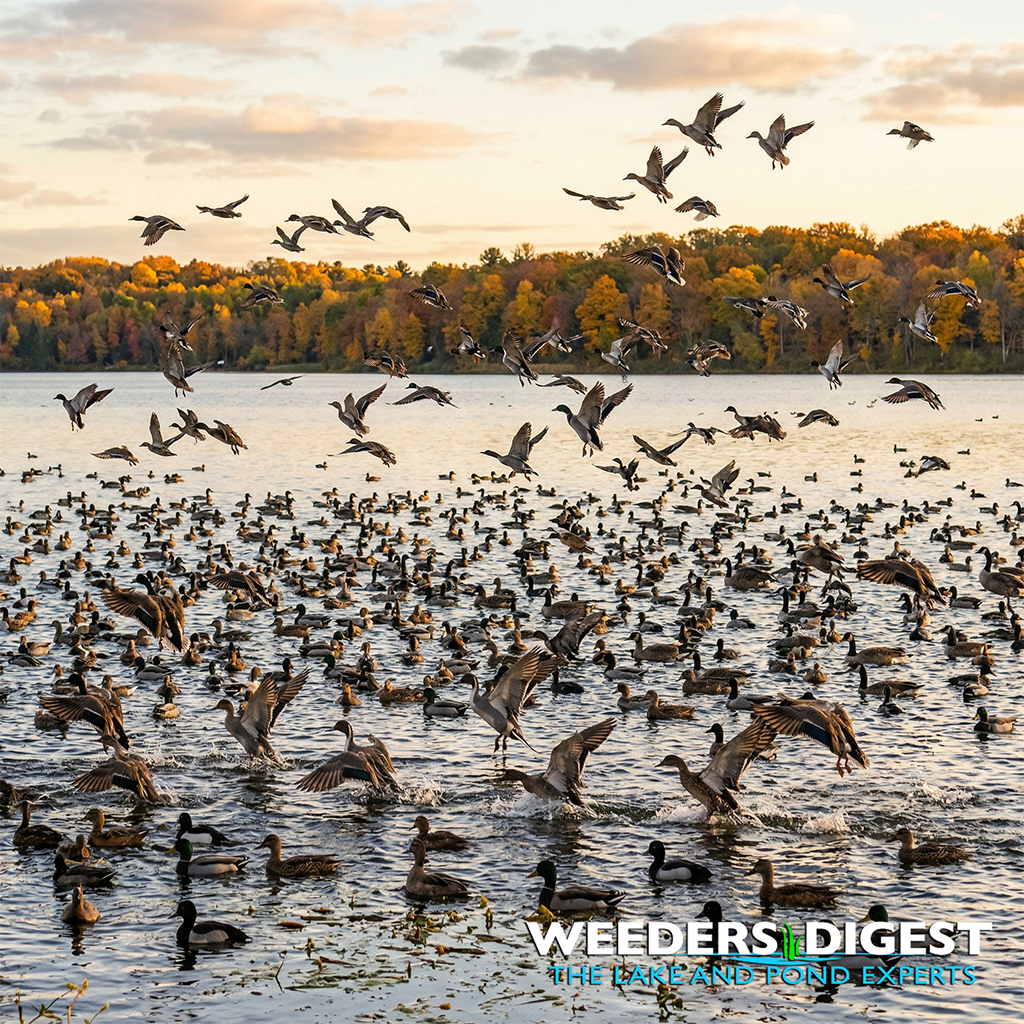
If you have ever woken up to find your quiet backyard pond or local lake suddenly teeming with hundreds of ducks, geese, or swans, you have witnessed one of nature’s most impressive logistical feats. These birds aren't just picking a spot at random; they are choosing your lake because it meets a very specific set of criteria required for their survival. Think of your lake as a high-end "refueling station" on a transcontinental highway. After flying hundreds of miles, these birds are exhausted and need a safe place to rest their wings and replenish their energy stores.
The sudden arrival of these massive flocks is usually triggered by a combination of weather patterns and the specific "amenities" your water body offers. During the spring and fall, cold fronts or favorable wind conditions push large groups of birds south or north simultaneously. When they see a body of water that looks deep enough for safety but shallow enough to provide easy access to aquatic plants and insects, they drop out of the sky in droves.
It can be a bit overwhelming to see so many birds at once, especially given the noise and the mess they can leave behind. However, their presence is actually a compliment to the health of the ecosystem. Migrating birds are highly selective; they look for water that isn't too disturbed by human activity and has a healthy enough balance of nutrients to support the high-protein snacks they need for the next leg of their journey.
Essentially, your lake has become a critical link in a chain that stretches across the hemisphere. While they might only stay for a few days or a couple of weeks, their visit is timed perfectly with the seasonal shifts in temperature and food availability. Once they have regained their strength and the wind turns in their favor, they will disappear just as quickly as they arrived, continuing their trek to distant breeding or wintering grounds.
The Science Behind It:
The phenomenon of mass avian stopovers at specific lacustrine environments is governed by the principles of optimal foraging theory and stopover ecology. Migratory birds, particularly waterfowl (Anseriformes), operate under intense physiological pressure to minimize the time spent in transit while maximizing energy acquisition. Research indicates that the selection of a specific lake is rarely incidental; rather, it is a response to "landscape-scale" cues and the specific limnological characteristics of the water body. Large-scale weather systems, such as the passage of a cold front characterized by North or Northwesterly winds in the fall, facilitate mass movements of "pulses" of birds that must eventually seek refuge to avoid exhaustion.
Stopover sites serve as critical "energy bridges" where birds must replenish lipid and protein reserves. According to studies published in journals such as The Journal of Wildlife Management, the density of submerged aquatic vegetation (SAV) and the abundance of benthic macroinvertebrates are primary drivers for bird concentrations. Lakes with high structural complexity—meaning a mix of open water for predator evasion and shallow littoral zones for foraging—provide the ideal habitat. The presence of specific taxa, such as Potamogeton species (pondweeds), often dictates the carrying capacity of a stopover site for species like the Canvasback or Redhead duck.
Furthermore, the "social attraction" hypothesis suggests that migrating flocks utilize the presence of other birds as a visual proxy for habitat quality. When initial "scout" groups land on a nutrient-rich lake, their presence signals to subsequent high-flying flocks that the site is safe and resource-abundant. This leads to an exponential increase in bird density over a very short period. This clustering behavior is a strategic adaptation to reduce individual predation risk through the "dilution effect," allowing the birds to spend more time feeding and less time in a state of high-alert vigilance.
The chemical and physical properties of the water also play a role in site selection. High-turbidity lakes or those undergoing severe eutrophication may be avoided if the water clarity prevents visual foragers from locating food sources. Conversely, lakes with balanced nutrient loading that support a diverse food web are highly attractive. As noted by university extension research on wetland ecology, the loss of these specific high-quality "rest stops" due to coastal development or poor water management can lead to increased mortality rates during migration, as birds are forced to fly longer distances without adequate refueling, leading to a depletion of endogenous reserves.