


Why Your Lake is Losing the Battle Against Hydrilla: The Biology Behind the Ultimate Super-Weed
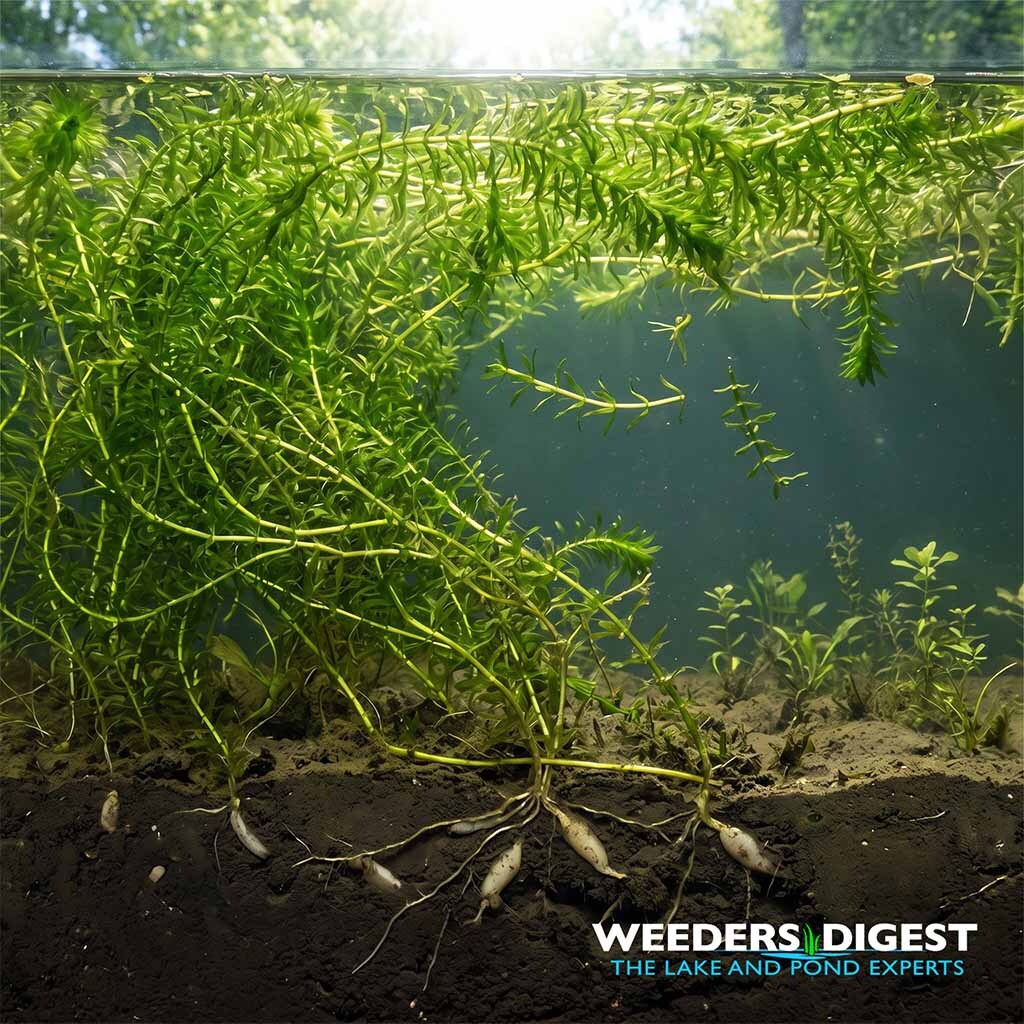

Summary:
Hydrilla verticillata is an aggressively invasive aquatic plant that dominates freshwater ecosystems due to its explosive growth rate and its ability to rapidly reproduce through highly resilient underground tubers and floating stem fragments. For lakes and ponds, this means that even a single microscopic piece of the plant introduced by a boat propeller or a bird can quickly multiply into thousands of pounds of dense, impenetrable vegetation that chokes out native wildlife and halts recreational activities. Instead of relying primarily on seeds to spread, hydrilla has evolved to clone itself relentlessly, making traditional removal methods like cutting or pulling incredibly difficult and often counterproductive.
In my years working on the water as a Certified Lake Manager, I have seen pristine, deep-water coves completely transformed by hydrilla mats in just a single summer. We frequently get emergency calls from homeowners who tried to manually rake the weeds away, only to find the infestation doubled in size a month later. When you pull this plant apart, you are actually triggering its primary mode of reproduction. Every snapped stem acts as a seed, drifting away to settle in a new spot and begin the cycle all over again, creating an endless loop of frustration for waterfront property owners.
Understanding this super-weed is the first step in reclaiming your water body, as it requires a targeted, scientific approach rather than brute force. Because the plant leaves thousands of dormant energy reserves buried deep in the mud, clearing the visible green canopy is only addressing a fraction of the problem. True management requires starving the underwater root structures and interrupting the vicious reproductive cycle before it can establish a permanent foothold in your local ecosystem.
The Science Behind It:
Hydrilla verticillata is an obligate submersed macrophyte, meaning it requires a completely underwater environment to survive, though its stems rapidly stretch upward to form dense canopies at the water's surface. While some biotypes are capable of sexual reproduction via flowering, hydrilla primarily spreads through vegetative fragmentation and the production of specialized, asexual reproductive structures called hibernacula. When any stem fragment containing at least one node—the point on the stem where leaves attach—is severed, it can develop adventitious roots and establish an entirely new, independent colony. This morphological adaptation ensures that mechanical disturbances, such as grazing wildlife or aquatic harvesting machines, actively facilitate the plant's dispersal across wide aquatic ranges.
The sheer velocity of this vegetative expansion is a primary driver of the plant's dominance. Historically, limnologists believed that hydrilla grew at a maximum rate of one inch per day. However, research conducted by Glomski and Netherland (2012) and published through the University of Florida Institute of Food and Agricultural Sciences (UF/IFAS) documented a drastically different reality. Their study demonstrated that a single five-inch cutting of hydrilla rooted and expanded three-dimensionally by forming hundreds of lateral branches, stolons (horizontal above-ground stems), and new vertical stems. Collectively, this expansion resulted in up to 191 inches of new growth per day from that single fragment. This exponential biomass production enables hydrilla to outcompete native aquatic vegetation for space and photosynthetically active radiation (sunlight).
Beyond surface fragmentation, hydrilla utilizes turions and tubers to survive harsh environmental variables such as freezing temperatures, severe droughts, and chemical herbicide applications. Turions are compact, dark green axillary buds that form along the leaf axils of the plant's stem. When mature, they detach, drift in the water column, and settle into the benthic zone (the ecological region at the lowest level of a body of water) to overwinter and sprout. Meanwhile, tubers are larger, subterranean structures that develop at the terminal ends of rhizomes (underground lateral stems) buried deeply within the sediment. These starchy, potato-like nodules serve as massive carbohydrate reserves for the plant.
The quantitative output of these subterranean tubers is the primary reason eradication is scientifically arduous. According to data from the UF/IFAS Center for Aquatic and Invasive Plants, a single hydrilla tuber, once sprouted, can ultimately yield approximately 700 progeny tubers per square foot within a single growing season. This creates a hyper-dense subterranean bank of reproductive potential that remains entirely unaffected by standard aquatic vegetation management practices that only target the vegetative biomass in the water column.
Furthermore, this immense tuber bank possesses extraordinary biological longevity. Research published by Purdue University Agriculture highlights that hydrilla tubers can lie completely dormant but viable in undisturbed aquatic soils for over four years. They can withstand prolonged periods of desiccation if water levels drop, only to re-sprout vigorously once aquatic conditions stabilize. Because a low percentage of these tubers sprout continuously throughout the year rather than germinating all at once, the sediment acts as a persistent biological engine, virtually ensuring reinfestation unless long-term, systemic management protocols are strictly maintained over a period of multiple years.