

Why Your Lake’s Hidden "Submerged Islands" Are Changing—And Why I’m Worried for Your Propeller
Summary:
When you are out on the water, you likely think of islands as solid, permanent landmasses topped with trees and shoreline. However, many lakes contain what we call "submerged islands," which are essentially underwater hills or plateaus that don't quite break the surface. Some of these are natural geological formations, while others are the result of man-made reservoirs where the land was flooded but the highest peaks remained just beneath the water line.
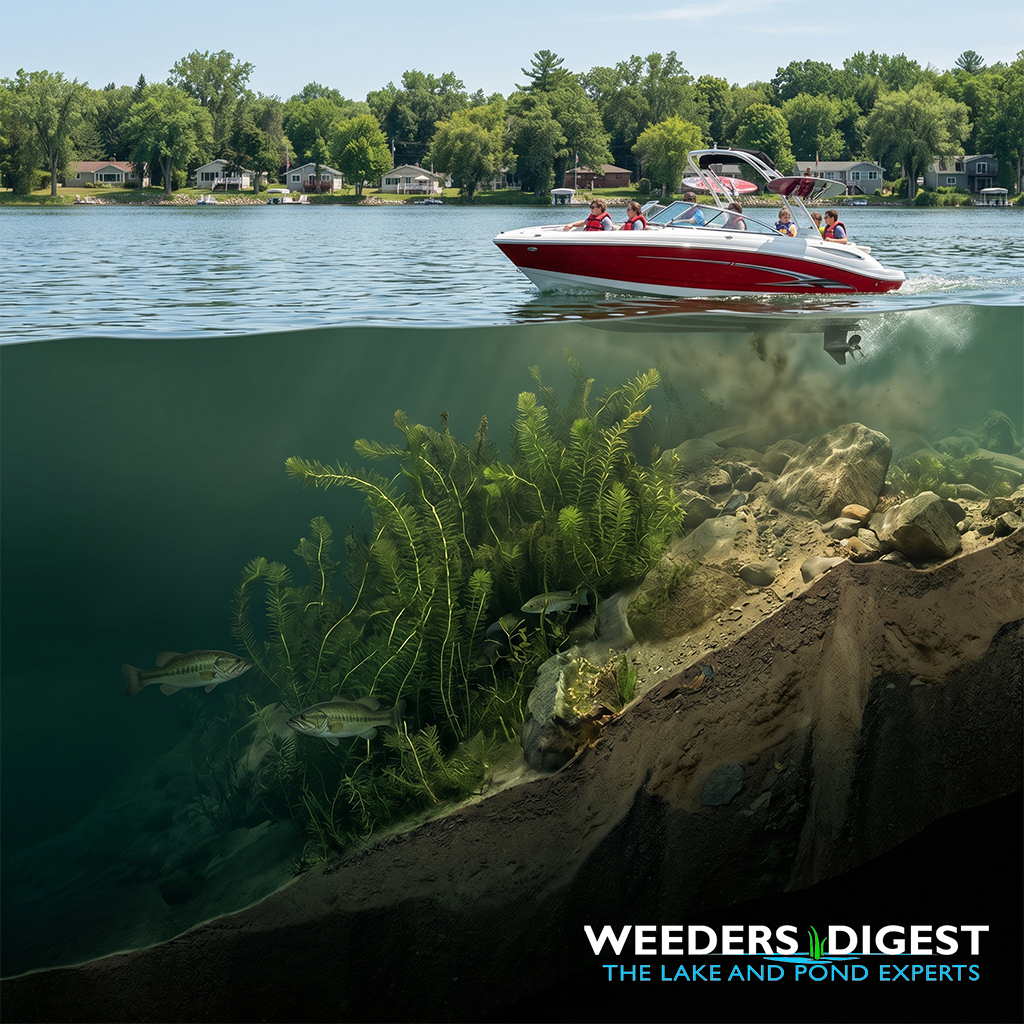
The reason I find these so fascinating—and dangerous—is their unpredictability. A submerged island might be five feet deep in June and only six inches deep by August as water levels drop. Because they are hidden beneath the surface, they are nearly impossible to see until you are right on top of them. For a boater, hitting one of these can mean a ruined motor, a cracked hull, or a sudden, jarring stop that puts everyone on board at risk.
These areas are also ecological hotspots. Because they sit closer to the sun-drenched surface than the deep lake bottom, they often become lush gardens for aquatic weeds. While this is great for the fish, it creates a "thick forest" that can tangle up your boat’s intake or propeller long before you even feel the ground beneath you. Understanding what is happening under your hull is the first step to staying safe this season.
The Science Behind It:
The formation of submerged islands, technically categorized as shoals or "sunken islands," is primarily driven by bathymetric heterogeneity resulting from glacial activity or tectonic shifts. In glacial "kettle" lakes, these features often represent drumlins or eskers—deposits of glacial till consisting of sand, gravel, and boulders—that were submerged as the ice sheets retreated and the basins filled with meltwater. In anthropogenic environments, such as man-made reservoirs, these islands are often the remnants of pre-impoundment topography, where knolls or hilltops were not fully inundated above the designated pool level.
The physical hazards these features pose to navigation are compounded by the principles of light refraction and water turbidity. According to research published in the Journal of Great Lakes Research, the "Secchi depth," or the measure of water clarity, dictates the visibility of submerged hazards. In eutrophic lakes with high algal biomass, a submerged island may remain invisible even if it is only centimeters below the surface. Furthermore, the Coriolis effect and internal seiches can cause localized water level fluctuations, meaning a shoal that was safe to traverse in the morning may become a strike hazard by afternoon due to wind-driven water displacement.
Beyond the physical geology, submerged islands function as high-energy "littoral zones" in the middle of pelagic waters. Because these areas reside within the euphotic zone—the layer of water where sunlight is sufficient for photosynthesis—they support dense colonies of macrophyte growth. As noted in studies from University of Wisconsin-Madison’s Center for Limnology, these areas often host invasive species like Eurasian Watermilfoil (Myriophyllum spicatum), which thrive on the nutrient-rich sediments typical of these underwater plateaus. These plants increase the "effective height" of the submerged island, creating a biological snag that can cause engine cavitation or cooling system failure.
The risk of vessel impact is further exacerbated by the "squat effect," a hydrodynamic phenomenon where a vessel moving through shallow water creates a low-pressure area that pulls the hull deeper into the water column. When a boater unknowingly passes over a submerged island, this vertical displacement can bridge the gap between the hull and the rocky substrate, leading to catastrophic structural failure. Continuous monitoring through bathymetric mapping and sonar technology is essential for identifying these dynamic hazards, as sedimentation and erosion constantly alter their profile over time.