


Why Your Life Jacket Actually Keeps You Afloat (And How It’s Getting So Much Slimmer)

Summary:
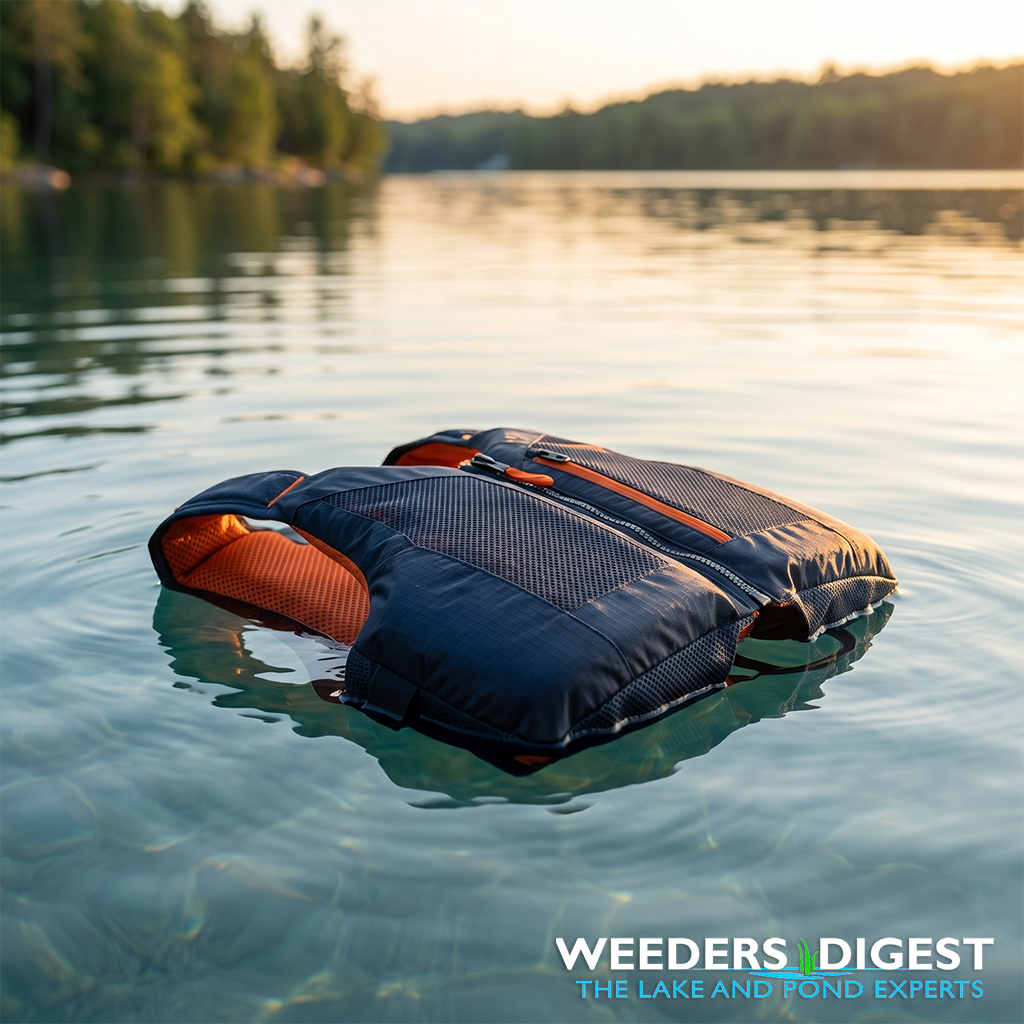
If you have ever strapped on a life jacket, you might have wondered how something so lightweight and relatively thin can keep a full-grown adult bobbing on the surface of the water. For a long time, we associated safety with bulk—the bigger the orange "horse collar," the safer you felt. However, modern life jackets have evolved significantly, utilizing advanced materials that pack an incredible amount of upward force into very small spaces.
At its core, your life jacket is a tool for managing density. By trapping a massive amount of air within specialized foams or inflatable chambers, the jacket ensures that your body’s overall density remains lower than the water around you. This is why you don't have to fight to stay up; the jacket is doing the heavy lifting by displacing water and pushing you toward the sky.
The reason modern jackets aren't as bulky as they used to be is due to the shift from natural materials like cork or kapok to synthetic, closed-cell foams and high-tech CO2 inflation systems. These materials provide the same amount of "lift" with a fraction of the material thickness. This means you can move, fish, or paddle without feeling like you are wearing a mattress.
Understanding this balance of physics and material science helps explain why a slim, high-quality life vest is just as capable of saving your life as the clunky versions of the past. It is all about the efficiency of the buoyancy trapped inside those sleek outer shells.
The Science Behind It:
The functional mechanics of a Personal Flotation Device (PFD) are governed by Archimedes’ Principle, which states that any object, wholly or partially immersed in a fluid, is buoyed up by a force equal to the weight of the fluid displaced by the object. For a human to float, the buoyant force exerted by the water must be greater than or equal to the force of gravity acting upon the individual’s mass. Because the average human body has a density slightly higher than or nearly equal to that of water—specifically when lungs are not fully inflated—the addition of a PFD provides the necessary displacement of water to ensure a net positive buoyancy.
Modern "non-bulky" buoyancy is achieved primarily through the use of closed-cell foams, such as polyvinyl chloride (PVC) or polyethylene. Unlike open-cell sponges, these materials consist of millions of tiny, independent bubbles of gas trapped within a polymer matrix. Research into polymer buoyancy indicates that these closed cells prevent water absorption, ensuring that the PFD maintains its integrity and lift even after prolonged submersion. Because these synthetic foams have a high gas-to-solid ratio, they provide significant displacement while maintaining a low profile, allowing for the ergonomic designs seen in high-performance aquatic gear.
Inflatable PFD technology further reduces bulk by utilizing atmospheric air or compressed carbon dioxide ($CO_2$) stored in small canisters. According to studies on maritime safety equipment, these devices offer a "buoyancy-on-demand" system where the volume of the device is negligible until the moment of immersion or manual activation. When triggered, the $CO_2$ rapidly expands into a bladder, displacing a large volume of water ($V$) and creating a massive upward buoyant force ($F_b$) according to the equation $F_b = \rho g V$, where $\rho$ is the density of the fluid and $g$ is the acceleration due to gravity.
The evolution of these materials allows for a specific distribution of buoyancy that is scientifically mapped to the wearer's center of gravity and center of buoyancy. By strategically placing thinner layers of high-density closed-cell foam around the torso, engineers can ensure that the wearer is not only kept afloat but is also rotated into a face-up position. This specialized orientation is a result of calculated torque where the center of buoyancy is positioned anterior to the center of mass, a critical factor in lifesaving applications for unconscious victims in open water.