


Why Your Neighborhood Turtles Love Basking and How They Stay Underwater So Long
 |

Summary:
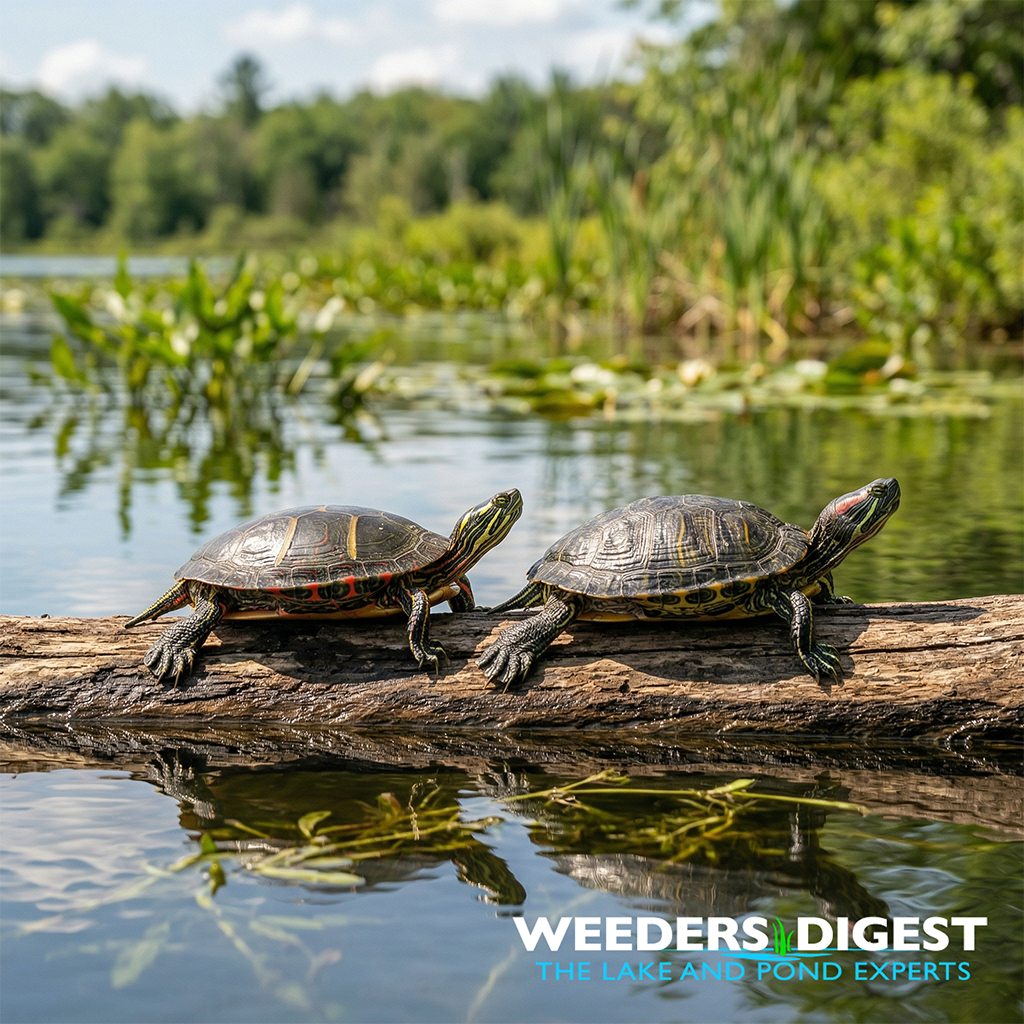
If you have ever spent a quiet afternoon by your pond, you have likely seen turtles lined up on a fallen log like a row of little soldiers. While it looks like they are simply enjoying a lazy summer day, this behavior—known as basking—is actually a critical survival tactic. Because turtles are cold-blooded, they cannot produce their own body heat. They rely on the sun's rays to kickstart their metabolism, which allows them to digest their food and gives them the energy to move. Without this daily "solar recharge," a turtle would become sluggish and eventually fall ill.
Beyond just staying warm, sunbathing serves as a vital hygiene routine for your shelled neighbors. The UV rays from the sun act as a natural disinfectant, drying out the turtle’s skin and shell to kill off harmful bacteria, fungi, and algae. It also facilitates the production of Vitamin D3, which is essential for maintaining a strong, healthy shell. While they are up on that log, they are also keeping a watchful eye on the water, ready to dive back in at the slightest hint of danger.
Once they do dive back in, you might wonder where they go. Turtles are masters of breath-holding, often disappearing for long stretches of time. In the summer, a typical pond turtle might stay submerged for 20 to 40 minutes while foraging. However, their true respiratory talent shows up during the winter. When the water gets cold, their metabolism slows down so much that they can stay underwater for months at a time.
It is truly fascinating to realize that the turtle on your log is performing a complex balancing act between two worlds. Whether they are soaking up the sun to fuel their next swim or utilizing specialized skin membranes to "breathe" through their tail ends while underwater, these creatures are perfectly engineered for the aquatic environment. Watching them bask is a sign of a healthy, functioning ecosystem where the wildlife has exactly what it needs to thrive.
The Science Behind It:
The behavior of basking in Testudines is primarily a thermoregulatory necessity driven by their ectothermic physiology. Unlike endotherms, turtles rely on external thermal gradients to reach their Preferred Body Temperature (PBT). Research by Boyer (1965) indicates that basking allows turtles to elevate their internal temperature significantly above the ambient water temperature, which is essential for enzymatic activity and metabolic processes such as digestion and gravid female egg development. Furthermore, exposure to ultraviolet-B (UVB) radiation is required for the photolysis of provitamin D3 into previtamin D3 within the epidermis, a precursor for calcium homeostasis and skeletal integrity.
The duration a turtle can remain submerged is governed by its metabolic rate and the availability of dissolved oxygen. During active summer months, turtles utilize pulmonary respiration, relying on lungs that are ventilated by specialized abdominal muscles since their rigid shells prevent rib cage expansion. According to Ultsch (1989), most freshwater species like the Painted Turtle (Chrysemys picta) exhibit a high tolerance for hypoxia, but eventually must surface to replenish oxygen stores and expel carbon dioxide. This aerobic submergence is limited by the depletion of oxygen in the blood and lungs and the subsequent buildup of lactic acid.
During hibernation or extreme dive durations, many species transition to anaerobic metabolism or utilize extrapulmonary gas exchange. Certain species, such as the North American Map Turtle, can absorb dissolved oxygen directly from the water through highly vascularized membranes in the mouth and the cloaca, a process often colloquially termed "cloacal respiration." This allows the organism to maintain basal metabolic functions without the use of lungs, provided the water remains well-oxygenated and cold enough to suppress metabolic demand.
The physiological transition to anaerobic states involves a sophisticated buffering system to manage metabolic acidosis. Turtles utilize their shells and skeletons as reservoirs for calcium and magnesium carbonates, which are released into the bloodstream to neutralize the lactic acid produced during long-term submergence. This remarkable adaptation allows some species to survive underwater for several months during ice-cover events, provided they can successfully manage the resulting ionic imbalances and acid-base disturbances.
Sources / References:
- Boyer, D. R. (1965). Ecology of the Basking Habit in Turtles. Ecology, 46(1/2), 99–118. https://doi.org/10.2307/1935262
- Ultsch, G. R. (1989). Ecology and Physiology of Hibernation and Overwintering Among Freshwater Fishes, Turtles, and Snakes. Biological Reviews, 64(4), 435–515.