

Why Your Tow Rope Stays on the Surface: The Secret to a Safer Day on My Boat
 |

Summary:
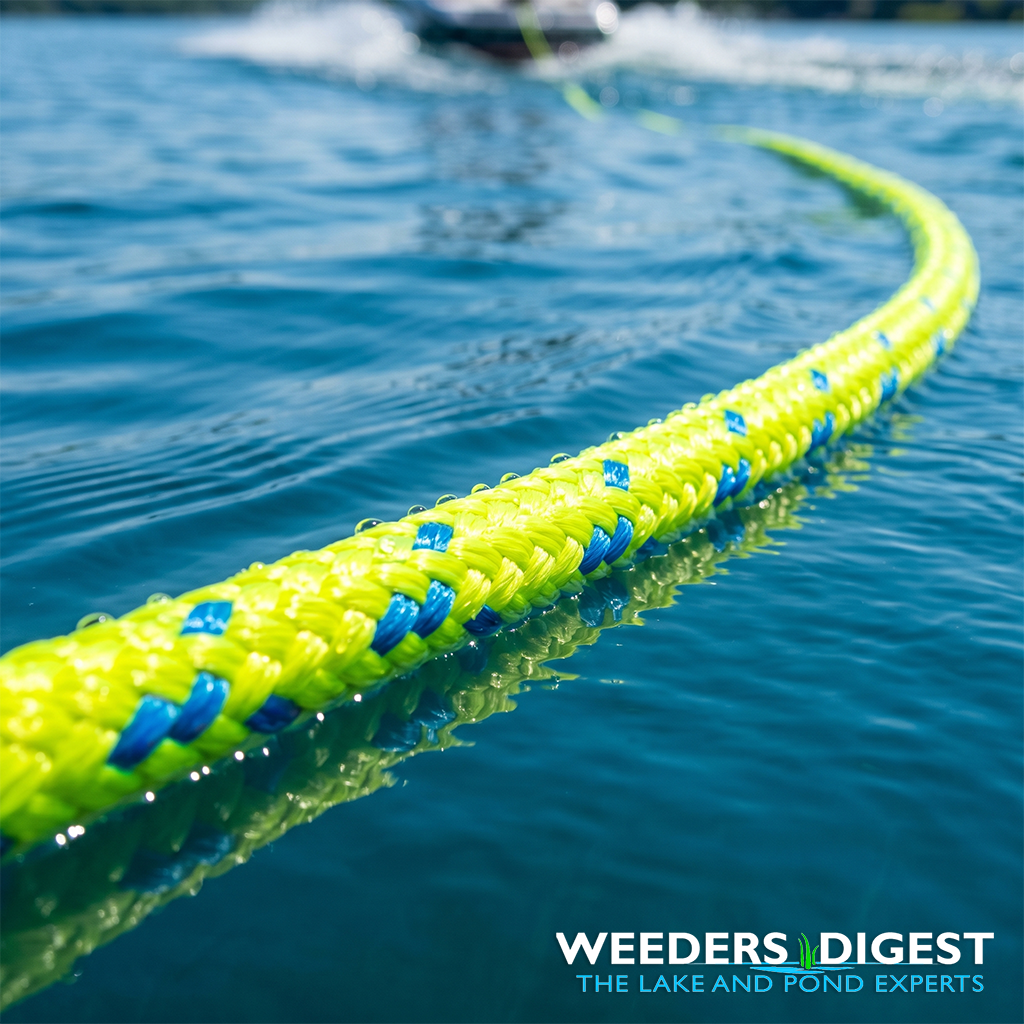
When you are out on the water, you probably don’t give much thought to your tow rope until it gets dangerously close to your propeller. Thankfully, most ropes designed for tubing and wakeboarding are engineered to float right on the surface. This isn't just a happy accident; it is a critical safety feature designed to keep the line visible to the boat driver and, more importantly, away from the intake of your engine.
The reason my ropes stay buoyant while a standard clothesline might sink comes down to the specific plastic used during manufacturing. Most high-quality tow lines are made from a material called polypropylene. This specific plastic is naturally less dense than water, meaning it has an inherent "positive buoyancy" that keeps it bobbing on the waves regardless of how long it sits in the lake.
If you’ve ever used a rope that started to sink after an hour of riding, you were likely using a blend of materials or a rope that had become waterlogged through its weave. Professional-grade ropes for wakeboarding often include an additional foam core or a specialized coating to ensure that even when the rope is under tension or getting soaked, it remains high and dry on the surface for me to see.
Understanding this simple physics helps explain why we use different ropes for different sports. While a floating rope is a lifesaver for a tuber, a professional water skier might actually prefer a rope with different stretch properties, though the industry standard remains focused on keeping that line visible and afloat to prevent "prop-wrap" and ensure the safety of everyone in the water.
The Science Behind It:
The buoyancy of aquatic tow ropes is primarily determined by the specific gravity of the synthetic polymers used in their construction. Most tow ropes are fabricated from high-tenacity polypropylene (PP) filaments. According to chemical property data, polypropylene possesses a specific gravity ranging from $0.90$ to $0.92$, which is significantly lower than the specific gravity of fresh water ($1.00$) or salt water (~$1.025$). This mathematical relationship ensures that the material displaces a weight of water greater than its own weight, resulting in a net upward force known as buoyant force, as defined by Archimedes' Principle.
In contrast to polypropylene, other common synthetic fibers like nylon or polyester have specific gravities of approximately $1.14$ and $1.38$, respectively. Because these values exceed the density of water, ropes constructed purely from these materials will eventually submerge once the surface tension is broken or the air trapped within the braid is displaced. Research from maritime engineering extensions indicates that the molecular structure of polypropylene is non-polar and hydrophobic, meaning it does not absorb water into its fibers. This prevents the rope from gaining "water weight" over time, a common failure point in natural fiber ropes like cotton or manila.
The physical construction of the rope also plays a role in its performance on the water's surface. Most wakeboarding and tubing lines utilize a "hollow braid" or "diamond braid" pattern. This geometric configuration traps small pockets of air within the weave of the polypropylene strands. While the material itself is buoyant, these air pockets provide additional displacement, further increasing the rope's "high-ride" profile on the water. This is crucial for visibility in high-turbidity environments or during the heavy wake transitions common in towed water sports.
Furthermore, specialized wakeboard lines may utilize a Polyethylene (PE) coating or a Dyneema (Ultra-High-Molecular-Weight Polyethylene) core. Dyneema is prized in limnological and maritime research for having a strength-to-weight ratio significantly higher than steel while maintaining a specific gravity of approximately $0.97$. This allows the rope to remain incredibly thin and minimize "rope spray" without sacrificing the essential floatability required for safety. By maintaining a positive buoyancy coefficient, these ropes mitigate the risk of entanglement with the vessel’s propulsion system, a leading cause of mechanical failure and maritime accidents in recreational boating.