

Goose Control Laser Deterrent



Description
De-Flock Your Waterfront, Yard, and Property
Reduce droppings, shoreline damage, noise and repeated nesting around your property with the High-Power Green Laser Goose Deterrent.
Canada geese are protected wildlife. Property owners must follow federal, state and local regulations when managing them. Chemical poisons, weapons, fireworks and direct physical harassment create safety, legal and environmental concerns.
The High-Power Green Laser Goose Deterrent provides a non-lethal alternative when operated responsibly. By utilizing biological-deterrence calibration and wide-area spatial coverage, it produces an effective visual barrier to quickly de-flock your waterfront, yard and commercial grounds.
- 500mW 532nm green beam
- Effective in bright daylight
- Wide-area beam coverage
- Thermal management for consistent output
- Non-lethal when operated responsibly
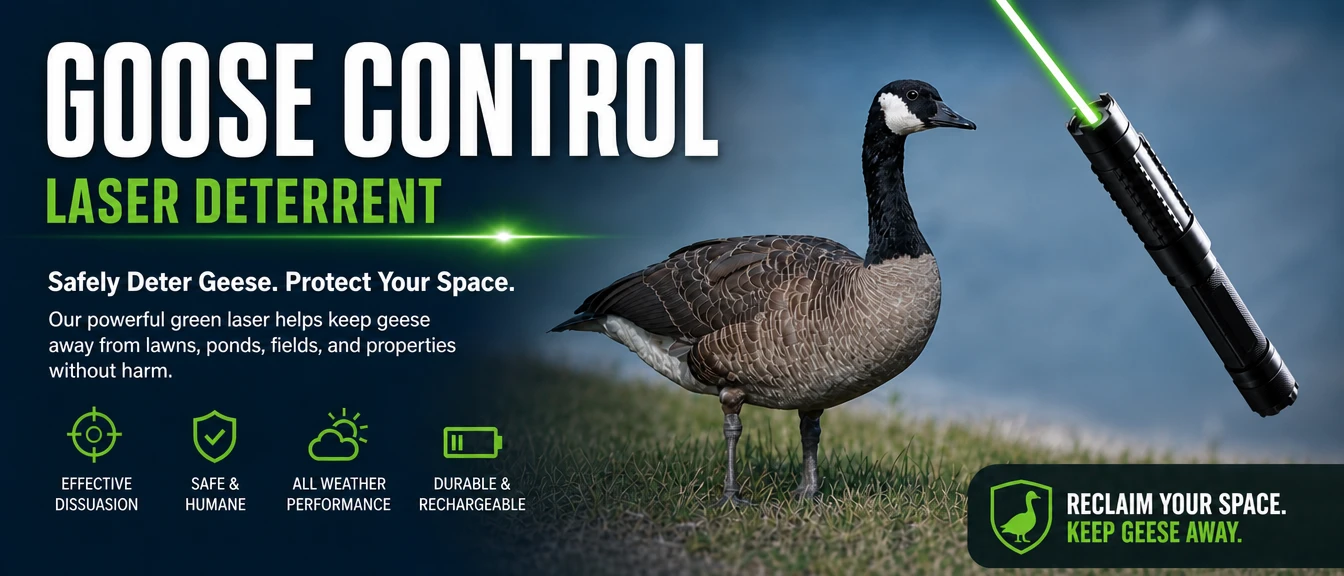
Why Professional Laser Deterrence Outperforms Cheap Pointers
Waterfront owners often ask why they should invest in a professional-grade unit when inexpensive green laser pointers are widely available. The difference comes down to raw optical power, thermal reliability, daylight capability and ethical wildlife management.
True Daylight Visibility
Cheap pointers wash out instantly under sunlight, forcing you to wait for dusk. This high-power system projects a high-visibility beam that remains distinct and effective even in broad daylight.
Expanded Beam Coverage
Standard pointers project a tiny, pinprick dot that geese easily ignore. This professional unit uses specialized beam divergence to create a large, commanding visual barrier across your property.
All-Weather Thermal Reliability
Cheap diodes lose power rapidly in cold temperatures or overheat during extended use. Built-in industrial thermal management ensures consistent performance in any weather.
Designed for Visible, Long-Range Operation
The 500mW model provides strong beam visibility for residential properties, small ponds, commercial grounds, docks and other open areas. Visibility changes with daylight, weather, distance and the surface where the beam appears.
Lawns & Commercial Grounds
Move geese off turf and open grounds.
Ponds & Shorelines
De-flock resting and feeding areas along the water.
Waterfronts & Docks
Reduce droppings and nesting around docks and waterfront areas.
Responsible Wildlife Management
Always confirm local wildlife rules before use. Never direct the beam into a bird’s eyes or toward people, vehicles, buildings, roads or aircraft.
Follow all federal, state and local regulations when managing geese and when using lasers.
Questions About Goose Control?
Call Weeders Digest at 877-224-4899 for help choosing a goose deterrent for your property.
Comparison
Professional vs. Cheap Laser Pointers
Why property managers choose industrial reliability over consumer novelty items.
| Daylight Performance | Professional: effective in bright daylight · Cheap pointer: invisible outdoors in sunlight |
|---|---|
| Beam Spread | Professional: wide-area optical coverage · Cheap pointer: narrow, easy-to-ignore pinprick |
| Thermal Protection | Professional: regulated circuitry for continuous output · Cheap pointer: overheats and dims within minutes |
| Deterrence Success | Professional: calibrated frequency to stop habituation · Cheap pointer: geese quickly learn to ignore it |
How to Use
Step-by-Step Goose Deterrent Guide
Use calm, controlled movements and target the ground around the flock to de-flock your property.
-
Fully Charge the Batteries
Start with fully charged batteries to maintain consistent beam output during operation.
-
Observe the Flock
Identify the geese watching the surrounding area while the rest of the flock feeds or rests.
-
Aim at the Ground Near the Perimeter
Direct the beam onto the ground, rocks, tree trunks or other surfaces near the outside edge of the flock. Do not aim directly at the birds.
-
Move the Beam Slowly Toward the Flock
Use slow, controlled movements. The visual disturbance encourages the alert geese to move and often prompts the rest of the flock to follow.
-
Repeat Consistently
Repeat over several consecutive days when geese return. Consistent deterrence helps discourage them from resting or feeding in the same location.
Specifications
Goose Control Laser Deterrent Specifications
Published product details.
| Product | High-Power Green Laser Goose Deterrent |
|---|---|
| Output | 500mW |
| Wavelength | 532nm green |
| Power | Batteries; fully charge before operation |
| Daylight Performance | Effective in bright daylight conditions |
| Beam | Wide-area optical coverage |
| Thermal Protection | Regulated circuitry for continuous output |
| Applications | Lawns, ponds, shorelines, waterfronts, commercial grounds and docks |
| Deterrence Type | Non-lethal visual deterrent |
Laser Safety
Laser Safety Requirements
Operate responsibly and within all regulations.
- Never look directly into the laser beam.
- Never aim the laser at people or animals.
- Never point the beam toward aircraft, roads or moving vehicles.
- Keep the product away from children and unauthorized users.
- Follow all federal, state and local laser-use regulations.
Direct the beam at the ground or surfaces near the flock, never into a bird’s eyes.
Related Tools
Related Goose and Bird Deterrents
Combine visual, automated and taste-based deterrents for stubborn flocks.
FAQs
Goose Control Laser Deterrent FAQs
Answers about how the laser works, safety and regulations.
Is the laser goose deterrent lethal?
No. It is a non-lethal visual deterrent when operated responsibly.
Why not just use a cheap green laser pointer?
Cheap pointers wash out in sunlight, project a tiny dot geese learn to ignore, and lose power in cold or overheat. This professional unit is visible in daylight, covers a wide area and uses thermal management for consistent output.
Does it work in daylight?
Yes. The high-power beam is designed to remain distinct and effective even in broad daylight. Visibility changes with daylight, weather, distance and the surface where the beam appears.
What is the laser output?
500mW, with a 532nm green beam.
Where can I use it?
Lawns, ponds, shorelines, waterfronts, commercial grounds, docks and other open areas.
Should I aim the laser at the geese?
No. Aim at the ground, rocks, tree trunks or other surfaces near the edge of the flock and move the beam slowly toward it. Never direct the beam into a bird’s eyes.
How often do I need to use it?
Repeat over several consecutive days whenever geese return. Consistent deterrence discourages them from resting or feeding in the same location.
Are there legal restrictions?
Canada geese are protected wildlife. Confirm federal, state and local wildlife rules and laser-use regulations before use, and never point the beam at people, vehicles, buildings, roads or aircraft.
Is it safe for kids to use?
No. Keep the product away from children and unauthorized users, and never look directly into the beam.
Related Products


