

Portable Suction Dredge Pump System


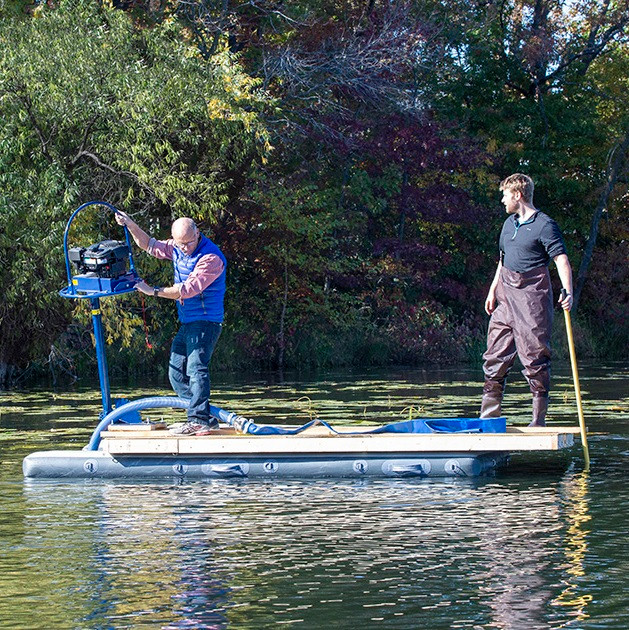



The 10' suction dredge shafts are currently out of stock. However, you can still secure yours today by placing a backorder, and we will prioritize your shipment as soon as new inventory arrives.
Description
Portable Suction Dredge Pump
- Dredge pump designed for muck, sludge, mud and plant waste that can be easily removed from bottom.
- Pump is NOT designed to remove hard packed clay. Large volumes of sand will increase wear. The result can be prematurely worn out internal components.
- Stones over 1 inch in diameter can cause premature wear and if constantly ingested may cause damage.
- In practice two people are needed in the cleaning operation. One controls the dredge pump and the other controls the floating platform.
- An adjustable mount makes for easier handling and allows you to set the cleaning depth and angle of attack.
PERMIT REQUIRED FOR USE IN MINNESOTA
This dredge system has a powerful 190cc Briggs & Stratton Professional Series 4-stroke gas powered engine. The capability of this powerful sediment pumping system allows it to pump about 2118 cubic feet of water per hour, (15,800 gallons) along with up to 211 cubic feet of sediment per hour. *Volumes may vary based on the nature of your application.
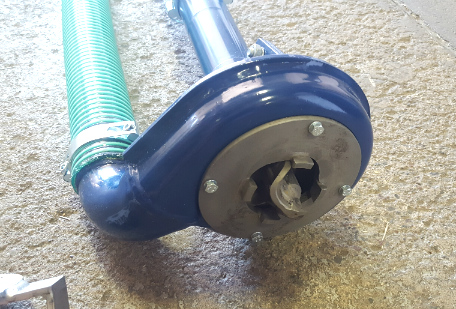
The unique design of the portable dredge allows you to hover the pump over the bottom of the lake to efficiently remove muck, silt and lake bottom sentiment. The centrifugal pump is also equipped with a mill that effectively grinds down the roots of reeds and other seaweed.
This portable lake suction dredge is designed to provide homeowners, contractors and shoreline management services the ability to dredge and transfer unwanted aquatic debris and sediment out of lakes and ponds.
Additionally, the portability of this dredge makes it a money saving alternative to hiring an excavator who has limited reach, can be destructive to the shore, and typically deposits the material adjacent to the shore only to have it wash right back in after the first good rain.
BENEFITS
- Does not pollute lakes, ponds or streams
- No damage to the beaches or the bottom of the lake or pond
- Reed roots and mud easily gets sucked up and pumped away
- Capable of moving about 15,800 gallons of water per hour along with about 211 cubic feet of sediment per hour
- The sludge can be pumped up to 492' away depending on lift height and sediment concentration
- Proven design has been used for many years.
- Also works well as a fire pump
Accessories:
Bottom Softening Knife Attachment for loosening firm packed bottoms - this attachment will also help protect the dredge blades from large rocks.
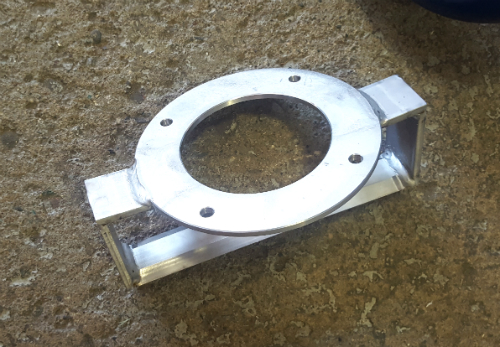
The dredge is delivered with a variable mounting, 10-foot transparent hose stub for connecting to your discharge hole and one Cam Lock coupling. You can mount it on a raft, a steady boat, or you could do some dredging from the ice. It's best to mount it on a platform so that you can remove from the raft when you want to use the raft for something else.
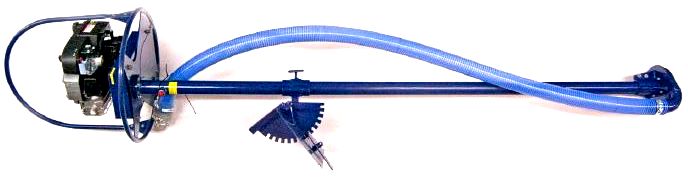
Many people also buy an extra quick coupling so you can easily divide the hose into the appropriate lengths..
The maximum hose length we recommend is 450 Ft, maximum lift height is 78 Ft. Stones and rocks as large as an inch can pass through the pump and anything larger is blocked.
FAQ
FAQs
It uses a gas‑powered pump mounted on a floating platform (boat, raft or dock) to suction muck, sludge, organic sediments and rooted vegetation from the lake/pond bottom and discharge the material away from the site.
According to the product page:
- Engine: 190 cc Briggs & Stratton 4‑stroke.
- Approximate throughput: ~2,118 cubic feet of water per hour (~15,800 gallons) and up to ~211 cubic feet of sediment per hour in ideal conditions.
- Max hose lift: up to 78 ft; recommended max hose length ~450 ft.
It is not designed for hard‑packed clay bottoms or heavy sand loads which cause increased wear. Stones over ~1 inch diameter may damage components.
The mounting bracket attaches to most any flat surface on a boat, raft or floating platform. One person controls the dredge pump, another handles the platform/hose management. The intake shaft depth/angle is adjustable to hover over the sediment.
You’ll need:
- A suitable launch from a stable craft or platform.
- Discharge hose path (often long distances) to move sediment away.
- Knowledge of bottom profile (avoiding too many rocks or shallow zones).
- Possibly a permit depending on your state/waterbody (e.g., Minnesota has one).
Ideal for homeowners or associations who want to remove built‑up muck/sludge, organic sediment and rooted vegetation in swim areas, boat slips or shoreline zones without full‑scale excavation equipment.
Because it handles abrasive sediment, expect wear on hoses, mill components, pump internals. Monitoring for damage and replacing wear parts is important. Avoid ingesting large rocks or excessive sand.
Compared to rakes/cutters this system removes sediment + roots + biological load rather than just trimming. Compared to herbicides, it’s mechanical removal, so no chemical load or long residual dying plants. It’s more invasive/capable but also more complex and expensive.
Ensure discharge doesn’t channel sediment back into shoreline or cause downstream turbidity. Floatation must be secure. Ignition/fuel for gas engines must be handled safely. Check local regulations for dredging or sediment removal.
- What’s the full warranty on the engine and pump?
- What is the expected lifespan of wear parts and cost to replace?
- What discharge hose length and lift can my site handle?
- Do I have the bottom conditions (rocks vs silt) compatible with this machine?
- Will I need operator training or a multi‑person crew?
- Am I compliant with local lake/pond sediment management permits?

Shipping Note: Please allow 5 business days for processing and handling of this oversized item before it ships. You will receive an automated email with tracking information as soon as your order is on its way.
1 Review
-
Very good product
I was not entirely sure what to expect because the pump looks rather small. When we got it put together and started it’s very very good . Much better than I expected
Related Products


Lake Pump Filter & Suction Kits | Filter, stand, Intake hose, check valve, fittings

