Shore Transfer Conveyor

- Availability:
- Limited Supply - Purchase Now!
- Delivery Estimate:
- hide




Description
Shore Transfer Conveyor: Move Harvested Lake Weeds From Water to Land
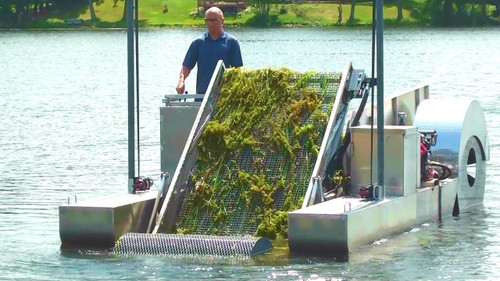
Make aquatic weed harvesting and shoreline cleanup more efficient with the Weeders Digest Shore Transfer Conveyor, a portable shore conveyor system designed to move harvested lake and pond vegetation from the water's edge into a waiting trailer, dump truck, or disposal container.
Aquatic weed harvesters collect vegetation from lakes, ponds, and waterways, but unloading heavy piles of wet weeds can be time-consuming. The shore transfer system bridges the gap between water-based harvesting equipment and your onshore collection area.
Instead of repeatedly lifting wet aquatic plants by hand, transfer harvested material onto the conveyor and let the moving belt carry it toward a suitable collection vehicle or container.
The standard 15.5-foot-long by 2-foot-wide conveyor is designed to work with Weeders Digest remote-controlled aquatic harvesters and other compatible weed collection equipment.
Need more reach? The modular design supports extended conveyor arrangements of approximately 30 feet or 45 feet using additional compatible sections.
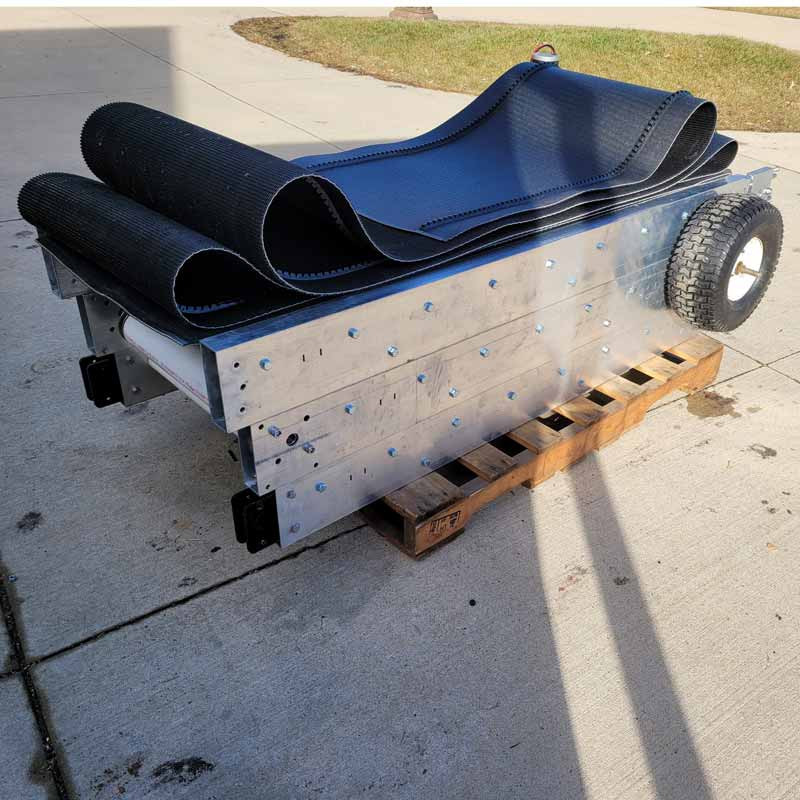
Weighing approximately 150 pounds in its standard configuration, this portable shoreline conveyor is designed for transportation in a suitably sized pickup truck or small trailer.
The conveyor can be positioned at an appropriate shoreline transfer point, including sites with seawalls, riprap, or embankments, when the equipment is adequately supported and stabilized.
Unlike a conventional water conveyor intended to move or pump water itself, this powered conveyor belt moves harvested aquatic vegetation and loose organic plant material from the shoreline toward a land-based collection point.
Whether you're a lakefront homeowner, aquatic weed harvesting contractor, lake association, or pond management professional, the Shore Transfer Conveyor helps streamline the process of harvesting, unloading, and removing aquatic vegetation.

From Lake to Land in Three Simple Steps
Harvest Aquatic Weeds
Use a compatible aquatic weed harvester to cut, skim, or collect nuisance vegetation and floating plant debris.
Transfer to the Conveyor
Position the harvester at the designated unloading point and transfer the collected vegetation onto the receiving end of the conveyor.
Elevate & Load
The conveyor transports vegetation upward into a suitable dump truck, trailer, or other approved collection container.
Why Use a Shore Transfer Conveyor?
Reduce Manual Weed Handling
Transport wet vegetation mechanically rather than repeatedly carrying harvested weeds up the shoreline by hand.
Streamline Harvester Unloading
Create a more organized transfer point for compatible aquatic weed harvesting operations.
15.5-Foot Standard Conveyor
The standard shore conveyor provides a 15.5-foot transfer length with a 2-foot-wide conveying surface.
Expandable Conveyor Length
Connect additional compatible sections to create approximately 30-foot and 45-foot conveyor arrangements.
Portable Between Properties
The approximately 150-pound standard unit is designed for transport using an appropriately sized pickup or trailer.
Shoreline Placement Flexibility
Suitable installations can bridge selected shoreline obstructions, seawalls, riprap, or embankments with proper support.
Designed for Aquatic Weed Harvesting & Shore Transfer
Removing aquatic weeds from the water is only one part of a successful lake or pond cleanup. Collected vegetation must also be unloaded, transported, and disposed of properly.
The Shore Transfer Conveyor provides a connection between water-based harvesting equipment and a land-based collection area.
It is particularly useful for operations that produce repeated loads of wet aquatic vegetation, including lake associations, shoreline maintenance businesses, aquatic harvesting contractors, pond managers, and larger private lakefront properties.
By transporting harvested vegetation directly into a suitable collection container, the conveyor can reduce repetitive manual handling and help organize shoreline unloading.
Portable, Modular & Expandable
The standard conveyor measures 15.5 feet long, 2 feet wide, and weighs approximately 150 pounds.
For shorelines requiring additional reach, compatible conveyor sections may be configured into approximately 30-foot or 45-foot transfer systems.
This design allows operators to evaluate different unloading distances without automatically requiring a permanent shore conveyor installation.
The equipment is designed for transport in a suitable pickup truck or small trailer, although transport compatibility depends on the vehicle's cargo dimensions, payload rating, and safe loading arrangements.
Need Help Planning Your Shore Transfer System?
Our team can help you review conveyor length, shoreline slope, harvester compatibility, power options, transport requirements, and the height of your receiving trailer or truck.
Call 877-224-4899Features
Shore Transfer Conveyor Features & Benefits
15.5-Foot Standard Length
Provides an extended transfer path from the shoreline receiving area toward a land-based collection point.
Two-Foot Conveyor Width
Designed for moving collected aquatic vegetation along a 24-inch-wide conveyor.
Approximately 150-Pound Unit
The standard unit weighs approximately 150 pounds, making it more transportable than large permanent shoreline equipment.
Modular, Stackable Configuration
Compatible sections can create longer conveyor arrangements of approximately 30 feet or 45 feet.
Harvester-Friendly Design
Designed to work with Weeders Digest remote-controlled aquatic weed harvesting equipment.
Water-to-Land Shore Transfer
Moves harvested weeds from a suitable shoreline receiving area toward a trailer or other collection container.
Multiple Power Configurations
Product information references 110V AC and 24V DC configurations, depending on the selected conveyor setup.
Portable Equipment
Designed for transport using a suitably sized pickup truck or small trailer.
Variable Shoreline Applications
Can be planned for seawalls, riprap, embankments, and other suitable unloading locations with appropriate support.
Sectional Assembly
The product information describes partial assembly and a design that can be disassembled into transportable sections.
Potential Single-Operator Workflow
Some unloading operations may be handled by one trained operator, although setup and repositioning may require additional personnel.
Equipment for Repeated Cleanup
Provides a practical unloading link for regular aquatic vegetation harvesting and shoreline maintenance operations.
How It Works
How the Aquatic Weed Shore Transfer Conveyor Works
The Shore Transfer Conveyor moves previously collected vegetation from the edge of the water to a land-based unloading destination.
Harvest the Vegetation
A compatible harvester gathers lake weeds, floating vegetation, or other suitable aquatic plant debris from the water.
Approach the Shoreline Unloading Point
The harvester positions itself at a designated transfer area with a safe, accessible receiving point for the shore conveyor.
Unload Onto the Conveyor
Collected vegetation is deposited onto the conveyor's receiving end using an approved transfer method.
Move Vegetation Along the Belt
The powered conveyor carries the material toward the elevated discharge end.
Collect in a Trailer or Truck
Vegetation falls into a correctly positioned dump truck, trailer, dumpster, or other suitable container.
Transport and Dispose
Collected plant material is transported to an approved disposal location according to applicable regulations.
Length Options
Shore Conveyor Lengths: 15.5 ft, 30 ft & 45 ft
The standard conveyor measures 15.5 feet long by 2 feet wide. Its modular design supports longer shoreline transfer arrangements by connecting additional compatible conveyor sections.
15.5 ft Conveyor
Suitable for projects where the shoreline transfer point is relatively close to the receiving trailer or container.
Approximately 30 ft
A longer conveyor arrangement may bridge a greater distance between the aquatic harvester and unloading destination.
Approximately 45 ft
The longest advertised arrangement is intended for projects that require additional transfer reach.
Shore Transfer Configuration Comparison
| Configuration | Nominal Length | Width | Important Considerations |
|---|---|---|---|
| Standard Unit | 15.5 ft | 2 ft | Standard transportable unit; approximate weight 150 lb |
| Extended System | Approximately 30 ft | Confirm assembled width and connections | Additional compatible sections and support may be required |
| Long Extended System | Approximately 45 ft | Confirm assembled width and connections | Longer arrangements require additional stability and power planning |
Power Options
Shore Transfer Conveyor Power Options
Product information describes configurations powered by 110V AC electricity or 24V DC battery power, depending on the equipment supplied.
Generator operation may also be possible for a compatible AC-powered configuration when an appropriately rated generator and electrical protection are used.
110V AC Power
A compatible electric-motor configuration for locations with suitable electrical service or an appropriately rated generator.
24V Battery Power
An alternative configuration for suitable off-grid harvesting locations using an approved 24V DC power arrangement.
Generator Operation
A generator may supply a compatible AC motor when its output and capacity meet the system's actual electrical requirements.
Power Configuration Comparison
| Power Source | Application | What to Confirm |
|---|---|---|
| 110V AC | Accessible electrical service at the unloading site | Motor voltage, current draw, cord requirements, GFCI protection, and outdoor suitability |
| 24V DC | Selected battery-powered conveyor configurations | Battery type, capacity, wiring, charger, and expected runtime |
| Generator | Off-grid operation of a compatible AC-powered conveyor | Generator voltage, frequency, starting capacity, grounding, and operating instructions |
Harvester Compatibility
Compatible Aquatic Weed Harvesters & Shore Transfer Equipment
The Shore Transfer Conveyor primarily assists aquatic weed harvesters with moving collected vegetation into land-based containers.
Weeders Digest identifies the conveyor as a complementary system for its remote-controlled aquatic harvesters and mentions the WaterGator, Neptune Rake, and Eco-Harvester among equipment that can be part of a harvesting and transfer workflow.
| Equipment | Role in Cleanup | Compatibility Consideration |
|---|---|---|
| WaterGator | Remote-controlled aquatic weed cutting, skimming, and collection | Confirm unloading alignment and harvester discharge configuration |
| WaterBug | Remote-controlled weed harvesting and collection | Confirm receiving height and unloading approach |
| WaterBeetle | Compact remote-controlled skimming and collection | Confirm the unloading method can deliver material to the conveyor |
| Eco-Harvester | Commercial aquatic weed harvesting and collection | Verify discharge rate, transfer height, and receiving capacity |
| Neptune Rake | Aquatic vegetation harvesting and selected removal operations | Confirm an appropriate method for placing material on the conveyor |
| Manual Lake Rakes | Gathering weeds and shoreline debris | Collected vegetation may require manual placement onto the conveyor |
For assistance matching your harvester with a shoreline conveyor, contact Weeders Digest at 877-224-4899.
Setup & Installation
How to Set Up a Shore Transfer Conveyor
Setup requirements vary according to conveyor length, shoreline slope, power configuration, and receiving equipment. Follow the instructions for your exact system.
Inspect the Shoreline
Choose a suitable unloading area with stable ground, safe water access, and adequate space for the receiving vehicle or container.
Measure the Transfer Distance
Determine the distance from the harvester unloading point to the discharge point, including any seawall, riprap, or embankment.
Measure the Required Height
Check the receiving container height and planned conveyor incline. Verify that your selected configuration provides sufficient reach.
Assemble the Conveyor
Assemble supplied sections, connections, and hardware according to the product instructions. Use lifting assistance or additional personnel where necessary.
Position and Stabilize
Place the receiving end at the planned shore transfer point and discharge end above the collection container. Stabilize and support the conveyor as required.
Set Up the Power Source
Connect the approved AC or DC power supply for the selected configuration according to the manufacturer instructions.
Inspect Before Starting
Check guarding, belt condition, rollers, fasteners, electrical connections, and the stability of the conveyor and container.
Test With a Small Load
Follow operating instructions to confirm material moves correctly without binding, slipping, or overflowing the receiving area.
Begin Controlled Unloading
Feed harvested vegetation at a rate the conveyor can handle while keeping personnel clear of moving equipment.
Shut Down and Clear Safely
Stop and isolate power before clearing debris, adjusting equipment, changing position, or preparing the unit for transport.
Shoreline Placement
Planning Your Shore Conveyor Installation
The best shore transfer location provides safe harvester access, suitable conveyor support, and adequate space for the receiving truck, trailer, or container.
Open Shoreline
An accessible bank with stable ground can simplify equipment placement and loading.
Seawall
The conveyor may bridge a seawall when required height, reach, and support conditions are met.
Riprap Shoreline
Rock-lined areas may require stable supports or pads to prevent movement and equipment damage.
Embankment
A sloped bank may be suitable if the conveyor's angle, stability, and loading requirements are satisfied.
Truck or Trailer Access
The receiving vehicle should be parked on stable ground with an appropriate loading position.
Water-Level Changes
Seasonal water level changes can alter the height and distance between the harvester and the unloading point.
Questions to Consider Before Purchasing
- How far is the unloading point from the receiving trailer?
- What is the height of the truck or trailer bed?
- Will the receiving end align with your aquatic harvester?
- Is the shoreline flat, sloped, rocky, or protected by a seawall?
- Does the site offer stable ground for supports?
- Is electrical service available or is off-grid power required?
- Can the receiving vehicle safely access the site?
- What volume and wet weight of vegetation will be transferred?
What It Transfers
What Can the Shore Transfer Conveyor Move?
The Shore Transfer Conveyor is primarily designed for previously harvested aquatic vegetation and suitable loose organic plant material.
Although it is sometimes discovered through searches for a muck conveyor or water conveyor, its primary purpose is to transport collected vegetation—not pump water or excavate dense lake-bottom sediment.
Harvested Lake Weeds
Move collected submerged aquatic vegetation from a harvester to an onshore container.
Wet Pond Weeds
Transfer manageable loads of harvested pond vegetation when the material is suitable for the belt.
Floating Aquatic Plants
Move collected duckweed or other floating vegetation when the material consistency is compatible.
Loose Shoreline Vegetation
Transfer collected piles of plant material that can be safely placed on the conveyor.
Harvester-Collected Debris
Some loose organic material may be suitable depending on its size, consistency, and the equipment configuration.
Drainable Plant Loads
Vegetation with some excess water removed may be easier to transfer than heavy, saturated masses.
Material Suitability Comparison
| Material | Suitability | Important Considerations |
|---|---|---|
| Cut aquatic weeds | Primary intended material | Keep loads within the equipment's operating capacity |
| Harvested floating vegetation | Potentially suitable | Wet material may clump or behave differently from rooted plants |
| Loose organic shoreline debris | Potentially suitable | Remove oversized or damaging objects before loading |
| Heavy lake-bottom muck | Not recommended as a primary application | May clog, overload, or spill from the conveyor |
| Dense mineral sediment | Not established as supported | Sand and silt can cause wear and loading problems |
| Large rocks or logs | Not recommended without explicit approval | May damage belts, rollers, or drive components |
| Specialty agricultural crops | Not established as supported | Food, crop, or industrial processing specifications have not been confirmed |
How Is This Different From Water-Tight Conveyors?
Some industrial water-tight conveyors are specifically engineered to contain liquids or prevent leakage from the conveying system.
The Shore Transfer Conveyor is designed for transporting wet aquatic vegetation. A liquid-tight belt, sealed enclosure, or certified leak-proof material path has not been established for this product.
If your project requires moving large volumes of liquid, containing slurry, or preventing water leakage, confirm those requirements with Weeders Digest before purchasing.
Transfer Performance
Shore Transfer Conveyor Capacity & Unloading Performance
Transfer performance depends on belt speed, loading rate, material moisture, vegetation density, slope, and the equipment configuration.
The product's FAQ describes moving hundreds of pounds of vegetation per hour under suitable conditions, but does not establish one fixed rated throughput for every arrangement.
Material Moisture
Wet aquatic weeds can be heavy and clump together, affecting movement along the belt.
Conveyor Incline
Steeper angles can affect traction, material retention, and loading capacity.
Harvester Output
A harvester that unloads rapidly may require controlled feeding to prevent overloading.
Belt Speed
The movement rate depends on the installed drive and control setup. Variable-speed control is not confirmed for all units.
Receiving Container
A correctly positioned trailer or truck helps prevent material from falling outside the collection area.
Extended Sections
Longer arrangements may change support requirements, power needs, and practical transfer performance.
How High Can the Shore Conveyor Lift Weeds?
The product FAQ references a possible transfer height of approximately 6 to 8 feet in some arrangements, depending on the installation angle, configuration, supports, and operating conditions.
This is not a guaranteed vertical-lift specification. Confirm your required receiving height with Weeders Digest.
Transport & Storage
Transporting & Storing the Shore Transfer Conveyor
The approximately 150-pound standard conveyor is designed to be transported in a suitably sized pickup truck or small trailer.
The sectional design allows breakdown for transportation or off-season storage when following equipment instructions.
Before Transportation
- Stop operation and isolate the electrical or battery power supply.
- Wait for all moving parts to stop completely.
- Remove accumulated aquatic vegetation and loose debris.
- Drain excess water where appropriate.
- Disassemble sections only as instructed.
- Use suitable lifting assistance or handling equipment.
- Protect exposed drive components and electrical connections.
- Secure equipment with appropriate transport restraints.
- Confirm adequate vehicle cargo space and payload capacity.
- Clean equipment according to invasive species prevention rules.
Off-Season Storage
- Remove vegetation and organic debris from accessible surfaces.
- Allow components to dry before storage.
- Inspect belts, rollers, frames, fasteners, and connections.
- Protect electrical equipment from moisture and freezing conditions.
- Store sections securely to prevent tipping or falling.
- Follow manufacturer instructions for belt tension and long-term storage.
Care & Maintenance
Shore Transfer Conveyor Maintenance
Routine cleaning and inspection help maintain reliable operation during repeated aquatic weed harvesting projects.
- Clean after use. Remove harvested vegetation, mud, and debris.
- Inspect the belt. Check for wear, cuts, tracking problems, or damage.
- Check rollers. Inspect accessible rollers and supports for lodged material or deterioration.
- Inspect the frame. Look for loose fasteners, bent sections, and structural damage.
- Check supports. Verify that stabilization components remain secure.
- Inspect electrical equipment. Look for damaged cables or connections.
- Monitor operation. Watch for unusual noises, slipping, or material spilling.
- Prevent debris buildup. Clear unwanted accumulation only after shutdown and power isolation.
- Inspect extension connections. Check joints and connecting hardware in longer systems.
- Prepare for storage. Clean, dry, and protect the equipment during extended non-use.
Safety & Operation
Shore Transfer Conveyor Operating Safety
Stay Clear of Moving Belts
Keep hands, clothing, hair, tools, and loose objects away from belts, rollers, and drive components.
Maintain Required Guards
Operate the machine with appropriate guarding and required safety equipment in place.
Stabilize the Equipment
Secure and support the conveyor before loading, particularly on uneven or sloped shorelines.
Use Correct Electrical Protection
Follow approved electrical requirements for equipment operating close to water.
Keep Discharge Areas Clear
Never stand beneath falling loads or between the conveyor and receiving equipment.
Avoid Overloading
Feed material at a rate the machine can safely handle.
Use Proper Lifting Assistance
The standard unit weighs approximately 150 pounds and may require multiple people or appropriate equipment for handling.
Shut Down Before Servicing
Isolate power and wait for complete stoppage before clearing jams, moving equipment, or making adjustments.
Specifications
Shore Transfer Conveyor Specifications
| Product Name | Shore Transfer Conveyor |
|---|---|
| Product Type | Portable aquatic weed shore conveyor |
| Primary Purpose | Transfer harvested lake and pond vegetation from shoreline unloading points into receiving trucks, trailers, or containers |
| Standard Length | 15.5 feet |
| Standard Width | 2 feet / 24 inches |
| Standard Unit Weight | Approximately 150 pounds |
| Extended Length Options | Approximately 30 feet and 45 feet using compatible additional sections |
| Construction Type | Modular, transportable conveyor arrangement |
| Primary Material Transferred | Harvested aquatic weeds and suitable loose vegetation |
| Harvester Application | Designed for compatible aquatic weed harvesting equipment |
| Typical Receiving Equipment | Dump truck, trailer, or suitable collection container |
| Power Configurations Referenced | 110V AC or 24V DC, depending on setup |
| Generator Compatibility | Possible with an appropriately rated generator and compatible AC system |
| Controls | On/off controls described; variable-speed availability depends on configuration |
| Approximate Transfer Height | Product FAQ references about 6–8 feet in some arrangements; not a guaranteed specification |
| Rated Throughput | Exact pounds-per-hour rating not published |
| Wet Aquatic Vegetation | Primary intended material |
| Heavy Muck & Sludge | Not established as a supported primary application |
| Liquid-Tight Construction | Not confirmed; no certified liquid-tight containment rating established |
| Crop Processing Applications | Not established or validated |
| Assembly | Partial assembly required |
| Transport | Designed for a suitable pickup truck or small trailer |
| Storage | Sectional breakdown for transport and off-season storage |
| Battery Included? | Not confirmed for every configuration |
| Generator Included? | Not specified as included |
| Additional Sections Included? | Confirm selected length and package contents |
| Installation Tools | Product FAQ states setup instructions and tools are provided |
| Shipping Handling Time | Allow approximately 5 business days for processing and handling before shipment |
| Warranty | Confirm current warranty terms with Weeders Digest |
Shipping & Delivery
Shore Transfer Conveyor Shipping & Delivery
The Shore Transfer Conveyor is oversized equipment requiring additional processing and handling.
Oversized Equipment
Shipping arrangements may differ from standard parcel delivery because of conveyor dimensions and handling requirements.
5 Business Days Handling
Allow approximately five business days for processing and handling before the order ships.
Tracking Updates
Tracking information is sent by automated email when the order ships, according to the published shipping notice.
Delivery Planning
Confirm unloading access and any freight requirements before the equipment arrives.
Before Your Conveyor Arrives
- Confirm available space for delivery and unloading.
- Arrange appropriate personnel or lifting equipment.
- Inspect the packaging and equipment upon delivery.
- Compare received components with packing documentation.
- Report apparent shipping damage promptly through the appropriate carrier and seller procedures.
For freight questions, extended configurations, or availability, call 877-224-4899.
Related Tools
Related Aquatic Weed Harvesters & Shoreline Cleanup Equipment
Pair your Shore Transfer Conveyor with compatible harvesting and collection equipment for a more complete aquatic vegetation removal workflow.
WaterGator Remote-Controlled Aquatic Harvester
Remote-controlled equipment for cutting, skimming, collecting, and unloading aquatic vegetation in larger pond and shoreline applications.
View WaterGatorWaterBug Aquatic Weed Harvester
A remote-controlled, battery-powered harvester that collects aquatic vegetation and can be incorporated into a suitable shore transfer workflow.
View WaterBugWaterBeetle Personal Aquatic Harvester
A compact remote-controlled skimmer and harvester for smaller ponds and shorelines. Confirm its unloading arrangement with the conveyor.
View WaterBeetleEco-Harvester Aquatic Weed Harvester
Explore larger-scale harvesting equipment for professional lake and pond vegetation management.
View Eco-HarvesterNeptune Rake Aquatic Weed Harvester & Muck Dredge
Compare an aquatic harvesting and removal system. Verify the appropriate way to transfer collected vegetation onto the shore conveyor.
View Neptune RakeAquatic Weed Harvesters
Explore Weeders Digest harvesting and skimming equipment for residential and professional waterfront management.
Shop Aquatic Weed HarvestersFAQs
Shore Transfer Conveyor Frequently Asked Questions
What is a Shore Transfer Conveyor?
A Shore Transfer Conveyor is a powered conveyor designed to move harvested aquatic weeds from a shoreline receiving point into a suitable dump truck, trailer, or other collection container.
What does shore transfer mean in aquatic weed harvesting?
Shore transfer refers to moving harvested aquatic vegetation from water-based equipment to a land-based collection or transportation point. A conveyor makes this transfer more organized and can reduce manual handling.
What is a shore conveyor used for?
A shore conveyor transports collected material away from a shoreline receiving point. This model is designed primarily to transfer harvested lake and pond weeds to a waiting trailer, truck, or container.
Is this a water conveyor?
It is a conveyor for moving wet aquatic vegetation from water to land. It is not a water conveyor designed to pump or transport liquid water through a pipe or channel.
Can I use the Shore Transfer Conveyor as a muck conveyor?
This product is primarily designed for harvested aquatic vegetation. Heavy wet muck, compacted sludge, and mineral sediment are not established as supported materials. Contact Weeders Digest about equipment specifically intended for your muck-removal project.
Is this one of the water-tight conveyors used for liquid transport?
No liquid-tight certification or leak-proof conveying specification has been established for this model. Specialized water-tight conveyors may be required for applications involving liquid containment or heavy slurry.
Can this product be used as a marijuana conveyor?
The Shore Transfer Conveyor is designed for aquatic weed harvesting and shoreline unloading. Its suitability as a marijuana conveyor for agricultural or industrial processing has not been established.
Is this a cannabis conveyor for plant processing?
No cannabis-processing suitability is established for this model. A specialized cannabis conveyor may require different material-handling, hygiene, environmental, and equipment specifications than an aquatic weed transfer system.
Is it suitable for drying plants movable conveyors applications?
Searches for "drying plants movable conveyors" generally concern movable agricultural or industrial conveyors used in plant processing or drying workflows. This Shore Transfer Conveyor is designed primarily to move harvested aquatic vegetation from water to land; it is not specified as a plant-drying conveyor.
What is the main purpose of a Shore Transfer Conveyor?
Its main purpose is to simplify unloading and moving collected aquatic vegetation from water-based harvesting equipment to land-based disposal equipment.
Does the Shore Transfer Conveyor cut lake weeds?
No. It transports vegetation that has already been harvested, cut, skimmed, or gathered.
How long is the standard conveyor?
The standard conveyor is 15.5 feet long.
How wide is the Shore Transfer Conveyor?
The standard conveyor is 2 feet, or 24 inches, wide.
How much does the Shore Transfer Conveyor weigh?
The standard conveyor is listed at approximately 150 pounds. Longer configurations may weigh more.
Can I extend the conveyor to 30 feet?
Yes. The modular system is advertised with an approximately 30-foot arrangement using additional compatible sections. Confirm the required components and pricing before ordering.
Is a 45-foot Shore Transfer Conveyor available?
The system is advertised as expandable to approximately 45 feet. Contact Weeders Digest to confirm the configuration, supports, power requirements, availability, and cost.
Are extension sections included with the standard conveyor?
The listing identifies a standard 15.5-foot conveyor and longer configurations but does not establish that extra sections are included with the standard unit.
What powers the conveyor?
The product information references 110V AC electric-motor and 24V DC battery-powered configurations, depending on setup. Confirm the exact arrangement before ordering.
Can I use a generator to power the shore conveyor?
Generator operation may be possible with a compatible AC-powered unit. The generator must meet the actual motor requirements and applicable electrical safety standards.
Does the conveyor include a battery?
The published information does not confirm that a battery is included with every configuration. Ask Weeders Digest about the exact components supplied.
Is a gas-powered conveyor available?
Shore transfer conveyors in general may use gasoline engines, but this particular product listing references 110V AC and 24V DC configurations. Contact Weeders Digest to discuss current options.
Can one person operate the conveyor alone?
The product FAQ describes single-operator use during some harvesting operations. Assembly, lifting, transport, and repositioning may require additional people or equipment.
Can I use the conveyor with a WaterGator?
Yes. The product information identifies the WaterGator as part of a compatible harvesting and transfer workflow. Confirm unloading height, receiving arrangement, and operating configuration.
Is it compatible with the WaterBug aquatic harvester?
The conveyor is designed to work with Weeders Digest remote-controlled harvesters. Confirm that your WaterBug configuration can unload into the receiving end.
Can the Shore Transfer Conveyor work with a WaterBeetle?
Potentially, if the WaterBeetle's collected material can be unloaded safely onto the conveyor. The exact transfer arrangement should be verified.
Does the conveyor work with the Eco-Harvester?
The product FAQ identifies the Eco-Harvester as an example of compatible harvesting equipment. Confirm unloading dimensions and material delivery rate.
Can I use it with a Neptune Rake?
The Neptune Rake is mentioned among equipment used in the harvesting and transfer workflow. Verify how its collected vegetation will be placed onto the conveyor.
Can I load the conveyor by hand?
Collected vegetation may be placed onto an appropriately configured conveyor, but manual feeding must follow safe operating instructions. Keep hands and tools clear of belts and rollers.
Does it work with other brands of aquatic harvesters?
It may be possible to create a suitable unloading arrangement, but compatibility depends on discharge height, receiving geometry, material flow, and conveyor capacity.
How high can the Shore Transfer Conveyor elevate weeds?
The product FAQ references approximately 6–8 feet in some configurations. Actual transfer height depends on conveyor length, angle, support arrangement, and operating conditions.
Can I unload directly into a dump truck?
Yes. That is a primary intended application when the discharge end can be safely positioned above the receiving area.
Can I use it to load a dump trailer?
Yes, provided the trailer is properly positioned and the conveyor reaches the receiving height within its approved operating limits.
Can the conveyor unload into a dumpster?
A suitable dumpster or collection container may be used if its dimensions and position are compatible with the conveyor discharge arrangement.
Can the conveyor be used on an embankment?
Yes. Suitable shoreline embankments are among the described applications. Proper stabilization, support, and incline limits must be considered.
Will the conveyor work over a seawall?
The conveyor is designed for shoreline transfer arrangements that may include seawalls. Confirm the wall height and required supports before installation.
Can I use it on riprap or rocky shoreline?
Potentially, but uneven rocks may require stabilized supports or pads.
Will it work on sloped terrain?
Gentle slopes may be suitable with proper leveling and support. Steep or unstable terrain may require a different unloading location.
Can the conveyor move wet aquatic weeds?
Yes. It is primarily designed for harvested aquatic vegetation, including wet lake and pond weeds. Loading capacity depends on material and configuration.
Can it transfer duckweed and floating vegetation?
Collected floating vegetation may be suitable, although very wet or loose material can behave differently from larger weed piles. Confirm suitability for your operation.
Can it handle wet muck or sludge?
The conveyor is optimized for aquatic vegetation. Heavy muck and silt can clump, overload, or clog the belt and are not the intended primary materials.
Can the conveyor move sand or gravel?
A rated sand or gravel handling capacity is not established. Do not use it as a construction-material or dredge conveyor without confirmation from the supplier.
How much material can the conveyor move per hour?
The product FAQ describes moving hundreds of pounds of weeds per hour under suitable conditions, but no single rated throughput is published. Results depend on belt speed, slope, material weight, and feeding rate.
Does the Shore Transfer Conveyor have adjustable speed?
The product FAQ indicates that some configurations may include variable-speed capability. Confirm whether it is included with your selected unit.
Does it have an on/off control?
The product FAQ describes an on/off control. Exact controls depend on the configuration.
Can the conveyor be disassembled?
Yes. The sectional design allows breakdown for transport or off-season storage.
Will it fit in a pickup truck?
It is designed for pickup-truck or small-trailer transport. Confirm cargo dimensions, vehicle payload capacity, and conveyor transport configuration.
Is the conveyor portable?
Yes. The standard unit weighs approximately 150 pounds and is designed for transport, although safe handling may require additional assistance.
Is assembly required?
Yes. The product FAQ indicates partial assembly is required and that setup instructions and tools are provided.
How should I maintain the conveyor belt?
Clean vegetation and debris after use, inspect the belt for damage or tracking problems, and follow manufacturer procedures for adjustment and servicing.
What should I do if aquatic weeds clog the conveyor?
Stop the conveyor, isolate power, and follow approved jam-clearing instructions. Never reach into moving rollers or belts.
Can I leave the conveyor outside all year?
Follow the manufacturer's outdoor storage guidance. Cleaning, drying, and protecting electrical and mechanical components is recommended.
Can I move the conveyor between lakes?
Yes, when transported safely and when all applicable invasive species inspection, cleaning, drainage, and decontamination rules are followed.
Is the conveyor suitable for commercial lake weed harvesting?
It is designed for use alongside aquatic harvesting equipment, including professional shoreline cleanup operations. Confirm capacity and configuration for commercial workloads.
Can lake associations use the conveyor?
Yes. Lake associations managing harvested vegetation may find it useful for transferring loads into onshore transportation or disposal equipment.
Does the conveyor replace an aquatic harvester?
No. The conveyor handles shoreline transfer and unloading. An aquatic harvester or another collection method is still needed to remove vegetation from the water.
Do I need a permit to operate the conveyor?
Requirements depend on the waterbody, shoreline, type of harvesting work, and local regulations. Check with the appropriate authority before beginning shoreline or aquatic vegetation management work.
What is the processing time before the conveyor ships?
The product listing requests approximately five business days for processing and handling before shipment. Transit time is additional.
Is shipping included in the price?
Shipping charges and delivery arrangements are not established in the product description. Confirm freight terms during checkout or with Weeders Digest.
Are extended conveyor sections available separately?
Longer configurations are advertised. Contact Weeders Digest to confirm section availability, pricing, power arrangements, and required hardware.
What warranty comes with the conveyor?
The product listing does not specify a complete warranty term. Contact Weeders Digest for current warranty coverage and conditions.
Where can I find compatible aquatic weed harvesters?
How do I choose the right conveyor length?
Measure shoreline transfer distance, bank height, and receiving vehicle height. Also consider harvester unloading position and the space required for safe supports.
Can Weeders Digest help plan my unloading setup?
Yes. Contact our team with the proposed conveyor length, harvester model, shoreline photos, elevation measurements, and receiving equipment details.
Who do I contact about pricing and availability?
Call Weeders Digest at 877-224-4899 for product information, pricing, availability, shipping, and configuration assistance.
Shipping Note: Please allow 5 business days for processing and handling of this oversized item before it ships. You will receive an automated email with tracking information as soon as your order is on its way.
Related Products