

T-Weeder | Aquatic Weed Removal Tool



Description
Pull Lake and Pond Weeds From the Bottom Instead of Only Cutting the Tops
The T-Weeder is a lightweight manual aquatic weed removal tool designed to grab nuisance vegetation and pull it back to shore in one pass.
The T-Weeder uses a 3-foot-wide T-shaped head attached to a 4-foot galvanized metal handle. The head is made from two solid aluminum plates, each approximately 1/4 inch thick and spaced about 1 inch apart.
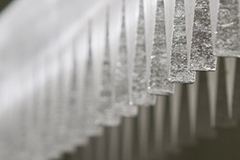
Rows of 1-inch teeth run across the leading edges of the T-head. As you pull the tool across the lake or pond bottom, the teeth engage long aquatic weed stems and help pull the vegetation from the sediment instead of simply cutting growth at the surface.
Throw it from your beach, dock, or another stable shoreline location. The T-Weeder sinks into the weed bed, travels along the bottom, and comes back to you using the included 25-foot retrieval rope.

Throw It Out. Pull It Back. Bring the Weeds With It.
Two Rows of Teeth Work Through the Weed Bed
The two aluminum plates form a narrow channel across the 3-foot head. Offset rows of approximately 1-inch teeth engage longer aquatic vegetation as the T-Weeder moves through the plants.
This makes the T-Weeder different from a lake weed cutter. A cutter slices vegetation and leaves the roots in place. The T-Weeder is designed to grab the vegetation and pull it toward shore, with roots coming free when the plant and bottom conditions allow.
Because the weeds come back with the tool, you do not need to cut vegetation first and then make a second trip into the water to retrieve it.
Remove Rooted Vegetation
Pull longer submerged weeds from the sediment instead of repeatedly trimming only the visible growth.
Reach Up to 29 Feet
The 4-foot handle plus 25-foot retrieval rope provide an approximate 29-foot working range from your position.
One-Person Tool
At approximately 6 pounds, the T-Weeder is light enough for repeated throw-and-retrieve operation.
No Electricity or Chemicals
No motor, battery, fuel, electrical connection, or aquatic herbicide is required.
For another manual tool designed to grab and pull rooted aquatic vegetation, compare the Weed Ripper aquatic weed pulling tool .
What's Included
What Comes With the T-Weeder?
3-Foot T-Shaped Head
Two 3-foot solid aluminum plates form the weed-grabbing head. Each plate is approximately 1/4 inch thick and spaced about 1 inch apart.
4-Foot Galvanized Handle
The galvanized metal handle connects through the center of the aluminum T-head and gives you direct control when using the tool close to shore.
25-Foot Retrieval Rope
The retrieval rope extends your working area and lets you pull the T-Weeder back after throwing it into deeper or more distant weed beds.
How It Works
How to Use the T-Weeder
The T-Weeder uses a simple throw, sink, pull, and clear process. Once assembled, no power equipment is required.
- Choose a stable position.
Stand on a beach, dock, shoreline, or another secure platform with enough open space to throw and retrieve the tool safely. - Keep control of the retrieval rope.
Make sure the rope is free of knots, nearby objects, people, pets, and equipment before throwing. - Throw the T-Weeder into the weed bed.
The approximately 6-pound tool can be pitched outward by hand to reach vegetation away from shore. - Allow the head to sink.
The T-head settles into the vegetation and toward the lake or pond bottom. - Pull steadily toward shore.
Retrieve the tool with the rope. As the head moves along the bottom, the rows of teeth grab longer weed stems and pull the vegetation toward you. - Clear the collected weeds.
Shake or remove vegetation from the head once the T-Weeder reaches shore. - Repeat in overlapping passes.
Continue working through the weed bed until you have cleared the swimming, boating, fishing, dock, or shoreline area you want to use.
Best Weeds
What Aquatic Weeds Does the T-Weeder Work Best On?
The T-Weeder performs best on longer submerged or floating-leaf vegetation with stems the teeth can grab. As a general rule, plants around 12 inches or longer are easier for the T-Weeder to engage than short, fine grasses.
The second factor is root strength. If a plant can reasonably be pulled from the bottom by hand, it is a stronger candidate for the T-Weeder than a plant with a thick, woody, or deeply anchored root system.
Good T-Weeder Applications
- Eurasian watermilfoil
- Hydrilla
- Curly-leaf pondweed
- Parrot feather
- Coontail
- Elodea
- Bladderwort
- Horned pondweed
- Leafy pondweed
- Floating-leaf pondweed
- Clasping-leaf pondweed
- Smartweed
- Other longer aquatic weeds with stems the teeth can grip
Less Suitable for the T-Weeder
- Short, wispy lake grasses
- Fine vegetation too short for the teeth to grip well
- Cattails
- Water lilies with strong established root systems
- Heavy reeds
- Bulrushes
- Woody or extremely tough emergent plants
Dealing with heavy emergent vegetation? View cattail and emergent weed control options .
Specifications
T-Weeder Specifications
| Product Type | Manual aquatic weed pulling and removal tool |
|---|---|
| Primary Use | Pulling longer rooted aquatic vegetation from waterfront areas |
| Head Width | 3 ft |
| Head Design | T-shaped dual-plate weed pulling head |
| Head Material | Solid aluminum |
| Head Plates | 2 |
| Plate Thickness | Approximately 1/4 in each |
| Plate Spacing | Approximately 1 in |
| Teeth | Two rows across the leading edges of the T-head |
| Tooth Length | Approximately 1 in |
| Handle Length | 4 ft |
| Handle Material | Galvanized metal |
| Retrieval Rope | 25 ft |
| Approximate Working Reach | Up to 29 ft from the user's position |
| Approximate Weight | 6 lb |
| Power Required | None |
| Battery Required | None |
| Fuel Required | None |
| Aquatic Herbicide Required | No |
| Typical Use | Throw into the weed bed, allow the head to sink, and retrieve the tool across the bottom with the rope |
| Recommended Weed Length | Best suited to longer vegetation, generally around 12 in or longer |
| Manufacturing | Made in the USA |
Where to Use
Clear the Waterfront Areas You Use Most
The T-Weeder is portable, manually operated, and does not need to remain mounted in one location. Move it around your property and work on different weed problems as needed.
Swimming Areas
Pull nuisance vegetation from areas where weeds brush against swimmers or interfere with wading.
Beaches & Shorelines
Work outward from shore to open a cleaner path through longer aquatic weeds.
Around Docks
Target vegetation growing beside or beyond the dock without installing permanent equipment.
Boat Lifts
Remove longer weeds around boat-lift areas where vegetation can interfere with access or become tangled around boating equipment.
Fishing Areas
Clear selected sections where dense vegetation interferes with casting, retrieving, or shoreline fishing.
Ponds & Small Waterways
Use the same throw-and-retrieve method in ponds, streams, rivers, and other suitable waterfront areas.
Pulling vs. Cutting
T-Weeder vs. an Aquatic Weed Cutter
Both methods have a place in manual aquatic weed management, but they perform different jobs.
| Feature | T-Weeder | Aquatic Weed Cutter |
|---|---|---|
| Primary Action | Grabs and pulls vegetation | Cuts vegetation |
| Root Removal | Root material can come free when bottom and plant conditions allow | Roots generally remain in the sediment |
| Weed Retrieval | Vegetation is pulled back toward shore with the tool | Cut weeds usually require separate collection |
| Best Use | Longer vegetation suited to manual pulling | Dense vegetation where fast cutting is the priority |
| Power Required | None | None for manual cutters |
Compare WeedShear aquatic weed cutters and other aquatic weed control tools .
Care & Safe Use
Use the T-Weeder With a Straight, Controlled Pull
The T-Weeder is built for repeated weed removal, but the handle and head should not be used as a pry bar against a dock, rock, stump, or other solid object.
Pull Heavy Loads Straight
When the head grabs a heavy mass of weeds, use a straight controlled pull. Do not lift a large load with a hard shovel-style levering motion.
Do Not Pry Against Your Dock
Avoid using the edge of a dock, boat, seawall, or other structure as leverage to force a heavy weed load upward.
Do Not Force a Snag
If the tool becomes caught around a stump, rock, cable, anchor, or another fixed underwater object, stop pulling. Free the tool from the opposite direction rather than applying excessive force.
Rinse After Use
Remove vegetation and rinse off mud, plant residue, and other buildup before storage.
FAQs
T-Weeder FAQs
What is the T-Weeder?
The T-Weeder is a manual aquatic weed pulling tool with a 3-foot-wide aluminum T-head, 4-foot galvanized handle, two rows of weed-grabbing teeth, and a 25-foot retrieval rope.
How does the T-Weeder remove aquatic weeds?
Throw the T-Weeder into the target weed bed and allow the head to sink. Pull it back with the retrieval rope. As the T-head moves across the bottom, its teeth engage longer aquatic weed stems and pull vegetation toward shore.
Does the T-Weeder cut weeds or pull them?
The T-Weeder is designed to grab and pull aquatic vegetation rather than slice through the plants. Depending on the weed species and bottom conditions, root material can come free with the plant.
How wide is the T-Weeder head?
The T-shaped head is approximately 3 feet wide.
How long is the T-Weeder handle?
The galvanized metal handle is approximately 4 feet long.
How long is the retrieval rope?
The T-Weeder includes a 25-foot retrieval rope.
How far can the T-Weeder reach?
The 4-foot handle and 25-foot retrieval rope provide up to approximately 29 feet of working reach from where you are standing.
How much does the T-Weeder weigh?
The complete T-Weeder weighs approximately 6 pounds.
What is the T-Weeder head made from?
The head uses two solid aluminum plates. Each plate is approximately 1/4 inch thick, and the two plates are spaced approximately 1 inch apart.
How long are the weed-grabbing teeth?
The teeth are approximately 1 inch long and run across the leading edges of the two T-head plates.
What types of weeds does the T-Weeder work best on?
The T-Weeder performs best on longer vegetation with stems its teeth can grab. Good applications include Eurasian watermilfoil, hydrilla, curly-leaf pondweed, parrot feather, coontail, elodea, bladderwort, horned pondweed, leafy pondweed, floating-leaf pondweed, clasping-leaf pondweed, smartweed, and similar aquatic weeds.
Does weed length matter?
Yes. Longer vegetation is easier for the teeth to engage. Plants around 12 inches or longer are generally better candidates than short, fine lake grasses.
Will the T-Weeder remove cattails?
The T-Weeder is not a good choice for established cattails. Cattails have strong root systems and typically require a different cutting, digging, pulling, or treatment approach.
Will the T-Weeder remove lily pads?
Established water lilies and lily pads often have strong rhizomes and are harder to remove with the T-Weeder. A dedicated lily pad root puller is better suited to many heavy lily-pad infestations.
Does the T-Weeder work on short lake grass?
Short, fine, wispy vegetation is less suitable because the teeth need enough plant length and structure to grip the weeds during retrieval.
Where can I use the T-Weeder?
Use it around beaches, swimming areas, docks, boat lifts, fishing areas, shoreline access points, ponds, lakes, rivers, streams, and other suitable waterfront areas.
Do I need to enter the water to retrieve the weeds?
During normal operation, no. The 25-foot rope brings the T-Weeder and collected vegetation back toward shore. If the tool becomes caught on a fixed underwater object, you should approach the snag safely rather than trying to force it free from shore.
Is the T-Weeder easy for one person to use?
Yes. The tool weighs approximately 6 pounds and is designed for one-person throwing and rope retrieval. Dense weed beds and large loads require more physical effort.
How do I remove weeds from the T-Weeder after each pass?
Once the tool reaches shore, shake or pull the collected vegetation off the head. The T-Weeder is then ready for another pass.
Can the T-Weeder be used around a boat lift?
Yes. The T-Weeder works well for targeting longer aquatic weeds around boat-lift areas. Check for lift cables, anchors, electrical lines, and other underwater hardware before throwing the tool.
How does the T-Weeder compare with WeedShear?
The tools perform different jobs. WeedShear cuts aquatic vegetation quickly, while the T-Weeder grabs and pulls vegetation toward shore. Cutting is useful for rapidly clearing dense growth. Pulling is useful when you want to remove the plant and potentially some of its root material instead of only cutting the upper growth.
Does the T-Weeder collect the weeds it removes?
The T-Weeder pulls vegetation back toward shore with the tool. For loose fragments, floating vegetation, or larger shoreline piles, a lake rake or aquatic weed pitch fork helps finish the cleanup.
Does the T-Weeder require electricity or chemicals?
No. The T-Weeder is completely manual and requires no electrical connection, battery, fuel, or aquatic herbicide.
How should I handle a very heavy load of weeds?
Pull the tool in a straight, controlled direction. Do not use the handle like a shovel or pry against the edge of a dock to lift a heavy load. If each pass is too heavy, reduce the amount of vegetation collected per throw.
What should I do if the T-Weeder gets stuck?
Stop pulling if the tool is caught on a stump, rock, cable, anchor, or another solid object. Do not force the handle or rope. Approach the snag safely and free the tool from the opposite direction.
Is the T-Weeder made in the USA?
Yes. The T-Weeder is made in the USA.
Videos
See the T-Weeder in Action
Watch how the T-Weeder is thrown into an aquatic weed bed, allowed to sink, and pulled back toward shore with the collected vegetation.
T-Weeder Aquatic Weed Puller for Lake & Pond Weeds
14 Reviews
-
T-Weeder
I am impressed. I am on a 35 acre Wisconsin lake where most property owners have manicured lawns. Weeds are a constant problem. I have tried many other devices to control the weeds near my piers, this device is by far the best product I have used. A+ from me.
-
12 month review. Pulls the roots
I bought this last year when, for the first time, my Pond was getting crazy with Duck weed. My Pond is approx 100' in diameter. The T Weeder I have has a smaller Handle, maybe they did a minor redesign. Personally, I think the smaller handle would work better for ponds with steep sides. Anyway. This year the duck weed was minimal. My guess is the T Weeder hot 90% of the duckweed, roots and all. This year, I just needed a little clean-up. Most aquatic weeders just have knives on them. I didnt want to just cut weeds that will regrow, my mission was to eliminate. I already have grass to constantly cut. I dont want to 'mow' my pond.
-
T-Weeder
Simply the best lake tool I’ve ever had. I would recommend this rake to everyone. Very well built and sturdy. But light enough to get the job . Lighting fast shipping.Thank You
-
T-Weeder
Excellent product! Requires a little elbow grease but works like a champ and pulls out gobs of seaweed each time.
-
T Weeder aquatic weed removal tool
This rake works better than all the others I've purchased. Throws out real easily!
Related Products



Flumigard Herbicide | Aquatic Weed Control

