

Duckweed vs. Algae: How to Tell the Difference and Treat Accordingly
Duckweed vs. Algae: Spot the Difference
When it comes to maintaining a healthy pond or lake, identifying the specific type of aquatic growth is crucial. Many property owners struggle to distinguish between duckweed vs algae, but this distinction is essential because each requires different treatment methods. Applying the wrong approach can waste time, money, and even harm the pond's ecosystem. This article will provide a clear guide to help you spot the difference and choose the right course of action.
Duckweed vs. Algae: Why Correct Identification Matters
Treating duckweed as if it were algae, or vice versa, is a common mistake that can lead to significant frustration. Algaecides, for example, are designed to target algae's cellular structure, and they will have little to no effect on duckweed. Similarly, treatments effective for duckweed might not address the root causes of algae blooms, allowing them to return quickly.
Using the wrong chemicals can also disrupt the delicate balance of your pond ecosystem. Some algaecides, while effective on certain algae types, can harm beneficial aquatic plants or even affect fish and other wildlife. It's crucial to select treatments that specifically target the identified problem without causing unintended harm.
Misidentification often leads to recurring problems and further infestations. If the underlying issue isn't addressed correctly, the unwanted growth will likely return, requiring repeated treatments and potentially escalating the problem over time. Accurate identification is the first step toward a long-term solution.
What is Duckweed?
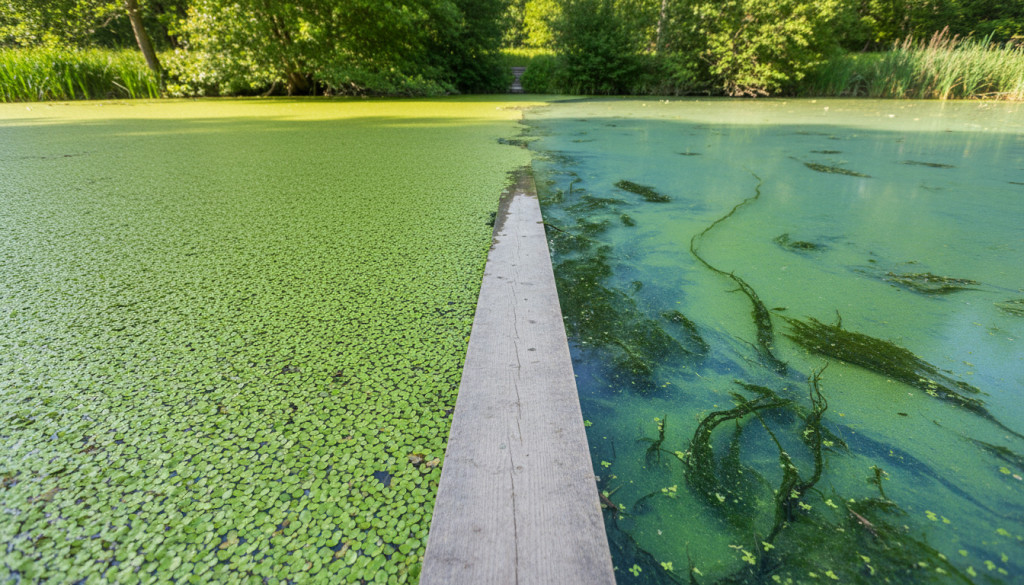
Duckweed is an aquatic plant characterized by its small, floating leaves, often referred to as fronds. These tiny leaves typically range from 1/16 to 1/4 inch in diameter, giving the appearance of a green carpet on the water's surface. Beneath each frond, a single, thread-like root extends into the water, absorbing nutrients.
Duckweed is known for its rapid reproduction and ability to quickly form dense colonies. It primarily reproduces asexually, with new fronds budding off from the parent plant. Under ideal conditions, duckweed can double its population in as little as 24 to 36 hours, leading to rapid coverage of a pond or lake surface.
Several duckweed species are commonly found in the United States, including Lemna minor (common duckweed), Spirodela polyrhiza (giant duckweed), and Wolffia (watermeal). Each species varies slightly in size and appearance, but they all share the characteristic of small, floating fronds and rapid growth.
What is Algae?
Algae is a diverse group of aquatic organisms that perform photosynthesis. Unlike duckweed, algae lacks true roots, stems, and leaves. It exists in many forms, from single-celled planktonic algae to multicellular filamentous and mat-forming varieties.
Algae exhibits a wide range of color variations, including green algae, brown algae, and blue-green algae (cyanobacteria). Green algae are the most common and often appear as a green film or cloudiness in the water. Blue-green algae, on the other hand, can produce toxins and often form scums or mats on the surface.
Algae growth is promoted by sunlight, an abundance of nutrients (especially nitrogen and phosphorus), and stagnant water conditions. Excessive nutrient runoff from fertilizers, septic systems, and agricultural activities can fuel rapid algae blooms, leading to water quality problems and aesthetic concerns.
Duckweed vs. Algae: Key Differences You Can See
The most obvious difference between duckweed vs algae lies in their appearance. Duckweed has a distinct leaf structure, with individual, clearly defined fronds floating on the surface. Algae, conversely, typically presents as a slimy film, stringy strands, or a cloudy discoloration of the water.
Texture is another key differentiator. Duckweed fronds have a smooth surface that feels almost waxy to the touch. Algae, depending on the type, can feel slippery, slimy, or even rough. Filamentous algae, for example, often has a stringy, cotton-like texture, while mat-forming algae can feel dense and matted.
Duckweed tends to form a uniform, continuous coverage on the water's surface, creating a dense green layer. Algae, however, often exhibits a patchy or clumpy distribution. It may appear as localized blooms, surface scums, or attached growths on rocks and submerged objects.
Identifying in Murky Water
Even in murky water, you can still distinguish between duckweed and algae. Look closely at the surface: duckweed will still present as individual, albeit small and potentially discolored, leaves. Algae, even when mixed with sediment, will typically create a cloudy or slimy appearance rather than distinct leaf structures.
If possible, collect a sample of the growth and examine it more closely. Duckweed will maintain its leaf-like structure even when removed from the water, while algae will often clump together or disintegrate into a slimy mass. A pond rake such as the Rakezilla can help with sample collection.
Remember that both duckweed and algae can sometimes coexist, making identification more challenging. In such cases, focus on identifying the dominant type of growth to determine the most appropriate treatment strategy.
Treating Algae: Prevention and Removal
Effective algae control requires a multi-faceted approach that addresses both the symptoms and the underlying causes. Algaecides can provide quick relief from algae blooms, but it's essential to choose the right product for the specific type of algae present. Copper-based algaecides are commonly used for green algae, while other formulations are more effective against blue-green algae.
Natural algae control methods focus on creating an environment that is less conducive to algae growth. Aeration, for example, increases oxygen levels in the water, which can inhibit the growth of certain algae species. Nutrient reduction strategies, such as minimizing fertilizer runoff and installing buffer strips, can also help limit algae growth.
Manual removal of algae is often ineffective because it doesn't address the underlying causes of the bloom. While you can physically remove some surface algae, the remaining algae will quickly reproduce and replenish the population. Instead, focus on long-term prevention strategies and targeted algaecide treatments when necessary. The best algae control methods combine both approaches.
The AquaThruster™ can also play a role in preventing algae buildup along shorelines. By creating continuous water movement, the AquaThruster™ disrupts the stagnant conditions that favor algae growth, helping to keep your shoreline clean and clear.
Treating Duckweed: Effective Removal Strategies
For small duckweed infestations, manual removal techniques like skimming and netting can be effective. Use a fine-mesh net to scoop the duckweed off the surface of the water, being careful not to disturb the sediment or other aquatic life. Dispose of the removed duckweed properly to prevent it from re-entering the pond.
Chemical control options include herbicides specifically designed for duckweed. These herbicides typically contain active ingredients like fluridone or glyphosate, which disrupt the plant's growth processes. Always follow the manufacturer's instructions carefully and apply the herbicide according to local regulations. It is important to treat duckweed correctly to prevent further spreading.
Biological control methods involve introducing grass carp to consume the duckweed. Grass carp are herbivorous fish that can effectively control aquatic vegetation, including duckweed. However, the introduction of grass carp is regulated in many areas, so it's essential to check with your local authorities before stocking them in your pond.
Frequently Asked Questions
What are the ideal conditions for duckweed growth?
Duckweed thrives in nutrient-rich, stagnant water with plenty of sunlight. High levels of nitrogen and phosphorus, often from fertilizer runoff or decaying organic matter, fuel its rapid growth. Calm water conditions allow duckweed to form dense mats on the surface, maximizing its access to sunlight and nutrients.
What are the ideal conditions for algae growth?
Algae also prefers nutrient-rich water and abundant sunlight, but it can tolerate a wider range of conditions than duckweed. Some algae species thrive in moving water, while others prefer stagnant environments. Water temperature also plays a role, with certain algae types blooming in warmer temperatures.
What are the long-term consequences of untreated duckweed or algae infestations?
Untreated duckweed and algae infestations can lead to a variety of problems, including reduced water clarity, decreased oxygen levels, and the death of fish and other aquatic life. Dense mats of duckweed or algae can also block sunlight from reaching submerged plants, disrupting the entire ecosystem.
How does water quality affect duckweed and algae growth?
Water quality is a major factor influencing both duckweed and algae growth. High nutrient levels, particularly nitrogen and phosphorus, promote rapid proliferation. pH levels, water temperature, and the presence of other pollutants can also affect the growth and composition of aquatic plant communities.
Are there any native look-alikes to duckweed that are beneficial?
While there aren't direct look-alikes, some native floating plants can be mistaken for duckweed. For example, watermeal (Wolffia) is another small, floating plant that often grows alongside duckweed. These native plants can provide habitat and food for wildlife, but excessive growth can still cause problems.
What are the regulations regarding herbicide use for aquatic weed control in different states?
Regulations regarding herbicide use for aquatic weed control vary significantly from state to state. Some states require permits for any herbicide application in public waters, while others have specific restrictions on certain chemicals or application methods. Always check with your local Department of Environmental Protection or similar agency to ensure compliance with all applicable regulations.
How does the AquaThruster™ prevent algae buildup?
The AquaThruster™ prevents algae buildup by creating constant water movement, disrupting the stagnant conditions that algae prefer. This movement also helps to distribute nutrients more evenly throughout the water column, preventing localized concentrations that can fuel algae blooms. The Weeders Digest team can help you determine the best placement for your AquaThruster™.
Choose the Right Approach for a Healthy Pond
The key to effectively managing aquatic growth lies in accurately identifying whether you're dealing with duckweed vs algae. Duckweed presents as distinct, small leaves floating on the surface, while algae takes on various forms, from slimy films to stringy strands. Correct identification ensures you choose the right treatment, saving time, money, and potential harm to your pond's ecosystem.
At Weeders Digest, we understand the challenges of maintaining a healthy pond. Our team has extensive knowledge of aquatic plant identification and control methods, and we're here to help you find the best solutions for your specific needs.
Recent Posts
-
Duckweed vs. Algae: How to Tell the Difference and Treat Accordingly
Duckweed vs. Algae: Spot the Difference When it comes to maintaining a healthy pond or lake, identif …3rd Apr 2026 -
How to Choose the Right Muck Reducer for Your Lake or Pond
Choosing Pond Muck Remover: Factors to Consider Pond muck is an inevitable part of any aquatic ecosy …3rd Apr 2026 -
The Benefits of Using Cold Water Muck Reducers in Early Spring
Early Spring Muck Reducer Benefits As winter loosens its grip, lakehome and pond owners start thinki …1st Apr 2026