

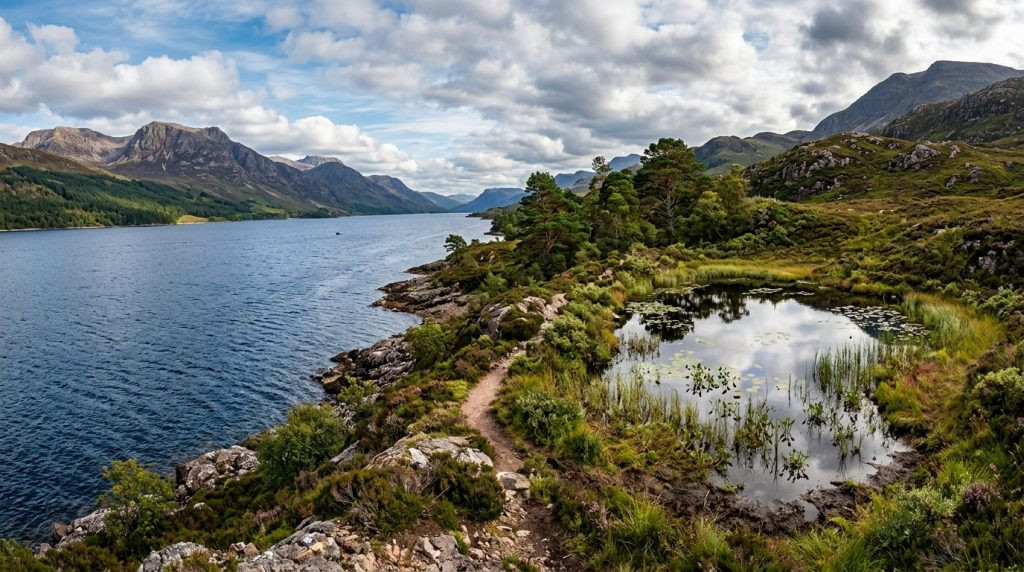
What Separates Lakes from Ponds?
For anyone new to owning waterfront property, understanding the fundamental differences between a lake and a pond is crucial for effective management. While both are inland bodies of standing water, their distinct characteristics profoundly influence everything from aquatic life to the specific challenges they present. Recognizing these distinctions early on can save significant time and resources, guiding you toward appropriate care strategies.
This article will dig into the key factors that differentiate lakes from ponds, exploring how these variations impact everything from water depth and temperature stratification to the types of vegetation and aquatic organisms you might encounter. We will also discuss how these natural attributes directly influence the management approaches required for maintaining a healthy and thriving aquatic environment.
Defining the Lake vs Pond Differences
The primary distinctions between a lake and a pond are not always immediately obvious, often leading to confusion for new property owners. While there isn't a universally agreed-upon scientific threshold, several key characteristics help differentiate these two types of water bodies.
Generally, lakes are larger and deeper, exhibiting more complex ecological systems, whereas ponds are typically smaller, shallower, and often more uniform in their physical and biological makeup. These fundamental differences dictate everything from water circulation patterns to the types of aquatic plants and animals that can thrive within them.
Understanding these core definitions is the first step in appreciating the unique challenges and opportunities each water body presents, setting the stage for effective and informed management decisions.
Depth and Light Penetration
One of the most significant factors distinguishing lakes from ponds is depth, which directly influences light penetration. Ponds are typically shallow enough for sunlight to reach the entire bottom, allowing aquatic plants to grow across the entire basin.
Lakes, conversely, are often much deeper, creating a "photic zone" where light penetrates and an "aphotic zone" where it does not. This stratification of light profoundly impacts where photosynthesis can occur, limiting rooted plant growth to the shallower margins and influencing the distribution of aquatic life.
The varying light conditions also affect water temperature and oxygen levels, creating distinct habitats within a single lake that are not typically found in the more uniform environment of a pond.
Temperature Stratification
Temperature stratification is another critical differentiator, particularly in temperate climates. Lakes, due to their depth, often develop distinct thermal layers during warmer months: a warm upper layer (epilimnion), a transitional layer with a rapid temperature change (thermocline), and a cold, dense bottom layer (hypolimnion).
This stratification prevents the mixing of water layers, leading to differing oxygen levels and nutrient concentrations at various depths. Ponds, being shallower, generally do not stratify or experience only temporary stratification, allowing for more consistent water temperatures and oxygen distribution throughout the water column.
The presence or absence of stable thermal stratification has profound implications for aquatic habitats, nutrient cycling, and the overall health of the water body.
Size and Surface Area
While not a definitive scientific measure, the sheer size and surface area often serve as practical indicators when considering lake vs pond differences. Lakes typically span a much larger surface area, often encompassing many acres, and can be several miles in circumference.
Ponds, on the other hand, are generally much smaller, usually less than 5 to 10 acres, and can often be entirely walked around within a short period. This difference in scale impacts wind exposure, wave action, and the overall volume of water, which in turn affects water quality dynamics and ecological processes.
Larger surface areas in lakes can also lead to more diverse shoreline habitats and a greater capacity to absorb environmental changes compared to the more confined nature of a pond.
Ecological and Biological Lake vs Pond Differences
Beyond physical dimensions, the ecological and biological characteristics of lakes and ponds present another layer of distinction. These differences are a direct consequence of their physical attributes, influencing the types of plant and animal life that can flourish in each environment.
Understanding these ecological variations is vital for any water body owner, as they dictate the natural balance and potential vulnerabilities of your aquatic ecosystem. From the dominant plant species to the fish populations, the biological makeup reflects the underlying physical conditions.
Recognizing these ecological lake vs pond differences is key to implementing management strategies that work with, rather than against, the natural tendencies of your water body.
Aquatic Vegetation
The types and distribution of aquatic vegetation vary significantly between lakes and ponds. In ponds, where sunlight often reaches the entire bottom, rooted aquatic plants can grow across the entire basin, sometimes leading to dense coverage if not managed.
Lakes, with their deeper aphotic zones, typically restrict rooted vegetation to the shallower littoral zones along the shoreline. While lakes may have extensive shoreline vegetation, the vast open water areas remain free of bottom-rooted plants, often dominated by phytoplankton.
This distinction in vegetation patterns directly influences nutrient cycling, oxygen production, and habitat availability for various aquatic organisms.
Fish and Wildlife
The fish and wildlife populations also reflect the distinct environments of lakes and ponds. Ponds, with their shallower, often warmer, and more uniform conditions, tend to support species that can tolerate lower oxygen levels and fluctuating temperatures, such as carp, bullheads, and certain sunfish species.
Lakes, with their greater depth, thermal stratification, and diverse habitats, can support a wider array of fish species, including cold-water fish like trout or walleye in their deeper, cooler zones. The larger scale of lakes also supports more diverse bird populations, amphibians, and mammals that rely on extensive aquatic habitats.
Understanding the natural inhabitants of your water body is crucial for responsible stewardship and for maintaining a healthy ecological balance.
Nutrient Cycling and Water Quality
Nutrient cycling and overall water quality are fundamentally influenced by the physical and biological differences between lakes and ponds. Ponds, being shallower and often having more direct interaction with surrounding land, can be more susceptible to nutrient runoff and rapid changes in water quality.
Their smaller volume means that nutrient inputs can have a more immediate and pronounced effect, potentially leading to faster eutrophication or algal blooms. Lakes, with their larger volume and often more complex stratification, can buffer these changes to some extent, though they are not immune to nutrient pollution.
The dynamics of oxygen depletion in the hypolimnion of stratified lakes, for instance, is a unique water quality challenge not typically found in ponds, highlighting the need for tailored management approaches.
Management Implications of Lake vs Pond Differences
The practical implications of the lake vs pond differences are perhaps most keenly felt in their management. What works for a small, shallow pond may be entirely ineffective, or even detrimental, to a large, deep lake, and vice-versa.
New water body owners often face common challenges such as excessive aquatic weed growth, persistent muck accumulation, or undesirable algal blooms. The approach to addressing these issues must be carefully tailored to the specific characteristics of the water body.
Understanding these distinctions is not merely academic; it directly informs the selection of appropriate tools, techniques, and long-term strategies for maintaining a healthy and enjoyable aquatic environment.
Aquatic Weed Control Strategies
Aquatic weed control strategies differ significantly depending on whether you are managing a lake or a pond. In ponds, where rooted vegetation can cover the entire bottom, broad-spectrum treatments or mechanical removal across the entire basin might be considered.
For lakes, targeting specific areas like swimming zones or boat lanes with localized treatments is often more practical and environmentally sound, due to the vastness of the water body. The choice of aquatic herbicide, biological control, or mechanical harvesting method must account for water depth, flow, and the presence of non-target species.
For instance, a bottom screen or benthic barrier might be highly effective in a shallow pond but impractical for large areas of a lake, necessitating different approaches for each.
Muck and Sediment Management
Managing muck and accumulated sediment also requires different strategies for lakes and ponds. In ponds, muck can often be more uniformly distributed and can be addressed with aeration systems designed to circulate the entire water column, promoting aerobic decomposition.
For lakes, particularly those with deep hypolimnions, muck accumulation can be significant in deeper areas where oxygen is scarce, requiring more targeted solutions like specialized muck reducers or even dredging in severe cases. The sheer volume of muck in a large lake often makes comprehensive removal economically unfeasible, necessitating a focus on prevention and localized treatment.
Understanding the source and composition of muck is critical, whether it's decaying vegetation in a pond or fine silt in a lake, as this informs the most effective removal or reduction method.
Aeration and Water Circulation
Aeration and water circulation are crucial for maintaining water quality, but their application varies greatly between lakes and ponds. Ponds often benefit from surface aerators or diffused aeration systems that ensure consistent oxygen levels throughout the shallow water column, preventing stagnation and supporting healthy aquatic life.
Lakes, especially those that stratify, require more sophisticated aeration systems, such as hypolimnetic aerators, which specifically target the deep, oxygen-depleted bottom layer without disrupting the thermal stratification. Destratification systems, which mix the entire lake, are also used but must be carefully managed to avoid negative impacts on cold-water fish species.
The choice of aeration system directly depends on the water body's depth, volume, and the specific water quality challenges it faces, highlighting the importance of understanding lake vs pond differences.
The Weeders Digest Approach to Lake and Pond Solutions
At Weeders Digest, we understand that every lake and pond presents its own unique set of challenges and opportunities. Our mission is to improve the quality of life for lakefront and pond owners by offering a comprehensive range of unique and beneficial products and solutions, tailored to the specific characteristics of your water body.
Customers consistently report significant improvements in their lakefront and pond conditions after implementing our solutions, noting the effectiveness of our products in tackling issues like excessive weed growth and muck accumulation. We pride ourselves on providing expert guidance that translates into tangible results for our clients.
Our team possesses an intimate, first-hand understanding of our extensive product catalog, ensuring that we can help you find the perfect lake or pond management solutions for your specific needs, whether you're dealing with a small backyard pond or a large recreational lake.
Tailored Solutions for Unique Water Bodies
We recognize that a one-size-fits-all approach simply does not work in aquatic management. Our experts take into account the specific lake vs pond differences, including depth, size, existing vegetation, and water quality parameters, to recommend the most effective strategies.
This tailored approach ensures that whether you are battling invasive weeds in a shallow pond or addressing deep-water muck in a stratified lake, you receive solutions that are precisely matched to your situation. We guide you through selecting the right tools, from specialized aquatic weed removal equipment to advanced aeration systems.
Our commitment is to provide practical, effective advice that empowers you to achieve and maintain a healthy and beautiful aquatic environment.
Expert Guidance and Support
Navigating the complexities of lake and pond management can be daunting, especially for new owners. Our team of agents has extensive knowledge of every item we sell, offering unparalleled support and guidance.
We are dedicated to helping customers understand their water body's specific needs and select the most appropriate products and techniques. This commitment to expert assistance ensures that you are never alone in your efforts to manage your lake or pond effectively.
From initial assessment to ongoing maintenance, we provide the insights and resources necessary for successful long-term aquatic health.
Frequently Asked Questions About Lake vs Pond Differences
Does the presence of a natural inlet or outlet determine if it's a lake or a pond?
While many lakes and ponds have inlets and outlets, their presence alone does not definitively classify a water body. The primary factors remain depth, size, and the resulting ecological characteristics, particularly temperature stratification and light penetration.
A pond can have a small stream feeding into it and draining out, just as a lake can be fed by multiple rivers and have a significant outflow. The flow-through rate can impact water quality and nutrient dynamics, but it's secondary to the physical dimensions when distinguishing between a lake and a pond. For instance, a very shallow, small body of water with an inlet and outlet would still typically be considered a pond due to its overall physical characteristics.
Understanding the flow dynamics is crucial for management, as it affects how quickly pollutants might flush through or how effectively treatments might disperse, but it doesn't change the fundamental classification.
How do I know if my water body is experiencing temperature stratification?
You can determine if your water body is experiencing temperature stratification by measuring water temperatures at various depths during warmer months. A significant and consistent drop in temperature (typically 1 degree Celsius or more per meter of depth) over a specific range indicates the presence of a thermocline, which is characteristic of a stratified lake.
Specialized equipment, such as a water quality meter with a temperature probe, can provide accurate readings at different depths. Alternatively, observing the behavior of fish, which may seek cooler, deeper waters during stratification, can offer anecdotal evidence.
Understanding stratification is critical because it impacts oxygen levels, nutrient distribution, and the overall health of the aquatic ecosystem, often necessitating specific aeration strategies to mitigate issues like anoxic bottom waters.
Are there specific regulations that apply differently to lakes versus ponds?
Yes, specific regulations can often apply differently to lakes versus ponds, particularly concerning environmental protection, water usage, and permitting for management activities. Larger, publicly accessible lakes are frequently subject to more stringent state and federal regulations regarding water quality, fishing limits, and shoreline development due to their ecological significance and public use.
Ponds, especially those entirely on private property and without direct connection to public waterways, may have fewer regulatory requirements, though local ordinances regarding chemical applications or dredging can still apply. It is always essential to consult with your local and state environmental agencies, such as the Environmental Protection Agency or your state's Department of Natural Resources, before undertaking any significant management activities.
These agencies can provide guidance on permits required for activities like aquatic weed control, dredging, or installing aeration systems, ensuring compliance with environmental laws.
Understanding the fundamental lake vs pond differences is the first critical step for any water body owner. These distinctions profoundly influence everything from the types of aquatic life present to the specific management challenges you will encounter. Recognizing these unique characteristics allows for the implementation of targeted, effective strategies that promote a healthy and vibrant aquatic ecosystem.
Successfully managing your water body, whether it's a tranquil pond or an expansive lake, requires a deep understanding of its unique ecology and the right tools for the job. We offer unparalleled expertise and a comprehensive range of solutions designed to address the specific needs of your aquatic environment, ensuring lasting health and beauty.
Unsure if you have a lake or a pond, and what that means for management? Contact our help desk for expert guidance.
Recent Posts
-
Tame Cattails with an Aquatic Vegetation Groomer
For lakefront property owners, encroaching cattails transform vibrant shorelines into dense, unusabl …8th Oct 2026 -
Seasonal Lake Weed Management: Local Help
Effective lake weed management local to your property requires more than just a generic approach; it …30th Sep 2026 -

Lake Weed Cutters: Manual vs. Motorized Options
Managing aquatic vegetation is a persistent challenge for lakefront property owners, marinas, and ho …23rd Sep 2026