PolarZyme | Cold Water Pond Clarifier | Powder Bacteria Eco-friendly
- FREE SHIPPING:
- Lower 48 States USA




Description
Start Biological Pond & Lake Treatment Before the Water Warms Up
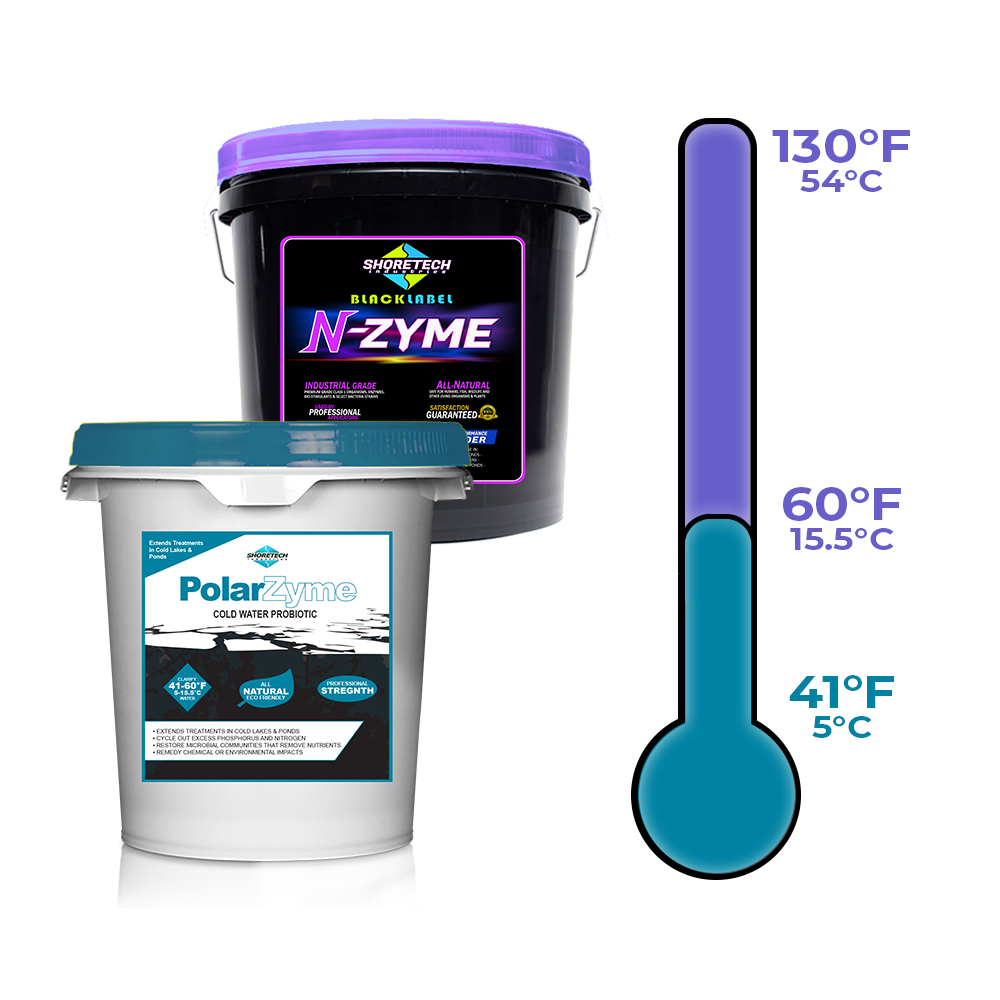
PolarZyme is a cold-water probiotic powder and cold water bacteria for ponds and lakes, formulated to remain useful when water temperatures are approximately 41°F to 60°F.
When leaves, dead aquatic vegetation, fish waste, algae residue, and other organic material accumulate in the water, decomposition can add nutrients and contribute to muck, sludge, odors, and poor water clarity.
PolarZyme introduces beneficial cold-water microorganisms that help digest biodegradable organic material and consume excess nutrients such as nitrogen and phosphorus. This supports cleaner-looking water and a healthier biological balance during times when many traditional warm-water bacteria products are less active.
For pond owners comparing a clarifier or flocculant, it is important to understand the difference. PolarZyme works as a biological water-clarifying treatment through beneficial microbial activity. It is not a chemical flocculant that rapidly binds suspended particles together and causes them to settle.
Use PolarZyme in lakes, ponds, shorelines, aquaculture systems, hatcheries, golf-course ponds, retention ponds, decorative ponds, and other suitable water bodies during the cold-water portion of the season.

Why Use Cold Water Bacteria for Ponds?
Biological Clarification for Cold Pond & Lake Water
Fall leaves, dead plants, fish waste, and other organic debris continue breaking down beneath the surface. As this material decomposes, it can contribute nutrients back into the water and build soft organic sediment along shorelines and pond bottoms.
PolarZyme is designed for the colder portion of the season, giving beneficial microbial activity a head start while water temperatures are between approximately 41°F and 60°F.
This makes it useful as part of a seasonal lake or pond management program before switching to a warm-water biological treatment once temperatures rise above the PolarZyme operating range.
Cold-Water Formula
Designed specifically for use when water temperatures are approximately 41°F to 60°F.
Biweekly Treatment
Apply every two weeks while water remains within the recommended cold-water range.
Dry Application
Broadcast the powder evenly over the surface of the treatment area.
Mix & Spray
PolarZyme can also be dissolved in water and distributed across the treatment area.
Browse more lake and pond water treatments or muck-reducing products .
Benefits
PolarZyme Cold-Water Benefits
Cold Water Bacteria for Ponds
PolarZyme is formulated for approximately 41°F to 60°F water, extending beneficial bacteria treatment into cooler spring and fall conditions.
Helps Process Organic Sludge
Beneficial microorganisms help digest biodegradable organic material that contributes to soft muck and sludge.
Consumes Nutrients
Microbial activity uses excess nutrients including nitrogen and phosphorus that are present in the water.
Biological Clarifier
Reducing suspended and decomposing organic material can help improve the appearance and clarity of lake and pond water over time.
Supports Microbial Balance
Adds beneficial microorganisms to support biological activity within the aquatic environment.
Biological Treatment
PolarZyme is a probiotic bacteria treatment rather than a chemical flocculant, aquatic herbicide, or algaecide.
How It Works
How PolarZyme Cold Water Bacteria Works
- Apply while the water is cold.
Begin treatment after ice-out or during late-season cooling when water temperature is approximately 41°F to 60°F. - Distribute PolarZyme across the treatment area.
Apply the powder dry or dissolve it in water and distribute it evenly across the surface. - Beneficial microorganisms become active.
The cold-water microbial blend begins working on available biodegradable organic material. - Organic debris is biologically processed.
Leaves, dead vegetation, fish waste, algae residue, and other biodegradable material become food sources for microbial activity. - Nutrients are consumed.
Microorganisms use available nitrogen and phosphorus as part of their growth and biological processes. - Water clarity may improve gradually.
As organic loading is reduced, the biological treatment can support cleaner-looking water over time. - Repeat the treatment.
Apply every two weeks while water temperatures remain within the recommended range.
Application & Rates
PolarZyme Application Rates
The current PolarZyme application chart provides different rates for an initial treatment, standard ongoing applications, and hypereutrophic water with very high nutrient loading.
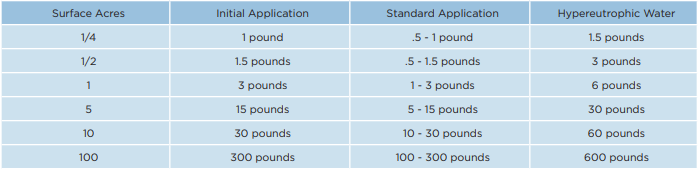
| Surface Area | Initial Application | Standard Application | Hypereutrophic Water |
|---|---|---|---|
| 1/4 Acre | 1 lb | 0.5 to 1 lb | 1.5 lb |
| 1/2 Acre | 1.5 lb | 0.5 to 1.5 lb | 3 lb |
| 1 Acre | 3 lb | 1 to 3 lb | 6 lb |
| 5 Acres | 15 lb | 5 to 15 lb | 30 lb |
| 10 Acres | 30 lb | 10 to 30 lb | 60 lb |
| 100 Acres | 300 lb | 100 to 300 lb | 600 lb |
Two Ways to Apply PolarZyme
Broadcast Dry
Distribute the powder evenly across the surface of the lake, pond, shoreline zone, or other treatment area.
Dissolve & Spray
Mix PolarZyme into water and spray the solution across the treatment area for even distribution.
Size Guide
PolarZyme Package Sizes
PolarZyme is currently offered in five package sizes. The powder is packaged in convenient 8 oz, or 1/2 lb, portions.
| Package Size | 8 oz Portions | Total Product |
|---|---|---|
| 3 lb | 6 × 8 oz | 3 lb |
| 6 lb | 12 × 8 oz | 6 lb |
| 10 lb | 20 × 8 oz | 10 lb |
| 20 lb | 40 × 8 oz | 20 lb |
| 30 lb | 60 × 8 oz | 30 lb |
Where to Use
Where Can Cold Water Bacteria for Ponds & Lakes Be Used?
Lakes
Use in cold lake water to support organic-matter digestion and nutrient management during early spring and late fall.
Ponds
Use PolarZyme as cold water bacteria for ponds during cool spring and fall conditions when water remains within the recommended range.
Shorelines & Dock Areas
Target areas where leaves, dead vegetation, and other biodegradable organic material commonly collect.
Retention Ponds
Use as part of a biological water-quality program in suitable stormwater and retention ponds.
Golf-Course Ponds
Supports biological water management in ornamental and functional golf-course water bodies.
Aquaculture & Hatcheries
The current product information lists aquaculture and hatchery applications among the intended uses.
Decorative Ponds
Can be used in suitable ornamental ponds and water features during colder water conditions.
Other Managed Water Bodies
Use where biological digestion of biodegradable organic material and cold-season nutrient management are appropriate.
Clarifier vs. Flocculant
Is PolarZyme a Clarifier or Flocculant?
PolarZyme is a biological pond and lake clarifier based on beneficial cold-water microorganisms. It is not a traditional chemical flocculant.
| Feature | PolarZyme Biological Clarifier | Traditional Flocculant |
|---|---|---|
| How It Works | Beneficial microorganisms biologically process organic material and consume nutrients | Binds suspended particles together into larger particles |
| Speed | Gradual biological process | Typically intended for faster physical clarification |
| Organic Material | Helps biologically digest biodegradable organic matter | Primarily targets suspended particles through aggregation |
| Nutrient Management | Microbial activity consumes available nitrogen and phosphorus | Depends on the specific flocculant formulation |
| Best Use | Ongoing biological management in cold water | Situations where particle settling or binding is the primary objective |
PolarZyme vs. N-Zyme
PolarZyme vs. N-Zyme: Choose by Water Temperature
PolarZyme and N-Zyme are both biological lake and pond treatments, but they are intended for different parts of the season.
| Feature | PolarZyme | N-Zyme |
|---|---|---|
| Primary Season | Early spring and late fall | Warmer season |
| Recommended Water Temperature | Approximately 41°F to 60°F | Best when water is above approximately 60°F |
| Format | Cold-water beneficial bacteria powder | Powder beneficial bacteria, enzymes and bio-stimulants |
| Organic Material | Helps process biodegradable organic debris in cold water | Helps process muck, sludge, waste and organic buildup in warmer water |
| Nutrient Management | Yes | Yes |
| Best Use | Extend biological treatment into cold-water conditions | Continue biological water treatment once temperatures warm |
Best Results
How to Get Better Results With PolarZyme
Measure Water Temperature
Use PolarZyme while the water is approximately 41°F to 60°F rather than relying only on the calendar.
Distribute Evenly
Spread the product across the treatment area rather than concentrating the complete dose in one small location.
Repeat Every Two Weeks
Regular application maintains biological input during the cold-water treatment period.
Target Organic Hot Spots
Pay attention to coves, shorelines, leaf-collection areas, inflows, and locations where dead vegetation accumulates.
Use Aeration When Appropriate
Water movement and aeration can support overall pond management by improving circulation and oxygen distribution.
Transition as Water Warms
Move to an appropriate warm-water bacteria program after temperatures rise beyond the PolarZyme operating range.
Specifications
PolarZyme Specifications
| Product | PolarZyme Cold Water Probiotic |
|---|---|
| Product Type | Cold water bacteria for ponds and lakes / biological clarifier powder |
| Recommended Water Temperature | Approximately 41°F to 60°F / 5°C to 15.5°C |
| Primary Purpose | Biological digestion of biodegradable organic material, nutrient management and support for improved water clarity |
| Clarifier or Flocculant | Biological clarifier. Not a traditional chemical flocculant. |
| Primary Organic Targets | Leaves, dead aquatic vegetation, fish waste, algae residue and other biodegradable debris |
| Nutrients Addressed | Nitrogen and phosphorus |
| Application Frequency | Approximately every 2 weeks while water remains within the recommended temperature range |
| Application Methods | Broadcast dry or dissolve in water and spray evenly across the treatment area |
| Initial Rate | 3 lb per surface acre according to the current application chart |
| Standard Rate | 1 to 3 lb per surface acre according to the current application chart |
| Hypereutrophic Rate | 6 lb per surface acre according to the current application chart |
| Package Sizes | 3 lb, 6 lb, 10 lb, 20 lb and 30 lb |
| Packet / Portion Size | 8 oz / 1/2 lb |
| Direct Weed Control | No |
| Direct Algae Control | No |
| Common Applications | Lakes, ponds, shorelines, retention ponds, decorative ponds, golf-course ponds, aquaculture, hatcheries and suitable water features |
Safety & Storage
PolarZyme Handling, Storage & Treatment Tips
Keep Product Dry
Store unused PolarZyme sealed and protected from moisture until you are ready to apply it.
Measure Before Applying
Determine the surface acreage and appropriate treatment category before measuring the product.
Apply Evenly
Distribute the selected rate throughout the target area rather than dumping the full application in one spot.
Use Within the Temperature Range
Cold-water performance is the reason to use PolarZyme. Transition to a suitable warm-water treatment when temperatures move above the recommended range.
Guarantee
PolarZyme Satisfaction Guarantee
The current PolarZyme product information states that ShoreTech and PolarZyme products are backed by a 100% satisfaction guarantee.
If you have questions about application rates, choosing the correct package size, seasonal treatment timing, or the results you are seeing in your lake or pond, contact Weeders Digest Product Support before your next application.
Related Tools
Products That Work With the PolarZyme
Accessories and complementary Weeders Digest products to get more from your PolarZyme.
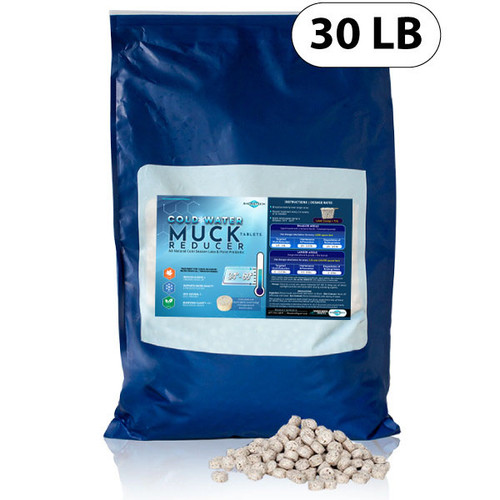
Cold Water Muck Reducer Tablets
Muck reducer tablets for cold water.
Why it fits: Pair cold-water clarification with cold-water muck reduction.
Shop Cold Water Muck Reducer TabletsKasco Home Series Aeration Packages
Quiet, energy-efficient pond aerators.
Why it fits: Aeration supports bacterial activity.
Shop Kasco Home Series Aeration PackagesN-Zyme Powder Bacteria
An all-natural pond and lake water clarifier.
Why it fits: A warmer-season companion clarifier.
Shop N-Zyme Powder BacteriaFAQs
PolarZyme Cold Water Bacteria for Ponds FAQs
What is PolarZyme?
PolarZyme is a cold-water probiotic powder containing beneficial microorganisms designed for biological lake and pond treatment when water temperatures are approximately 41°F to 60°F.
Is PolarZyme cold water bacteria for ponds?
Yes. PolarZyme is specifically formulated as cold water bacteria for ponds, lakes, shorelines, and other suitable water bodies during approximately 41°F to 60°F conditions.
Is PolarZyme a clarifier or flocculant?
PolarZyme is a biological clarifier, not a traditional chemical flocculant. Beneficial microorganisms help process biodegradable organic material and consume nutrients over time. A flocculant instead works primarily by binding suspended particles together so they form larger particles that can settle or be removed.
What does PolarZyme do?
PolarZyme helps digest biodegradable organic material, consume excess nutrients such as nitrogen and phosphorus, reduce organic sludge buildup, and support improved water clarity and biological balance.
What water temperature should PolarZyme be used in?
Use PolarZyme when water temperature is approximately 41°F to 60°F, or 5°C to 15.5°C.
When should I start using PolarZyme?
A common starting point is after ice-out once water reaches approximately 41°F. Continue treatment while the water remains within the recommended cold-water range.
Can I use PolarZyme in the fall?
Yes. PolarZyme can also be used during late-season cooling when water temperatures return to the 41°F to 60°F range.
How often should I apply PolarZyme?
The current product instructions call for application approximately every two weeks while water remains between 41°F and 60°F.
How much PolarZyme do I use per acre?
The current application chart lists 3 pounds per surface acre for the initial treatment, 1 to 3 pounds per surface acre for standard applications, and 6 pounds per surface acre for hypereutrophic water.
What does hypereutrophic mean?
Hypereutrophic water is extremely nutrient rich and may experience very high biological productivity and recurring water-quality problems. If you are unsure whether your water body fits this category, contact Weeders Digest before using the higher application rate.
Can I broadcast PolarZyme directly into the water?
Yes. PolarZyme can be applied as a dry powder and distributed evenly across the treatment area.
Can I mix PolarZyme with water and spray it?
Yes. The current product instructions also allow PolarZyme to be dissolved in water and sprayed across the lake or pond surface.
Does PolarZyme remove muck?
PolarZyme helps biologically process biodegradable organic material that contributes to muck and sludge. For concentrated bottom muck, a sinking muck-reducer product may provide more targeted sediment treatment.
Does PolarZyme kill lake weeds?
No. PolarZyme is not an herbicide and does not directly kill living aquatic weeds. It helps manage organic material and nutrient load as part of a broader lake or pond management program.
Does PolarZyme kill algae?
No. PolarZyme is not an algaecide. Its beneficial microorganisms help consume nutrients and process biodegradable organic material, but it does not provide direct chemical algae control.
Can PolarZyme help with water clarity?
Yes. PolarZyme functions as a biological clarifying treatment by helping process organic matter and excess nutrients. Results are gradual and vary by water body and conditions.
How is a biological clarifier different from a flocculant?
A biological clarifier such as PolarZyme relies on beneficial microorganisms to process biodegradable organics and nutrients. A flocculant works through physical or chemical particle aggregation, causing suspended material to form larger particles that settle more readily.
Can PolarZyme reduce nutrients in my pond?
PolarZyme's microbial activity consumes available nutrients including nitrogen and phosphorus as part of the biological treatment process.
Will PolarZyme instantly clear cloudy water?
No. PolarZyme works biologically, so improvement is generally gradual rather than the rapid settling response associated with some flocculants.
Can I use PolarZyme with pond aeration?
Yes. Aeration and circulation can complement a broader biological lake or pond management program by improving water movement and oxygen distribution.
Can PolarZyme be used in lakes?
Yes. PolarZyme is intended for both lakes and ponds as well as other suitable managed water bodies.
Can I use PolarZyme around my shoreline and dock?
Yes. Shoreline and dock areas where leaves and dead vegetation collect can be included in the treatment area.
Can it be used in retention ponds?
Yes. Retention ponds are listed among the current product applications.
Can PolarZyme be used in decorative ponds?
Yes. Decorative ponds and suitable water features are included among the listed applications.
Can it be used in aquaculture or hatcheries?
Yes. The current product information lists aquaculture and hatchery applications.
What size packages are available?
The current Weeders Digest options are 3 lb, 6 lb, 10 lb, 20 lb, and 30 lb packages.
How large is each PolarZyme packet or portion?
The current package breakdown uses 8 oz, or 1/2 lb, portions. For example, the 3 lb size contains six 8 oz portions.
What should I use when the water warms above 60°F?
Once water temperatures consistently move above the PolarZyme range, transition to a warm-water beneficial bacteria product such as N-Zyme.
What is the difference between PolarZyme and N-Zyme?
The primary difference is seasonal temperature. PolarZyme is formulated for approximately 41°F to 60°F water, while N-Zyme is intended for warmer conditions and performs best above approximately 60°F.
Can I use PolarZyme with a cold-water muck reducer?
They can serve complementary roles in a seasonal management program. PolarZyme is distributed through the treatment area, while sinking muck-reducer tablets are designed to place biological treatment directly into bottom sediment.
How quickly will PolarZyme work?
Results vary. Biological activity depends on water temperature, organic load, nutrient concentration, oxygen, water movement, treatment rate, and other environmental conditions.
Where can I get help calculating my PolarZyme treatment?
Contact Weeders Digest Product Support with your approximate surface acreage, water conditions, and temperature. Call 877-224-4899 for help choosing an application rate and package size.
Related Products