

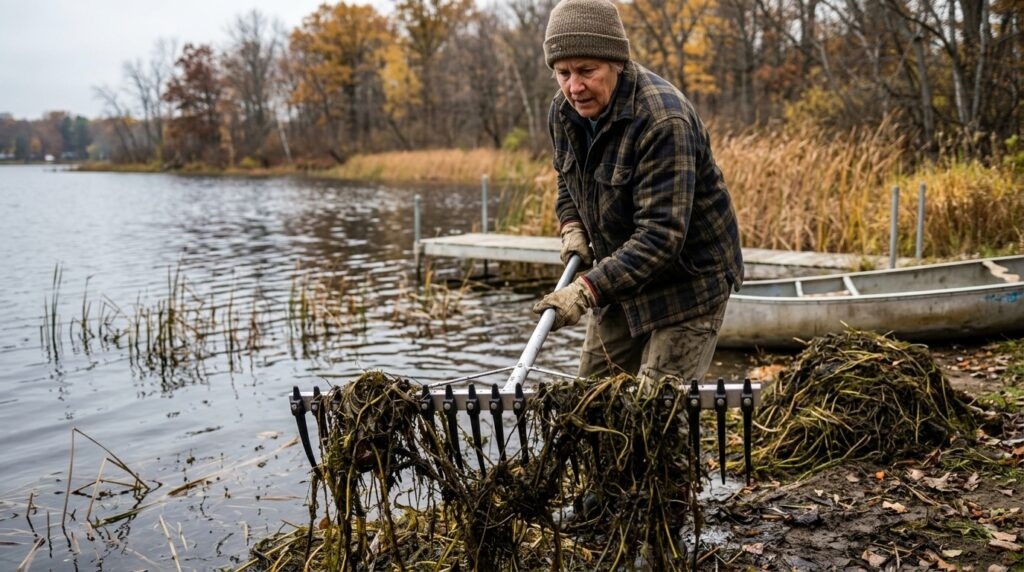
Fall Lake Cleanup: RakeZilla’s Role
Why Fall Lake Cleanup is Crucial for a Healthy Ecosystem
Proactive fall lake cleanup is not merely an aesthetic choice; it is a critical practice for maintaining a thriving aquatic environment. Neglecting to remove decaying weeds and organic debris before winter allows these materials to decompose on the lakebed, releasing a concentrated influx of nutrients into the water column.
This nutrient buildup, particularly phosphorus and nitrogen, acts as a potent fertilizer, fueling excessive aquatic weed growth and algae blooms come spring. Such conditions can quickly degrade water quality, diminish oxygen levels, and create an imbalanced ecosystem that is far more challenging to manage later.
Autumn brings a significant accumulation of problematic debris, including fallen leaves from surrounding trees, dying aquatic vegetation, and accumulated muck. Addressing these specific types of organic matter through a thorough fall lake cleanup prevents them from settling and contributing to the nutrient load, laying the groundwork for a healthier, clearer lake in the subsequent seasons.
RakeZilla: Your Go-To for Autumn Aquatic Debris
When facing the unique challenges of fall lake cleanup, a robust tool is essential, and RakeZilla stands out as the ideal solution for autumn aquatic debris. Its design, featuring exceptionally long tines and heavy-duty construction, is specifically engineered to tackle the dense, decaying vegetation and accumulated organic matter prevalent during this season.
The extended reach of RakeZilla's tines allows for effective penetration into matted weeds and submerged vegetation that has begun to break down, pulling up roots and entangled debris that lighter rakes would simply skim over. This deep engagement is crucial for removing the bulk of nutrient-rich material before it can fully settle and contribute to muck buildup.
Furthermore, RakeZilla's durable build minimizes the effort required to rake through heavy, waterlogged plant matter and thick muck. Its robust frame and strong tines resist bending or breaking under the strain of substantial loads, making the arduous task of clearing autumn debris more efficient and less physically demanding for the lakefront property owner.
Mastering Fall Lake Cleanup with RakeZilla
Effectively managing your fall lake cleanup requires more than just a powerful tool; it demands strategic application. When using RakeZilla to clear various types of autumn debris, employ specific techniques to maximize efficiency and impact.
For matted weeds and submerged vegetation, cast RakeZilla out as far as possible, allowing it to sink to the lakebed, then pull it back with a steady, sweeping motion to dislodge and collect the material. When dealing with floating leaves or surface debris, a lighter, more rapid pull can effectively gather them without disturbing the bottom too much.
Adapting your raking strategy to varying water depths and shoreline conditions is also key during the fall lake cleanup. In shallower areas, you can often stand on the shore or a dock, using the rake's long handle to reach; for deeper sections, working from a small boat or kayak allows for better access and leverage.
A common mistake to avoid during autumn cleanup is attempting to clear too large an area at once, which can lead to overwhelming piles of debris and inefficient removal. RakeZilla helps mitigate this by allowing for focused, heavy-duty passes that gather significant amounts of material in each sweep, making it easier to manage and dispose of.
Safety considerations unique to fall lake cleanup activities include being mindful of colder water temperatures and slippery shorelines. Always wear appropriate footwear, and if working from a boat, ensure it is stable and that you have proper flotation devices. Our team at Weeders Digest emphasizes the importance of a systematic approach, clearing sections methodically to ensure thoroughness and safety.
Beyond Weeds: RakeZilla's Versatility in Fall
RakeZilla's utility extends far beyond simply removing surface weeds; it is an indispensable tool for comprehensive fall lake care, preparing your aquatic environment for the dormant winter months. One of its most significant applications is in removing accumulated muck and sediment from the lake bottom.
By thoroughly raking the lakebed in autumn, RakeZilla helps to dislodge and bring up layers of organic muck that have built up over the summer, preventing them from compacting further and contributing to nutrient release. This proactive muck removal is vital for maintaining water depth and preventing the anaerobic conditions that can harm aquatic life.
Furthermore, RakeZilla plays a crucial role in preventing potential ice damage by clearing debris that could become trapped in the ice formation. Large masses of decaying vegetation or logs frozen into the ice can exert considerable pressure on docks, seawalls, and other shoreline structures as the ice shifts and expands, leading to costly damage.
Using RakeZilla in the fall to remove these potential hazards contributes significantly to overall lake health and water quality for the following spring. A cleaner lakebed with reduced organic matter means less decomposition, fewer nutrients available for early spring weed growth, and a clearer, more inviting body of water when the ice finally melts.
Choosing the Right Tools for Your Fall Lake Cleanup
When undertaking a thorough fall lake cleanup, selecting the appropriate tools is paramount, and RakeZilla consistently outperforms standard alternatives for autumn-specific needs. Traditional landscape rakes, while useful for terrestrial debris, are severely limited in aquatic environments; their shorter, often weaker tines cannot effectively penetrate submerged vegetation or handle the heavy, waterlogged mass of decaying plant matter and muck.
Lighter aquatic rakes also fall short when confronted with extensive fall debris. They lack the necessary weight and robust construction to dislodge deeply rooted weeds or pull significant volumes of dense, decomposing organic material without bending or breaking. Such tools often require multiple passes and considerably more effort, leading to frustration and an incomplete cleanup.
RakeZilla's superior durability and extended reach make it a far more efficient and effective choice for extensive autumn cleanup scenarios. Its heavy-duty design allows it to tackle thick mats of dying weeds, submerged leaves, and stubborn muck with ease, ensuring a comprehensive removal that lighter options simply cannot achieve. This means fewer passes, less physical strain, and a more thoroughly cleaned lakebed.
Investing in a heavy-duty tool like RakeZilla is a cost-effective decision for long-term lake maintenance. By effectively removing nutrient-rich debris in the fall, you significantly reduce the potential for aggressive weed growth and muck accumulation in the spring, thereby minimizing the need for more intensive and expensive interventions later. This proactive approach saves both time and money, ensuring a healthier lake year after year.
Frequently Asked Questions
What is the ideal water temperature for effective fall lake cleanup?
The ideal water temperature for effective fall lake cleanup is typically when the water begins to cool, usually below 60°F (15°C), but before it gets too cold for comfortable work. Cooler temperatures naturally slow down the decomposition process, making it easier to remove plant matter before it fully breaks down and releases nutrients.
How does the type of aquatic weed influence fall removal strategies?
The type of aquatic weed significantly influences fall removal strategies; for instance, rooted weeds like milfoil or hydrilla require tools that can dislodge them from the lakebed, while free-floating plants like duckweed are easier to skim from the surface. Understanding the specific weed species helps in selecting the most effective tools and techniques, such as using a heavy-duty rake for rooted plants or a fine-mesh net for floating varieties.
What are the best practices for disposing of collected lake debris in the fall?
The best practices for disposing of collected lake debris in the fall involve removing it completely from the shoreline to prevent nutrients from leaching back into the water. Composting the material away from the lake is an excellent option, allowing it to break down naturally and enrich garden soil. Always check local regulations regarding the disposal of aquatic vegetation.
How can fall lake cleanup impact local wildlife and fish populations?
Fall lake cleanup, when done responsibly, positively impacts local wildlife and fish populations by improving water quality and habitat. Removing excessive decaying vegetation prevents oxygen depletion that can harm fish, while maintaining a balanced ecosystem supports a wider variety of aquatic life. Care should be taken to avoid disturbing nesting areas or critical habitats during the cleanup process.
What are the signs that a lake needs immediate fall cleanup attention?
Signs that a lake needs immediate fall cleanup attention include an abundance of dying or decaying aquatic plants, visible mats of leaves and organic debris floating on the surface or accumulating along the shoreline, and a noticeable increase in muck on the lakebed. These indicators suggest a high nutrient load that, if left unaddressed, will lead to significant problems in the spring.
How does fall cleanup tie into broader seasonal lake management plans?
Fall cleanup is a critical component of broader seasonal lake management plans, serving as the preventative measure that sets the stage for a healthy spring and summer. By removing nutrient sources before winter, it reduces the likelihood of severe weed and algae issues in the warmer months, making subsequent seasonal maintenance more manageable and effective. It's the proactive step that minimizes reactive treatments later.
Prepare Your Lake for Winter with RakeZilla
A thorough fall lake cleanup is indispensable for the long-term health and beauty of your aquatic environment, and RakeZilla offers the robust solution needed for this crucial task. Its heavy-duty construction and extended reach ensure efficient removal of decaying weeds, leaves, and muck, preventing nutrient buildup that fuels spring growth.
At Weeders Digest, we understand the unique challenges lakefront property owners face, and our expertise is dedicated to providing effective solutions. We believe that proactive management in the fall significantly reduces future problems, ensuring a clearer, healthier lake for years to come.
To equip yourself with the ultimate tool for autumn aquatic maintenance, explore the RakeZilla Heavy Duty Aquatic Weed Rake today.
Recent Posts
-
Fall Lake Cleanup: RakeZilla’s Role
Why Fall Lake Cleanup is Crucial for a Healthy Ecosystem Proactive fall lake cleanup is not merely a …15th Oct 2026 -
Tame Cattails with an Aquatic Vegetation Groomer
For lakefront property owners, encroaching cattails transform vibrant shorelines into dense, unusabl …8th Oct 2026 -
Seasonal Lake Weed Management: Local Help
Effective lake weed management local to your property requires more than just a generic approach; it …30th Sep 2026