

Water Lilies

Water lilies are beautiful aquatic plants known for their striking flowers and broad, floating leaves. They are a common sight in ponds, lakes, and calm waterways around the world, adding aesthetic appeal while also playing a role in their aquatic ecosystems.
Identifying Water Lilies
Physical Characteristics of a Water Lily
Leaves:
- Oval-shaped
- Fleshy
- Green on top
- Purple or red on bottom
- Typically float on the water's surface, though some younger leaves may be submerged.
- Can grow quite large, providing shade for aquatic life below.
Flowers:
- Found above water
- Many colored
- Range in color from white, pink, red, yellow, and blue.
- Often fragrant and open during the day, closing at night.
- Consist of multiple petals arranged in a spiral pattern around a central cluster of stamens.
Stem:
- Fleshy rhizomes
- The rhizomes are submerged in the mud at the bottom of the water body, anchoring the plant.
- Long, flexible stems connect the leaves and flowers to the rhizomes, allowing them to reach the water's surface.
Types of Water Lilies
Water lilies are broadly categorized into two main types: hardy water lilies and tropical water lilies, each with distinct characteristics and growing preferences.
Hardy Water Lilies (Nymphaea)
Hardy water lilies are perennial plants that can survive freezing winters, making them suitable for temperate climates. They are known for their robust nature and ability to return year after year. Their flowers typically float on the water's surface or are held just above it, and they come in a range of colors including white, pink, red, and yellow. Their leaves are generally round or oval with a distinct notch.
Tropical Water Lilies (Nymphaea)
Tropical water lilies, as their name suggests, thrive in warmer climates and are often grown as annuals in regions with cold winters, or overwintered indoors. They are celebrated for their vibrant colors, often including blues and purples not found in hardy varieties, and many are fragrant. A key distinguishing feature is that tropical water lily flowers are typically held well above the water's surface on sturdy stalks. Some tropical varieties are also "night-blooming," opening in the evening and closing by morning.
Water Lily Biology and Growth
Water lilies are fascinating aquatic plants with a unique biology adapted to their watery environment. They belong to the family Nymphaeaceae and are characterized by their submerged rhizomes, long petioles (leaf stalks), and peduncles (flower stalks) that allow their leaves and flowers to reach the water's surface.
Rhizome System
The core of a water lily's growth lies in its rhizomes, which are thick, fleshy, horizontal stems buried in the mud at the bottom of a pond or lake. These rhizomes serve as storage organs for nutrients and energy, allowing the plant to survive dormant periods, especially during winter for hardy varieties. Roots extend from the rhizomes, anchoring the plant firmly and absorbing nutrients from the sediment.
Leaf and Flower Development
From the rhizomes, long, flexible stems grow upwards through the water column. These stems terminate in either a leaf or a flower bud. Water lily leaves are typically large, round, or oval, and float on the water's surface. They are designed to maximize sunlight absorption for photosynthesis. The upper surface is waxy to repel water, while the underside may be reddish or purple. The flowers are equally impressive, emerging above or just on the water's surface, displaying a wide array of colors and often a pleasant fragrance. They typically open during the day and close at night, though some tropical varieties are night-bloomers.
Reproduction
Water lilies reproduce both sexually through seeds and asexually through their rhizomes. After pollination, the flower submerges to ripen its seeds, which are then released and can float to new locations or sink to the bottom to germinate. Asexual reproduction occurs when pieces of the rhizome break off or when the rhizome naturally expands, forming new plants. This robust reproductive strategy contributes to their ability to spread and colonize suitable habitats.
Water Lily Benefits and Drawbacks
Water lilies, while undeniably beautiful, offer both ecological benefits and potential drawbacks in aquatic environments.
Benefits of Water Lilies
- Aesthetic Appeal: Their vibrant flowers and broad leaves add significant beauty to ponds and lakes, enhancing the visual appeal of any water feature.
- Habitat and Shelter: The dense canopy of water lily pads provides shade and shelter for various aquatic organisms, including fish, frogs, and insects, protecting them from predators and direct sunlight.
- Water Quality Improvement: Water lilies can help improve water quality by absorbing excess nutrients like nitrates and phosphates from the water, which can reduce the likelihood of algal blooms.
- Erosion Control: Their extensive root systems help stabilize the sediment at the bottom of ponds, reducing erosion.
- Food Source: The seeds, leaves, and rhizomes of some water lily species can serve as a food source for wildlife.
Drawbacks of Water Lilies
- Overgrowth and Competition: In ideal conditions, water lilies can grow aggressively and quickly cover large areas of a water body. This can outcompete native vegetation for sunlight and nutrients.
- Oxygen Depletion: A dense cover of water lilies can block sunlight from reaching submerged aquatic plants, leading to their death and decomposition. This decomposition process consumes oxygen, potentially leading to oxygen depletion in the water, which can harm fish and other aquatic life.
- Navigation Obstruction: Extensive lily pad growth can make swimming, boating, and fishing difficult or impossible in affected areas.
- Mosquito Breeding Ground: The still water trapped between dense lily pads can create ideal breeding grounds for mosquitoes.
- Impact on Biodiversity: While providing habitat, an overabundance of water lilies can reduce the diversity of other plant and animal species by dominating the ecosystem.
How To Get Rid Of Water Lilies In Lakes And Ponds
Physical Management of Water Lily
Water Lily has a root system which means the roots need to be destroyed to prevent the plant from coming back.
Physical removal is a highly effective method for controlling water lilies, especially in smaller ponds or targeted areas. The key to successful physical management is to remove as much of the rhizome system as possible, as these underground stems are capable of regenerating new plants.
Products To Physically Manage Water Lily
 -
-The Lily Pad Ripper is the only manual tool that full kills Water Lillies because it digs down and rips open the roots. The key to this tool is that once it opens up the root system it allows water to flood the entire root system and kills any Lily Pads that are attached.
The Lily Pad Ripper can be attached to any boat, ATV or Tractor and is drug along the bottom of your lake or pond.
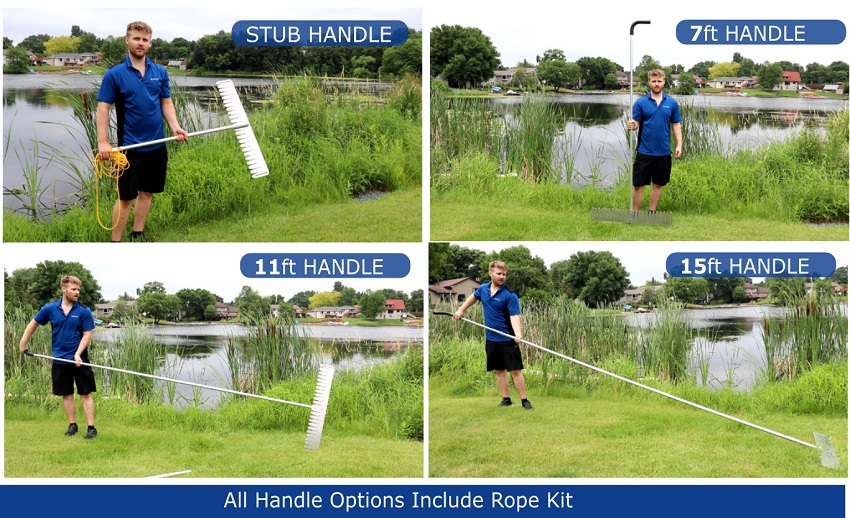
The Weed Ripper is designed to pull Water Lilies by the roots to prevent it from growing back.
The Weed Ripper features a 3 foot wide head and comes with a 25 foot rope that allows you to cut and pull weeds by tossing it into your lake or pond and pulling it back to you. Additionally, the Weed Ripper comes with 4, 7, 11 and 15 foot handle options.
 - Aquatic Vegetation Groomer (AVG)
The AVG is a gas powered underwater aquatic weed cutter that was especially designed to cut down Water Lilies at its root base. It uses two circular reciprocating blades which prevents it from getting tangled up like other weed whacker products sold online.
The AVG can be used in water depths up to 4 feet and comes with a 2 year warranty. It has a powerful 24 cc 2-cycle engine and a sealed gear box to keep it running smooth for years to come. Additionally, we have an optional shoulder strap and an optional float mount available to make the job of cutting down Water Lilies that much easier.

Our WeedShear measures 49 inches in width and features a v-shaped razor sharp stainless steel blades that easily cuts through Water Lily at its roots. This product comes with a hand held sharpener, a 25 foot polypropylene rope and folds up for easy storage.
To use the WeedShear, simply give it a toss out into your lake or pond and let it sink to the bottom. Once it hits the bottom, simply use a jerking motion to drag the WeedShear along the bottom of the lake or pond.
Automated Control of Water Lilies
For homeowners, automated control of Water Lily is ideal when your lake bottom has been cleared and you want to keep it that way without having to continuously labor away cutting weeds.
For lake and pond management companies, automated control of Water Lily is ideal when you have a large lake or pond that has been overtaken by the weed.
Automated control methods offer a less labor-intensive approach to managing water lilies, particularly for larger areas or for ongoing maintenance after initial clearing. These systems are designed to continuously disturb or remove water lily growth, preventing re-establishment and keeping your water body clear with minimal manual effort.
Automated Products To Control Water Lilies

Our Lake Groomer is for homeowners who want to maintain a muck free lake bottom. The Lake Groomer uses a rolling action along the bottom of your lake or pond and dislodges any existing Water Lily and prevents it from growing.
The Lake Groomer comes standard with three – 7 feet roller tubes that can cover a total of 21 feet of lake bottom and comes with a 3 year warranty.

The Aquatic Mower is an electric powered aquatic weed cutter that mounts to your boat and works very efficiently to cut down Water Lilies fast. If you are looking for an environment friendly, non-labor intensive solution to riding your lake or pond from Water Lilies than the Aquatic Mower is what you have been looking for.
The Aquatic Mower weighs just 45 pounds and has a 12 volt DC electric motor that has a batter life of up to 6 hours. It is made of rust resistant aluminum and stainless steel and has a cutting width of 4 feet.
For lake and pond management companies, our Eco Harvester pulls Water Lilies up from the roots and harvests them to be reused as mulch or animal feed.
The Eco Harvester can operate in as little as 12 inches of water and is built so it only takes one person to operate. Additionally, our patent protected Eco Harvester is one-third the price of traditional harvesters, making it one of the most affordable Water Lily removal machines on the market.
Herbicide Control of Water Lilies
Herbicide control is a great option for Water Lilies because you can literally apply the herbicide and then sit back and let it do its work. Most herbicides can control Water Lily throughout the season and only needs to be applied once a year.
When considering herbicide control for water lilies, it's crucial to choose products specifically labeled for aquatic use and to follow all application instructions carefully. The effectiveness of herbicides can depend on factors such as water temperature, plant growth stage, and proper application techniques. Always prioritize safety and environmental impact when using chemical treatments.
Herbicide Products To Control Water Lilies
Rodeo herbicide plus adjuvant is the best herbicide control for Water Lilies because it is extremely effective at killing it at its roots and preventing it from coming back for years. Its active ingredient is Glyphosate† N-(phosphonomethyl) glycine, isopropylamine salt which has shown to be practically not-toxic to freshwater invertebrates. The Adjuvant helps speed up the process of effectiveness of Rodeo herbicide to produce even better results.
After applying Rodeo herbicide you should start to see results within 2 to 4 days and within 7 to 10 days your Water Lilies problem should disappear. However, you want to make sure there is no rain in sight for 6 hours after applying for maximum results.
Navigate Granular is formulated on special heat treated attaclay granules that resist rapid decomposition in water. They quickly sink to your lake or pond bottom and release 2,4-D into the critical root zone.
Initial effects are indicated by brittle stems and curling leaf tips and are noticeable within 7 to 10 days. A full kill will occur within 3 to 5 weeks.
Frequently Asked Questions
What are water lilies?
Water lilies are beautiful aquatic flowering plants that grow in ponds, lakes, and calm waters. They are characterized by their large, round, floating leaves (lily pads) and striking, often fragrant, flowers that bloom on or above the water's surface.
Are water lilies good for a pond?
Water lilies can be beneficial for a pond by providing shade, which helps reduce algae growth and keeps water temperatures cooler for fish. They also offer habitat and shelter for aquatic wildlife and absorb excess nutrients from the water. However, if they become too dense, they can deplete oxygen and hinder other pond activities.
How do water lilies spread?
Water lilies spread primarily through their extensive rhizome (underground stem) systems, which can grow horizontally and produce new plants. They also reproduce sexually through seeds, which are released from submerged flowers and can float to new areas or sink to the bottom to germinate.
What is the difference between a hardy water lily and a tropical water lily?
Hardy water lilies are perennial and can survive freezing temperatures, returning each year. Their flowers typically float on the water. Tropical water lilies prefer warmer climates and are often grown as annuals; their flowers are usually held above the water's surface, and they come in a wider range of vibrant colors, including blues and purples, with some varieties blooming at night.
Can you cut water lily pads?
Yes, you can cut water lily pads, but it's important to understand that simply cutting the pads will not kill the plant. The plant will continue to grow new pads from its rhizome system. Cutting pads can be a temporary measure to clear an area or reduce density, but for long-term control, the roots (rhizomes) need to be addressed.
What kills water lilies permanently?
To permanently kill water lilies, you must destroy their root system (rhizomes). Methods include physical removal using tools like the Lily Pad Ripper or Weed Ripper that extract or damage the rhizomes, or applying aquatic herbicides specifically designed to be absorbed by the plant and translocated to the roots, such as Rodeo Herbicide.