

Lake Weed Cutters: Manual vs. Motorized Options
Managing aquatic vegetation is a persistent challenge for lakefront property owners, marinas, and homeowners' associations, especially as the growing season progresses and prepares for next year. An effective lake weed cutter is often the cornerstone of a successful strategy, offering a direct and immediate solution to reclaim recreational areas and maintain ecological balance. While the market offers a diverse array of tools, understanding the fundamental differences between manual and motorized options is crucial for making an informed decision that aligns with your specific needs and long-term lake management goals.
Choosing the right lake weed cutter involves more than just selecting a tool; it requires a strategic assessment of your lake's unique characteristics, the types of weeds present, and the scale of the problem. This article will dive into the specific advantages and considerations for both manual and motorized lake weed removal methods, providing the insights necessary to select the most efficient and sustainable approach for your aquatic environment.
Understanding Your Lake's Needs: The First Step to Effective Weed Control
Before investing in any lake weed cutter, a thorough assessment of your specific lake environment is paramount. This initial evaluation dictates the most appropriate tools and strategies for effective and sustainable aquatic vegetation management. Factors such as the size of the area affected, the depth of the water, and the type of weeds growing all play a critical role in determining the best course of action.
Identifying common aquatic weeds is the first step to effective management, as different species respond to different removal techniques. For instance, submerged weeds like milfoil or hydrilla require a different approach than emergent weeds like cattails or lily pads. Understanding the specific growth patterns and root structures of these plants will guide your selection of a lake weed removal machine or manual tool.
Furthermore, seasonal thermal changes directly impact weed growth, transforming clear water into weed-infested areas during warmer months. This cyclical nature means that effective aquatic vegetation management requires a strategic balance of methods, depending on specific lake conditions and goals. Considering these environmental dynamics ensures that your chosen lake weed control solution is not only effective in the short term but also contributes to long-term aquatic health.
Assessing Weed Type and Density
The type and density of aquatic weeds are primary determinants when selecting a lake weed cutter. Some weeds, like filamentous algae, are best managed with rakes or specialized skimmers, while dense mats of submerged vegetation such as Eurasian watermilfoil or curly-leaf pondweed often necessitate more robust cutting solutions. Understanding the specific species present helps tailor your approach, ensuring you target the problem effectively.
For instance, weeds with strong root systems or rhizomes, such as cattails or lily pads, require tools capable of severing these structures to prevent regrowth. Simply cutting the visible portion of these plants will only provide temporary relief, as they will quickly regenerate from their established root base. A precise identification of the weed type allows for the selection of a cutter designed to tackle its unique biological characteristics.
The density of the weed growth also influences the choice between manual and motorized options. Sparse, scattered weeds in a small area might be manageable with a hand tool, whereas a large expanse of thick, matted vegetation will quickly overwhelm manual efforts, making a motorized lake weed removal machine a more practical and efficient choice.
Considering Water Depth and Area Size
The physical characteristics of your lake or pond, particularly water depth and the overall area requiring treatment, are crucial factors in selecting an appropriate lake weed cutter. Shallow areas, especially near shorelines, are often more accessible for manual tools, allowing for precise targeting of weeds without the need for specialized equipment.
Conversely, deeper waters or expansive areas necessitate tools with greater reach and power. Manual cutters with long handles or ropes can extend into moderately deep sections, but for significant depths or broad coverage, a motorized solution, such as an aquatic mower, becomes indispensable. These machines are designed to operate efficiently in various depths and cover large areas in a fraction of the time it would take with manual methods.
The total square footage of the affected area directly impacts the feasibility of manual labor. A small swimming area or dock perimeter might be manageable with a manual underwater weed cutter, but attempting to clear an entire cove or a substantial portion of a lake with hand tools would be an arduous, time-consuming, and ultimately unsustainable endeavor. Matching the tool's capability to the scale of your problem ensures efficiency and prevents unnecessary effort.
Manual Lake Weed Cutters: Precision and Accessibility
Manual lake weed cutters offer a direct, hands-on approach to aquatic vegetation management, providing precision and accessibility in specific scenarios. These tools are typically simpler in design, relying on human power to operate, and are particularly well-suited for smaller areas, shallow waters, or for targeting specific weed patches. Their ease of use and lower initial investment make them an attractive option for many lakefront property owners.
The primary advantage of a manual underwater weed cutter lies in its ability to provide targeted removal. Users can precisely maneuver the tool to cut weeds around docks, swimming areas, or sensitive ecological zones without disturbing surrounding vegetation or sediment unnecessarily. This level of control is often difficult to achieve with larger, motorized equipment.
Furthermore, manual cutters require no fuel or complex maintenance, making them environmentally friendly and cost-effective over the long term. They are always ready for use, offering a convenient solution for quick clean-ups or ongoing maintenance tasks throughout the growing season. However, their effectiveness is inherently limited by the physical effort of the user and the scale of the weed problem.
Types of Manual Cutters and Their Uses
Manual lake weed cutters come in various designs, each optimized for specific types of aquatic vegetation and water conditions. The most common types include V-shaped cutters, sickle-bar cutters, and weed rakes, each offering distinct advantages for different weed removal tasks.
V-shaped cutters, often weighted and thrown from shore or a boat, are highly effective for cutting broad swaths of submerged weeds. Their sharp blades, arranged in a V-formation, slice through dense vegetation as they are retrieved, making them ideal for clearing pathways or larger areas where precision isn't the absolute priority. These tools are particularly useful for tackling weeds like milfoil or pondweed that grow in thick stands.
Sickle-bar cutters, typically mounted on a long handle, allow for more controlled cutting in shallower water or around obstacles. They are excellent for trimming weeds around docks, boat lifts, or swimming areas, providing a cleaner cut closer to the sediment.
Weed rakes, while not strictly cutters, are indispensable for collecting cut vegetation and for removing lighter, filamentous algae or loose debris. They are often used in conjunction with cutters to ensure that severed plant material is removed from the water, preventing it from re-rooting or contributing to muck accumulation.
Pros and Cons of Manual Weed Removal
Manual lake weed removal offers several distinct advantages, particularly for smaller-scale operations or those requiring a delicate touch. The primary benefit is the high degree of control and precision it affords, allowing users to target specific weed patches without disturbing the surrounding aquatic ecosystem. This makes manual cutters ideal for maintaining swimming areas, fishing lanes, or small dock perimeters.
Another significant advantage is the lower initial cost and minimal maintenance requirements. Manual tools do not require fuel, oil, or complex mechanical parts, resulting in fewer ongoing expenses and less downtime. They are also environmentally friendly, producing no emissions or noise pollution, which is a key consideration for preserving the natural tranquility of a lakefront property.
However, manual weed removal is inherently labor-intensive and time-consuming, especially for larger areas or dense weed growth. The physical effort required can be substantial, making it impractical for individuals with physical limitations or for managing extensive weed infestations. Furthermore, the effectiveness of manual cutting is limited by water depth and the sheer volume of vegetation, often leading to incomplete removal and rapid regrowth if not consistently maintained.
Motorized Lake Weed Cutters: Power and Efficiency
For lakefront property owners facing extensive or dense aquatic weed infestations, motorized lake weed cutters represent a powerful and efficient solution. These machines are designed to cover large areas quickly and effectively, significantly reducing the time and physical effort required compared to manual methods. They are particularly valuable for managing vast expanses of submerged or emergent vegetation that would be overwhelming for hand tools.
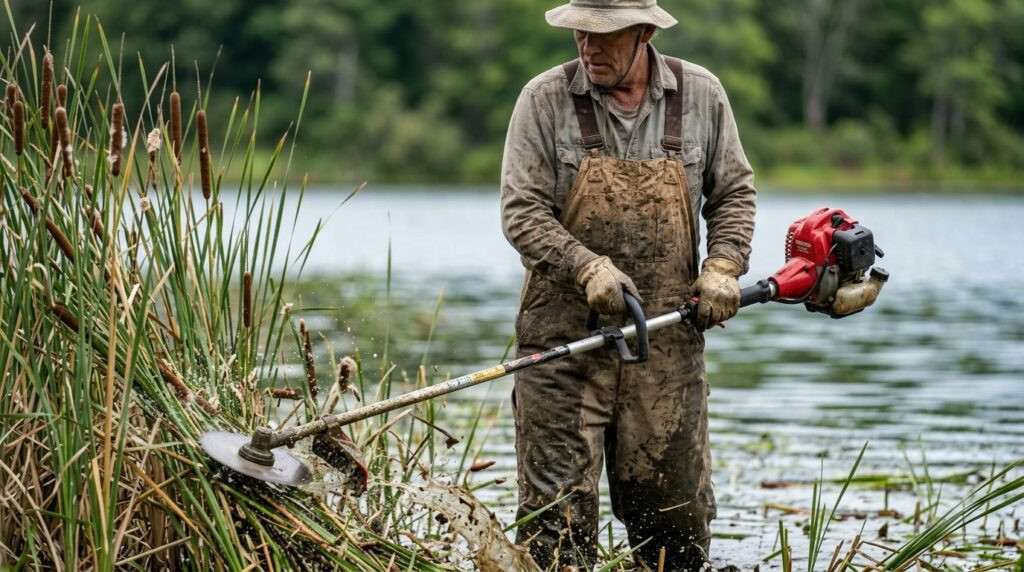
Motorized cutters, often referred to as aquatic mowers or weed cutter machines, utilize engines to power rotating blades or cutting bars, allowing them to slice through thick mats of weeds with ease. This enhanced capability makes them indispensable for maintaining navigation channels, clearing large swimming areas, or managing entire sections of a lake or pond. Their efficiency translates into more consistent and comprehensive weed control over larger scales.
While the initial investment and ongoing maintenance for motorized options are higher, the long-term benefits in terms of time saved and effectiveness can outweigh these costs for significant weed problems. They provide a robust solution for serious lake weed removal challenges, ensuring that large aquatic areas remain clear and usable throughout the season.
Exploring Different Motorized Options
The realm of motorized lake weed cutters encompasses a range of specialized equipment, each designed to address different scales and types of aquatic vegetation challenges. From smaller, portable units to large, industrial-grade aquatic mowers, understanding these options is key to selecting the most suitable lake weed removal machine for your specific needs.
Smaller, portable motorized cutters are often designed for use from a boat or dock, featuring a long shaft with a motorized cutting head. These are excellent for reaching deeper areas or covering moderately sized sections that are too large for manual tools but don't warrant a full-scale aquatic mower. They offer a good balance of power and maneuverability for many residential and small commercial applications.
For extensive weed infestations across large bodies of water, dedicated aquatic mowers are the most effective solution. These specialized boats are equipped with powerful engines and wide cutting bars that can efficiently clear vast areas of submerged and emergent vegetation. They are often employed by municipalities, large HOAs, or professional lake management services to maintain recreational lakes and preserve ecological balance.
Beyond cutting, some motorized units also incorporate systems for collecting the cut vegetation, which is crucial for preventing re-rooting and reducing muck accumulation. This integrated approach ensures a more thorough and lasting solution to lake weed control, minimizing the need for subsequent clean-up efforts.
Pros and Cons of Motorized Weed Removal
Motorized lake weed removal offers unparalleled efficiency and power, making it the preferred choice for large-scale or dense weed infestations. The ability to clear vast areas of aquatic vegetation in a fraction of the time compared to manual methods is a significant advantage, particularly for property owners managing extensive lakefronts or for community associations overseeing shared aquatic spaces.
These machines can effectively cut through tough, fibrous weeds that would be nearly impossible to manage with hand tools, providing a more comprehensive and lasting solution. The reduced physical exertion required also makes motorized options accessible to a wider range of users, ensuring consistent maintenance can be performed without undue strain.
However, motorized lake weed cutters come with a higher initial investment and require ongoing maintenance, including fuel, oil changes, and blade sharpening. They also produce noise and emissions, which can be a concern for environmentally sensitive areas or for those seeking a quieter approach to lake management. Furthermore, their size and power can sometimes make precise, localized cutting more challenging, potentially leading to unintended disturbance of desirable vegetation or sediment.
Choosing Between Manual and Motorized: Expert Insights from Weeders Digest
The decision between a manual and motorized lake weed cutter is not always straightforward; it hinges on a careful evaluation of your specific lake conditions, the nature of your weed problem, and your long-term management goals. At Weeders Digest, we understand that effective aquatic vegetation management requires a strategic balance of methods, depending on specific lake conditions and objectives. Our experience shows that the "best" solution is always the one that is most appropriate for the unique challenges you face.
For smaller, localized areas such as a swimming beach, a dock perimeter, or a narrow boat lane, a manual underwater weed cutter often provides the ideal balance of precision and cost-effectiveness. These tools allow for targeted removal, minimizing disturbance to the broader ecosystem and offering a hands-on approach to maintenance. They are particularly effective for addressing new growth or for routine upkeep in easily accessible shallow waters.
Conversely, if you are contending with a widespread infestation, dense mats of aggressive weeds, or need to clear extensive areas for recreational use, a motorized lake weed removal machine becomes a necessity. These powerful tools, like our aquatic mowers, are designed for efficiency and scale, enabling you to reclaim large sections of your lake quickly and effectively. They are an investment in comprehensive lake weed control, providing the power needed to tackle significant challenges that manual efforts simply cannot overcome.
When Manual is the Right Choice
Manual lake weed cutters are the optimal choice for specific scenarios where their advantages in precision, cost, and environmental impact outweigh the need for sheer power. They excel in smaller, confined areas where targeted removal is paramount, such as around docks, boat lifts, or designated swimming zones. The ability to carefully maneuver a hand tool allows for selective cutting, preserving desirable native plants while removing invasive species.
For property owners with limited budgets or those who prefer an environmentally conscious approach, manual cutters offer a sustainable solution. They require no fuel, produce no emissions, and generate minimal noise, making them ideal for maintaining the natural tranquility of a lakefront. Furthermore, for sporadic weed growth or for routine maintenance in easily accessible shallow waters, the physical effort involved is manageable and provides a satisfying, hands-on connection to your lake's health.
Consider manual options if your primary goal is to maintain a small, specific area, if you are dealing with lighter weed densities, or if you are committed to consistent, regular upkeep. They are excellent for preventing small problems from becoming large ones, acting as a proactive component of your overall lake weed control strategy.
When Motorized is Necessary
Motorized lake weed cutters become not just a convenience but a necessity when facing significant aquatic vegetation challenges that overwhelm manual capabilities. If your lakefront is plagued by widespread, dense infestations of submerged weeds like milfoil or hydrilla, or if you need to clear large areas for navigation, recreation, or aesthetic purposes, a motorized solution is indispensable. These machines are engineered to cut through thick, matted vegetation with speed and power, making short work of what would be an impossible task by hand.
For property owners, marinas, or HOAs managing extensive shorelines or large bodies of water, the efficiency of a motorized lake weed removal machine translates into substantial time and labor savings. Instead of spending days or weeks on manual cutting, a motorized aquatic mower can clear significant areas in hours, allowing for more consistent and effective maintenance throughout the growing season. This is particularly crucial when dealing with aggressive, fast-growing species that quickly reclaim cleared areas.
Moreover, for deeper waters or areas difficult to access from shore, motorized cutters offer the reach and capability to perform comprehensive weed removal. They provide a robust, long-term solution for maintaining the usability and ecological health of larger aquatic environments, ensuring that your investment in lake weed control yields tangible and lasting results.
Beyond Cutting: Comprehensive Lake Weed Management
While a lake weed cutter is an essential tool, effective aquatic vegetation management extends far beyond simply cutting visible growth. A truly comprehensive strategy integrates various methods to address the root causes of weed proliferation and maintain long-term aquatic health. This holistic approach ensures that your efforts are not just reactive but also proactive, leading to more sustainable results.
Understanding that seasonal thermal changes directly impact weed growth, transforming clear water into weed-infested areas, highlights the need for a multi-faceted strategy. Cutting alone often provides temporary relief, as many aquatic plants can regrow from fragments or established root systems. Therefore, integrating other control methods is crucial for preventing rapid regrowth and achieving lasting clarity.
At Weeders Digest, we emphasize that effective aquatic vegetation management requires a strategic balance of methods, depending on specific lake conditions and goals. This might include aeration to improve water quality, biological controls, or even the use of specialized products designed to inhibit growth or reduce muck. A well-rounded plan considers the entire ecosystem, not just the visible weeds.
The Role of Muck and Sediment Control
Muck and sediment accumulation play a significant role in fostering aquatic weed growth, providing a nutrient-rich substrate for plants to thrive. Therefore, any comprehensive lake weed control strategy must address these underlying conditions to achieve long-term success. Simply cutting weeds without managing the muck will often lead to rapid regrowth, as the ideal growing environment remains.
Excessive organic matter, composed of decaying leaves, plant fragments, and other debris, creates a soft, nutrient-dense bottom that is highly conducive to weed proliferation. This muck layer not only provides a fertile bed for new growth but can also release nutrients into the water column, further fueling the problem. Controlling muck is thus a critical component of preventing future weed infestations.
Solutions for muck and sediment control include aeration, which introduces oxygen to the bottom layers, promoting the breakdown of organic material by beneficial bacteria. Additionally, specialized products designed to consume muck can significantly reduce the nutrient load in the sediment. The AquaThruster, for instance, is an effective tool for preventing muck and silt buildup, creating a cleaner, less hospitable environment for weeds to take root.
Integrated Aquatic Weed Control Strategies
An integrated approach to lake weed control combines various methods to achieve the most effective and sustainable results. This strategy moves beyond singular solutions like a lake weed cutter and incorporates a range of techniques tailored to the specific challenges of your aquatic environment. The goal is to manage weed populations by addressing multiple factors that contribute to their growth.
Beyond mechanical cutting, integrated strategies often include biological controls, such as the introduction of specific fish species that feed on nuisance vegetation, or the use of beneficial bacteria to reduce nutrient levels. Physical barriers, like benthic mats, can also be deployed in targeted areas to prevent weed growth by blocking sunlight and inhibiting root establishment. These methods work in concert to create an unfavorable environment for weeds.
Furthermore, water quality management is a critical component. Reducing nutrient runoff from surrounding landscapes can significantly limit the food source for aquatic weeds, thereby slowing their growth. This might involve shoreline plantings, rain gardens, or improved septic system maintenance.
FAQs About Lake Weed Cutters
How often should I cut my lake weeds?
The frequency of cutting lake weeds largely depends on the specific weed species, their growth rate, and your desired level of control. Fast-growing invasive species like Eurasian watermilfoil may require cutting every few weeks during peak growing season (late spring to early fall) to maintain clear areas. For slower-growing or less dense vegetation, monthly or even bi-monthly cutting might suffice.
It's often more effective to cut weeds before they reach the surface and begin to flower, as this can prevent seed dispersal and further spread. Regular monitoring of your lake's vegetation will help you establish an optimal cutting schedule that keeps weeds in check without excessive effort. Consistent, proactive cutting is generally more effective than reactive, infrequent clearing of overgrown areas.
Consider the purpose of the cleared area; a swimming zone might require more frequent attention than a less-used section of your shoreline. Adjusting your cutting frequency based on observation and seasonal changes will yield the best results for your lake weed control efforts.
What are the environmental impacts of using a lake weed cutter?
The environmental impacts of using a lake weed cutter vary significantly between manual and motorized options, as well as the method of operation. Manual cutters generally have minimal direct environmental impact, producing no emissions or noise, and allowing for precise, targeted removal that minimizes disturbance to non-target species or sediment.
Motorized cutters, while highly efficient, do produce emissions and noise, which can temporarily affect wildlife and air quality. However, modern aquatic mowers are designed with efficiency in mind to minimize their footprint. The most significant environmental consideration for both types of cutters is the proper removal of cut vegetation; leaving cut weeds to decay in the water can deplete oxygen, release nutrients, and contribute to muck accumulation, negatively impacting water quality.
Therefore, regardless of the cutter type, always ensure that severed plant material is collected and properly disposed of on land, away from the water's edge. This practice is crucial for maintaining water quality, preventing re-rooting, and supporting a healthy aquatic ecosystem.
Can I use a lake weed cutter for all types of aquatic weeds?
While a lake weed cutter is highly effective for many types of submerged and emergent vegetation, it is not a universal solution for all aquatic weeds. Cutters are excellent for severing the stems of plants like milfoil, pondweed, coontail, and even the stalks of lily pads and cattails. They provide immediate relief by clearing pathways and open water areas.
However, certain types of aquatic vegetation, such as filamentous algae or duckweed, are not effectively managed by cutting. Algae, which often grows in stringy mats or as a surface film, requires different removal methods like raking, skimming, or specialized algaecides. Duckweed, a tiny floating plant, is also best managed with skimmers or by addressing nutrient imbalances in the water.
For comprehensive lake weed control, it's essential to correctly identify the specific weeds you are dealing with and select the appropriate tools and strategies. Often, a combination of cutting, raking, and other control methods is necessary to manage a diverse range of aquatic plants effectively. Weeders Digest offers a variety of aquatic weed cutters and other solutions tailored to different weed types.
The most important takeaway for any lakefront property owner is that effective lake weed control requires a thoughtful, informed approach. Whether you opt for the precision of a manual lake weed cutter or the efficiency of a motorized solution, understanding your lake's unique needs and the specific challenges posed by its vegetation is paramount to success. By making an informed choice, you can reclaim your waterfront and enjoy a clearer, healthier aquatic environment.
At Weeders Digest, we believe that every lake and pond deserves a tailored management plan. Our expertise in aquatic environments allows us to guide you through the complexities of weed identification and solution selection, ensuring you have the right tools and knowledge for lasting results. We are dedicated to helping you achieve your lake management goals with effective and sustainable strategies.
Ready to take control of your lake weeds? Contact us today to discuss your specific situation and explore the best options for your property.
Recent Posts
-
Tame Cattails with an Aquatic Vegetation Groomer
For lakefront property owners, encroaching cattails transform vibrant shorelines into dense, unusabl …8th Oct 2026 -
Seasonal Lake Weed Management: Local Help
Effective lake weed management local to your property requires more than just a generic approach; it …30th Sep 2026 -
Lake Weed Cutters: Manual vs. Motorized Options
Managing aquatic vegetation is a persistent challenge for lakefront property owners, marinas, and ho …23rd Sep 2026